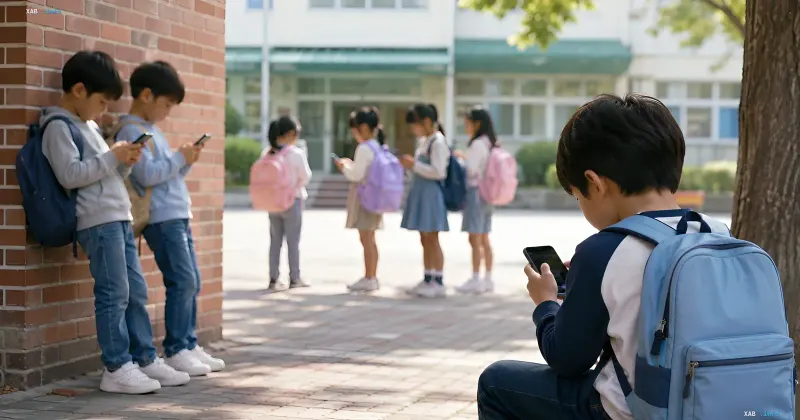
In South Korea, a country with one of the highest internet speeds and smartphone penetration rates in the world, a large-scale campaign is unfolding to combat digital addiction among schoolchildren. In March 2026, a revised Elementary and Secondary Education Act came into force, introducing strict restrictions on the use of mobile devices in classrooms. However, the legislative act left several questions open: specifically, how schools should store phones and regulate their use during breaks and on campus grounds. It is precisely this regulatory gap that has become a catalyst for active measures by regional education authorities.
Regional Initiatives: From "Clean Campuses" to Internet Blocking
Against the backdrop of the federal law, South Korean regions have begun developing their own, more specific strategies. On August 13, the Gyeonggi-do Office of Education announced a large-scale program: by the end of 2026, more than 300 elementary and middle schools in the region will receive the status of "mobile phone-free schools." As part of the pilot project, students will be prohibited from using smartphones for non-educational purposes. In exchange, schools plan to increase the number of hours allocated to reading, arts, and sports, attempting to replace digital dopamine with live interaction and creativity.
Even more radical measures are being taken in Gangwon Province. The local education office has launched the "Clean School Campuses with Smartphones" project. The uniqueness of the initiative lies in the fact that starting next year, schoolchildren are planned to be issued 10,000 special smartphones with software blocking internet access. Initially, the program will cover 10 schools and 3 kindergartens, but by 2029, authorities plan to expand coverage to 150 educational institutions. Similar pilot programs are being prepared for launch in Daegu and North Jeolla Province as early as next month.
National Scale and Public Resonance
The Ministry of Education of South Korea is not standing aside and plans to launch a nationwide pilot program for controlling gadget usage. Next month, 200 schools will be selected to participate in the project, and in 2027, the program is expected to cover 400 educational institutions across the country. In Seoul, on August 13, a special seminar was held with the participation of teachers, parents, and students themselves, where methods for managing smart devices were discussed.
The opinion of educators boils down to the need for physical separation of children from gadgets. As one middle school teacher stated at the seminar: "To ensure a normal learning process, students must be, at least, physically isolated from smart devices on school grounds." Public support for such measures is high: a survey conducted in Gyeonggi Province at the end of June showed that 77.3% of respondents support centralized control of phones, and among parents, this figure reaches 84%.
Contradictory Data
Despite widespread support from parents and teachers, the initiatives raise concerns among some students. Students express worry that excessive restrictions may affect not only the entertainment functions of smartphones but also educational tools. Students fear that tablets and laptops, which are actively used in the modern educational process to access digital libraries and educational platforms, may fall under the ban. There is a risk that "physical isolation" from gadgets may paradoxically slow down the digital literacy of schoolchildren, which is necessary in the modern world.