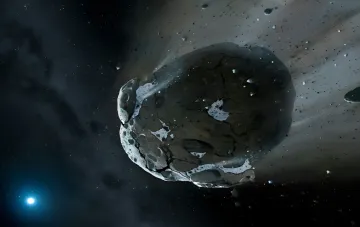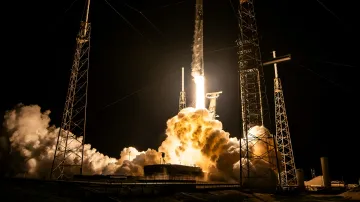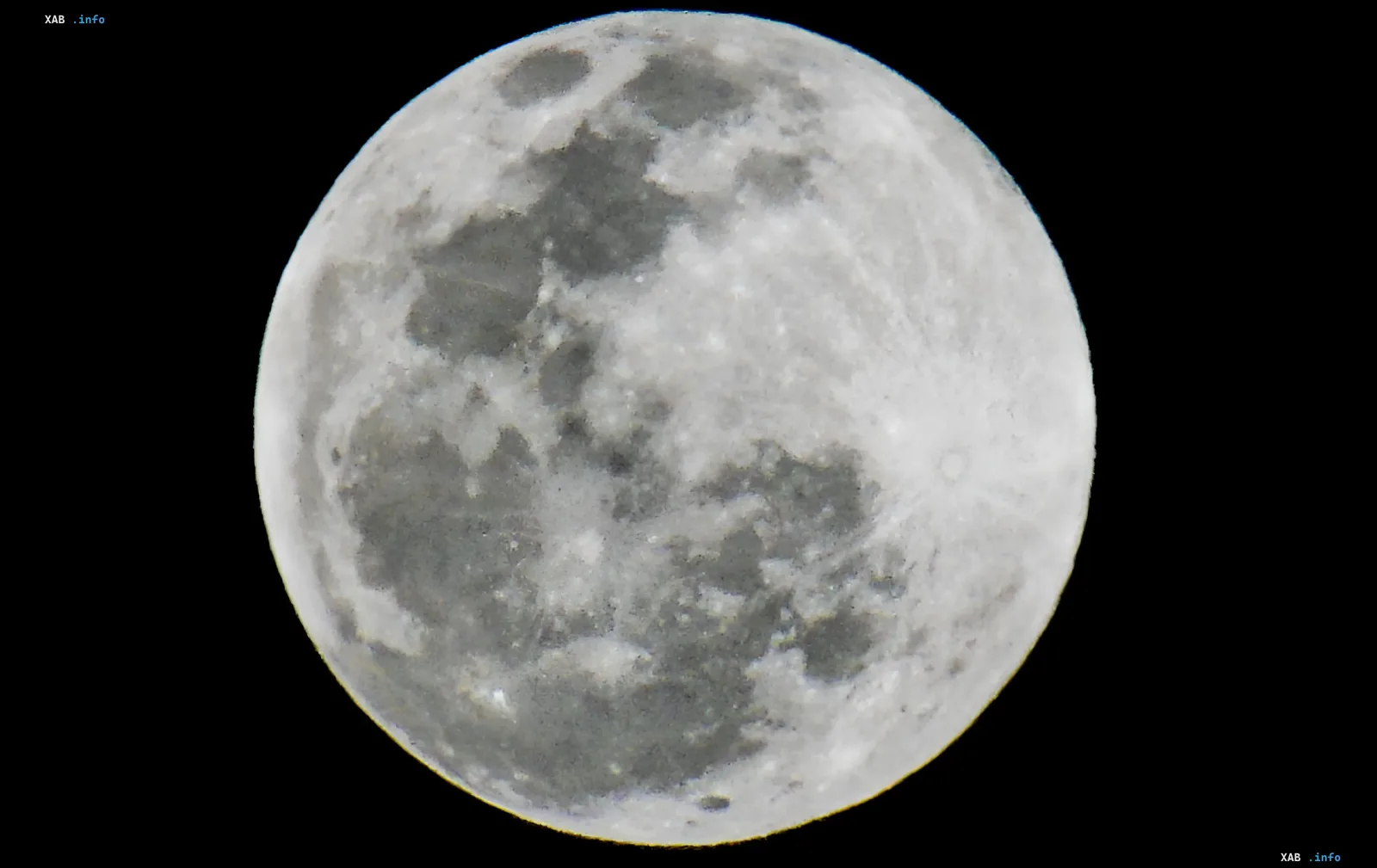
On Wednesday, August 5, a four-ton uncontrolled fragment of a spent SpaceX Falcon 9 rocket crashed onto the surface of the Moon. The incident, the result of a complex chain of gravitational interactions, led to the formation of a new crater on Earth's satellite, although it posed no threat to our planet.
Collision details
The object, comparable in size to a five-story building, was part of the Falcon 9 launch vehicle's second stage. This stage was launched in January 2025 to deliver two commercial landing modules to the Moon. Unlike standard missions, where spent stages burn up in Earth's atmosphere or fall into the ocean, in this case, the stage remained in orbit due to the need to provide additional thrust for the lunar mission.
According to NASA calculations, the collision occurred at a speed of about 8,690 kilometers per hour. An impact of such power should have created a crater approximately 18 meters wide and 4 meters deep, ejecting a significant amount of lunar dust and rocks into space.
Why did this happen?
Julianne Scheiman, Director of NASA Scientific Programs and Dragon Spacecraft at SpaceX, explained that the object's trajectory changed under the influence of solar activity and gravitational forces. The object, which had been in space since last year, gradually shifted until it found itself on a path to the Moon.
"This is a rare case where a spent rocket element does not burn up in the atmosphere but hits another celestial body," Scheiman noted. She also added that NASA and SpaceX are already discussing ways to prevent such situations in the future.
Contradictory data
There are discrepancies in the assessment of the scientific value of this event. On the one hand, NASA spokesperson Jimmy Russell stated that scientists plan to collect data on what happened to better understand artificial impacts and improve methods for tracking objects in space. On the other hand, Bill Gray, creator of astronomical software, noted that the event represents little scientific interest but highlights the general negligence regarding space debris disposal.
Visual confirmation
Professional astronomers and amateurs were unable to visually confirm the collision on Wednesday because the impact site was located close to the visible edge of the Moon. American and South Korean satellites will be deployed to photograph this area, although obtaining images may take several days.
Context and history
Although a lot of space debris has accumulated in near-Earth orbit, artificial impacts on the Moon are relatively rare. In the past, similar incidents occurred during the Space Race, and among recent cases — the fall of a Chinese rocket stage in March 2022 and the intentional collision of a NASA probe in 2009 to study the kicked-up dust.
Also, several landing modules crashed during landing attempts, including the Russian "Luna-25" mission in 2023, the Indian "Chandrayaan-2" and the Israeli "Beresheet" probe in 2019.
Results of the SpaceX 2025 mission
As for the SpaceX 2025 mission, one of the launched modules, the American Blue Ghost from Firefly Aerospace, successfully made a soft landing on the northeastern side of the Moon to analyze the soil. At the same time, the Japanese two-meter module from the company ispace with a small robotic rover crashed during the final descent.
Future of space technologies
Space technologies continue to develop actively. Nvidia is launching AI to the Moon — together with Lunar Outpost, the company is creating a system that will allow spacecraft to process data independently without delays and commands from Earth.
However, not all space plans go so smoothly — earlier, scientists discovered a critical problem with the spacesuits for the upcoming Mars mission: modern lunar spacesuits turned out to be unsuitable for work on the Red Planet.
Thus, the incident with the SpaceX rocket fragment became yet another reminder that space is not only a place for scientific achievements but also a zone where human activity can have unpredictable consequences.