In August 2026, the space industry is experiencing a fundamental paradigm shift: from the era of "launch and forget" to the age of active servicing of orbital assets. According to a new forecast by consulting firm Novaspace, the market for on-orbit satellite servicing (OOS) will generate total revenue of approximately $3 billion over the next 10 years. This is not just a figure, but a marker of the transition to a new model of the space economy, where spacecraft will not only be launched and replaced but will also receive technical support directly in space.
The economics of orbital servicing: refueling and life extension
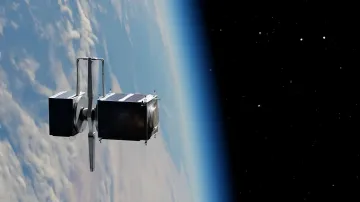
The structure of the emerging market demonstrates a clear hierarchy of needs. The largest segment, according to Novaspace calculations, will be satellite refueling. Revenue for this sector is forecast to reach $1.2 billion over the decade. The logic is simple: fuel is often the limiting factor for a satellite's lifespan, and the ability to replenish it radically changes the economic model for operating expensive spacecraft.
The second most significant direction will be satellite life extension services using attachable solutions, accounting for another $860 million. Together, these two areas will generate about $2.06 billion, which is more than two-thirds of the entire forecasted market. Demand is driven by the need to keep spacecraft operational for longer, increase the flexibility of their operation, and mitigate the consequences of increasing orbital congestion.
Military drivers and government investment
Despite the commercial potential, in the early stages, government and defense organizations will play a key role in shaping the market, as Novaspace expects. Military departments are increasingly viewing flexible management of space systems in light of the changing situation in orbit. In conditions where space is becoming a zone of strategic confrontation, satellite refueling is viewed as a way to increase their maneuverability and resilience to operational constraints and changes.
Government investment acts as a catalyst for technologies that can subsequently be adapted for the civilian sector. This allows for reducing risks for private investors and accelerating the maturation of technologies to a commercial stage.
From concepts to real operations
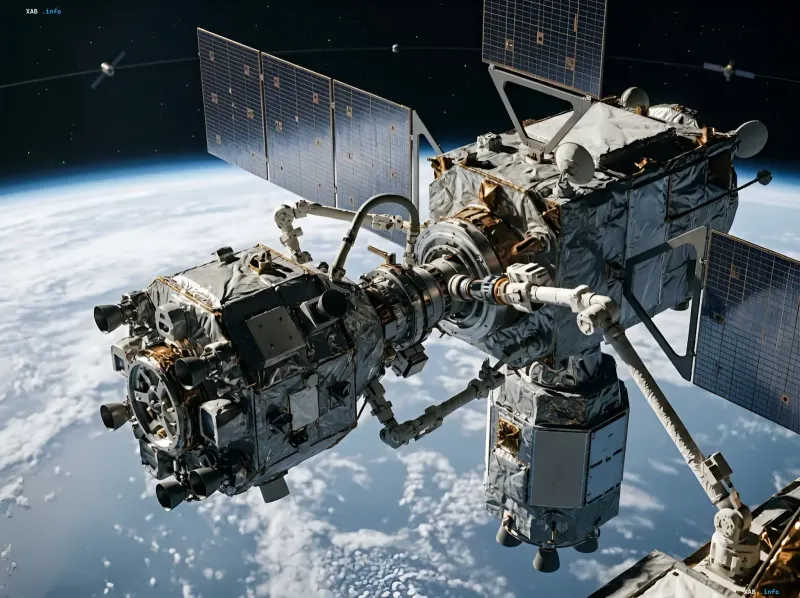
The market is currently at various stages of maturity: from theoretical concepts to the first commercial operations. Novaspace links its further development to the growth in the number of potential customers and the improvement of docking and manipulation technologies. The company notes that increasing object density in orbit, fierce competition, and uncertainty are forcing operators to find ways to make satellite systems more flexible and resilient. The forecast suggests that orbital servicing remains a relatively small market for now, but is already forming as a separate, critically important part of space infrastructure.