American company Star Catcher Industries is preparing for a unique orbital experiment that could radically transform near-Earth infrastructure. In October 2026, the experimental satellite Protostar is scheduled to launch from Vandenberg Space Force Base aboard a SpaceX Transporter-18 mission. The primary task of the spacecraft will be the first-ever wireless power transmission between two independently flying spacecraft directly in orbit.
The Essence and Stages of the Space Experiment
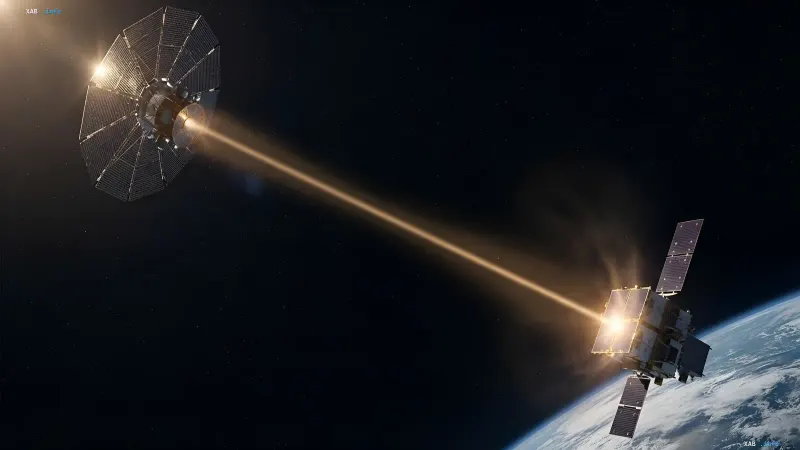
Upon successfully reaching its target orbit, the Protostar satellite will release a small cubesat equipped with standard solar panels. The main spacecraft will then autonomously locate the mini-satellite, track its movement, and direct a concentrated optical energy beam onto its solar elements. The engineering team will measure how much energy the cubesat receives and evaluate the overall efficiency of remote power transmission in open space conditions.
This mission aims to combine several advanced technological solutions that the company previously tested separately. For instance, ground-based optical power transfer demonstrations were conducted at NASA's Kennedy Space Center, and in late 2025 during the Sextant Alpha mission, the company successfully orbited and verified software for detecting and tracking other space objects.
Prospects for an Orbital Energy Network
The success of the Protostar mission will allow the company to demonstrate the viability of wirelessly powering unattached spacecraft. Looking ahead, Star Catcher aims to build a full-scale energy network in Earth's orbit. This will free current and future spacecraft from the strict limitations imposed by the capacity of their own solar arrays.
Potential consumers of this innovative orbital 'socket' include Earth observation satellites, military assets, and power-hungry orbital data centers and computing clusters. Commercial interest is already strong: the startup has raised $88 million in venture funding, signed ten future energy purchase agreements with players like Starcloud, Loft Orbital, Astro Digital, and Aethero, and secured a $60 million STRATFI contract from the U.S. Space Force.