SpaceX, Elon Musk's company, is considering a large-scale expansion of the Starlink Mobile project with the aim of turning it into a full-fledged 5G cellular carrier. The initiative involves building a global mobile network that operates primarily from space, which could potentially reshape the entire telecommunications market. This is reported by ixbt.com, citing industry estimates. However, even at the discussion stage, the plan has sparked heated debate and sharp skepticism from existing market players.
T-Mobile's position: "simply unthinkable"
The major US telecommunications operator T-Mobile has reacted to SpaceX's plans with extreme skepticism. T-Mobile's Chief Financial Officer Peter O'Connell stated that creating real competition between a space-based network and ordinary terrestrial base stations at the current stage is an extremely difficult task, both technically and economically. In his assessment, turning orbital infrastructure into a full-fledged mobile carrier is "simply unthinkable." Public comments, as relayed by industry publications, also cite more vivid examples: according to T-Mobile representatives, a satellite communication signal does not even pass through a car's windshield, which directly casts doubt on the scenario of using Starlink as an everyday mobile carrier in urban areas.
Physics vs. ambition: why space loses to cell towers
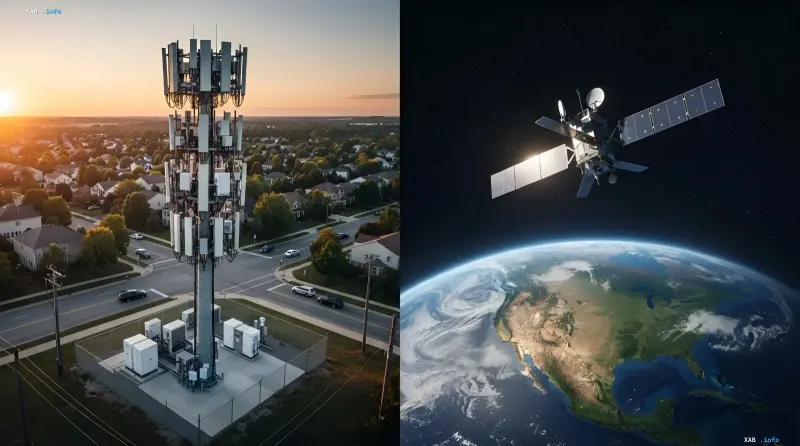
The core problem lies in the very nature of satellite communication. Starlink satellites are located hundreds of kilometers above the Earth's surface and are constantly moving along their orbits, which significantly complicates signal transmission and reception. The power of such orbital vehicles is considerably lower than that of terrestrial base stations, making it extremely difficult to ensure stable connectivity inside buildings, in underground parking garages, or in moving vehicles. That is precisely why, to date, satellite communication clearly lags behind traditional cellular networks in terms of quality and predictability.
An alternative path and its price
A second possible scenario for SpaceX is to purchase its own radio frequencies and build an independent terrestrial network. But such a path would require the company to make colossal investments, work for many years, and install millions of base stations across its entire coverage area. The idea of placing small stations on home antennas is assessed by experts as inefficient: it runs into the need to service billions of devices simultaneously and into serious radio-frequency interference that inevitably arises with such dense placement of transmitters.
Throughput as the bottleneck
A separate and, in the experts' view, one of the main problems remains throughput. While in sparsely populated areas a single satellite can serve hundreds of users, in major cities with millions of subscribers, distributing limited space-based resources poses serious difficulties. Peak loads in megacities, where the bulk of mobile users are concentrated, could turn the orbital network into an overloaded channel unable to deliver the promised level of service.
Contradictory data
Here there is a clear discrepancy in the assessments of the two sides. SpaceX, according to ixbt.com and a number of industry publications, is viewing the expansion of Starlink Mobile as a strategic step toward creating a global mobile carrier and, it seems, is counting on gradually overcoming technical limitations as orbital constellations and ground terminals develop. T-Mobile, by contrast, publicly calls this plan unrealistic and emphasizes that at the current technological level a space-based network is unable to compete with terrestrial base stations in either signal strength or throughput under conditions of dense urban development. Thus, one side sees in Starlink Mobile a future carrier, while the other sees a technically and economically unviable project; the final verdict will depend on whether SpaceX can close the gap in power, coverage, and throughput in the coming years.