Tightening of Regime: A "Wall" of Barbed Wire and Military
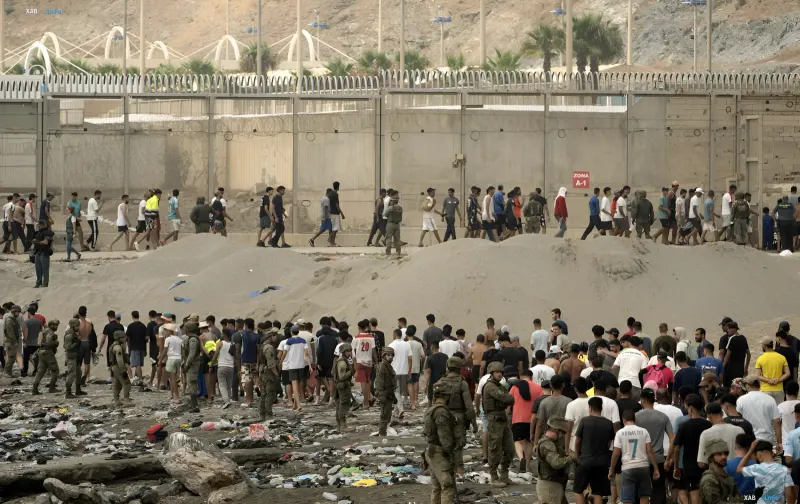
At the border between Morocco and the Spanish exclave of Ceuta, where an unprecedented migration crisis occurred at the end of July, there is an unprecedented strengthening of security measures. Authorities of both countries have mobilized resources to prevent a recurrence of events when tens of thousands of people stormed the exclave. In the border Moroccan city of Fnidek, where the movement of migrants usually begins, authorities have installed additional barbed wire barriers, and numerous checkpoints have been deployed on access roads.
On the coast, where migrants crossed the fence in July by diving into the water, patrol boats are now patrolling. Water cannons capable of repelling swimming attempts have been deployed at the border. The Spanish side has also significantly strengthened its contingent: there are currently 880 National Police officers in Ceuta, which is 270 more than at the end of July. They are supported by about 2,000 military personnel and 700 Civil Guard officers, creating a dense security cordon.
Social Media Calls and Operational Response of Authorities
The reason for such a harsh reaction was calls circulating on social networks urging a mass crossing of the demarcation line on August 15. Moroccan authorities reacted promptly: the Ministry of Interior of the country reported the arrest of a group of people suspected of inciting new attempts to illegally penetrate the Spanish enclaves of Ceuta and Melilla. The department assured that all necessary measures have been taken to prevent illegal movement.
Despite an active information campaign on the Internet, in the morning of August 15, a dpa reporter observed calm at the border crossing in Ceuta. This may indicate that strict control measures on the Moroccan side and increased patrols were able to prevent the gathering of crowds near the fence at the appointed time.
Lessons After the July Crisis: From 80,000 Migrants to New Barriers
The events of late July 2026 became a turning point in the region's migration policy. Then, up to 80,000 migrants stormed Ceuta, which became the largest crisis in recent years. In response, Madrid was forced to send significant military forces there to restore order. Spanish Interior Minister Fernando Grande-Marlaska subsequently stated that this was a one-off case that would not be repeated, however, the current situation proves the opposite: the threat remains relevant.
As a long-term solution, Madrid announced plans to build a 500-meter barrier on the maritime section of the border to physically block the possibility of swimming. Nevertheless, current measures are focused on containing the land threat and preventing the gathering of people near the border.
Contradictory Data
There are discrepancies in the estimates of the scale of the July invasion and the current situation. According to various estimates, up to 80,000 people stormed Ceuta at the end of July, however, exact figures remain a subject of discussion between official data and independent observers. Furthermore, despite government statements of "calm" on the morning of August 15, social media continues to circulate reports that migrants are trying to bypass checkpoints and find detours to the border, casting doubt on the full effectiveness of the measures taken.