Record range: strike on two plants in Yamal
On September 9, 2026, the Special Operations Forces (SSO) of the Armed Forces of Ukraine announced that units of the Deep Strike direction struck two major Russian gas-condensate industry facilities — the Novourengoy and Purovsky plants. Both sites are located in the Yamalo-Nenets Autonomous Okrug, RBC-Ukraine reports, citing the SSO. The agency emphasized that the operation was part of a series of long-range strikes on targets significant to Russia's ability to continue the war, describing it with the phrase "First time! A record strike for the entire duration of the war."
The targets: Purovsky and Novourengoy plants
The Yamalo-Nenets Autonomous Okrug is one of Russia's key oil and gas regions, where significant capacity for the extraction and processing of hydrocarbons is concentrated. According to the data cited in the statement, the Purovsky condensate preparation plant processed 13.4 million tonnes of gas condensate in 2025 and is an important link in Russia's gas-condensate sector. In the SSO's logic, strikes on such enterprises are aimed at the infrastructure that generates the budget revenues of the aggressor state and sustains its military potential.
Strategic context: strikes on the war economy
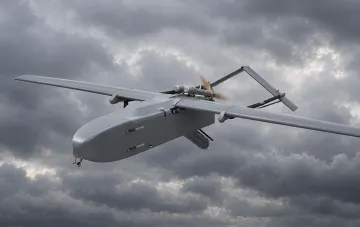
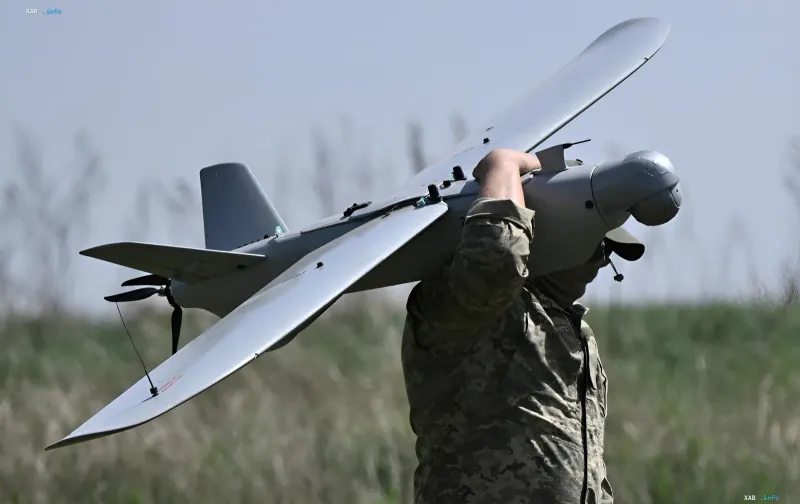
The SSO stressed that such attacks are viewed as part of a broader campaign of long-range strikes on targets critical to Russia's continuation of combat operations. Fire Point, for its part, stated that its FP-1 drones covered more than 3,200 km during the operation, setting, in its words, a new record for strike range. Thus, the declared distance substantially exceeds previously publicly confirmed results of similar operations.
Contradictory data
There is a discrepancy between the statements of the parties and sources regarding the exact range figure. In the SSO's wording and in the headlines of several Ukrainian outlets, the figure is "over 3,000 km," while drone manufacturer Fire Point cites "over 3,200 km." The difference of several hundred kilometers may be due to one side assessing the straight-line distance along the route and the other the actual flight trajectory, or to differences in measurement methodology. Moreover, all the data provided on the striking of targets and the record range comes from Ukrainian sources and the weapons manufacturer; independent confirmation of the scale of damage by Russian authorities or neutral observers is absent in the provided materials, so the exact extent of damage to the plants remains unverified.
Reactions and significance for the course of the conflict
The declared operation continues the line of SSO long-range strikes on Russian industrial infrastructure, which in recent months have reached distances of over 2,000 km against targets deep inside Russian territory. If the declared range of 3,000–3,200 km is confirmed, it will become a turning-point indicator for drone strike tactics and will expand the radius within which Ukrainian forces are able to hit strategic energy facilities. Until independent data is obtained, both sides of the conflict, as before, will rely on their own assessments of the scale and range of such operations.