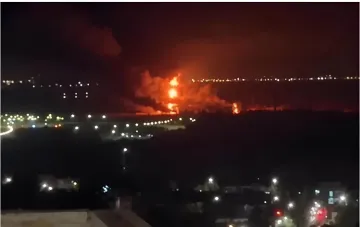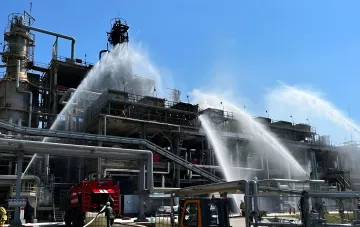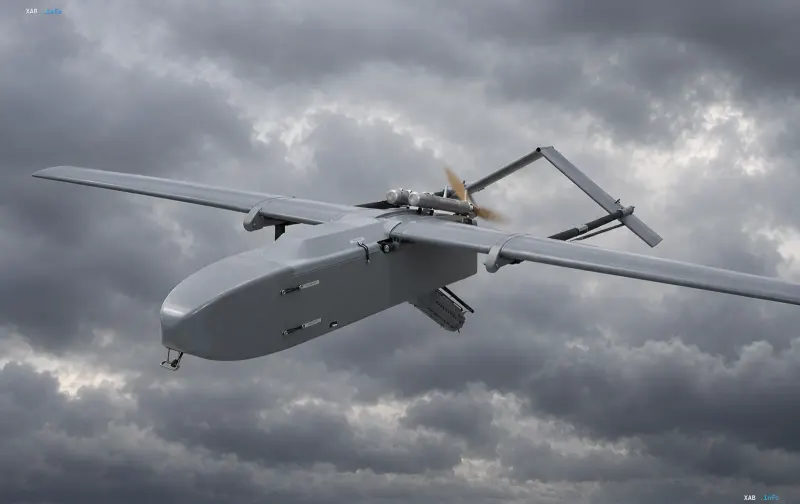
On the night of October 18, Ukrainian FP-1 unmanned aerial vehicles struck fuel infrastructure facilities in St. Petersburg and the VKontakte social network data center in the Leningrad Region. According to RBC-Ukraine, this was stated in the Telegram channel of Fire Point, the manufacturer of the drones in question. According to the company, the attacks were carried out at night and targeted multiple objectives across two regions.
Confirmation from the Drone Manufacturer
Fire Point reported that FP-1 drones were used for the nighttime strikes against facilities in St. Petersburg and the Leningrad Region. Among the targeted objectives, the company named the Ruchyi oil depot and the St. Petersburg Oil Terminal. The latter, according to the data provided, has a throughput capacity of 12.5 million tons of oil per year. Following the attack, fires broke out at both oil facilities, according to Fire Point's statement.
Attack on VKontakte Infrastructure
In addition to fuel infrastructure, Fire Point reported that serious damage was inflicted on the VKontakte social network data center located in the Leningrad Region. Users of the service began reporting a massive platform outage. Simultaneously, parts of St. Petersburg experienced power outages, which coincided with the reported strikes on targets in the region.
Context of the Massive Attack
The strikes on St. Petersburg and the Leningrad Region occurred as part of a broader wave of attacks: on the night of October 18, drones massively targeted objectives in Moscow, St. Petersburg, and the Leningrad Region. An oil loading port was likely hit. Due to the attacks, restrictions were introduced at three airports. Furthermore, a fire broke out at an Ozon marketplace warehouse near the city. Another potential target could have been the cable-stayed bridge across the Ship Fairway in St. Petersburg — it is located just 4.5 km from the St. Petersburg Oil Terminal, where a fire also broke out following the drone attack.
Assessment of the Significance of the Strikes
The strikes claimed by Fire Point affect both energy and digital infrastructure: the simultaneous targeting of an oil terminal with a capacity of 12.5 million tons per year and a major internet service data center indicates an expansion of the target list for nighttime operations. At the same time, all the provided details regarding the nature of the damage and the list of targeted objects currently stem from the drone manufacturer's statement and have not received independent confirmation from Russian authorities in the materials provided.