

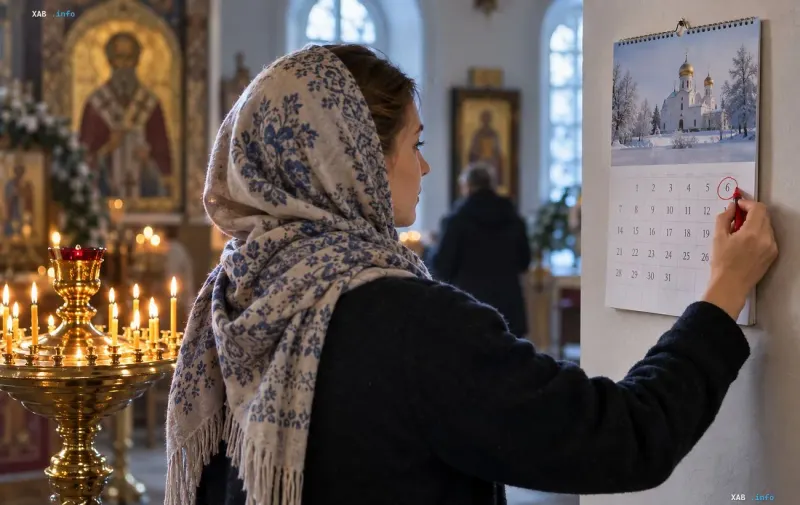
St. Nicholas Day is one of the most revered Christian holidays, reminding us of humanity, kindness, and mercy. In 2026, the faithful of Ukraine belonging to the Orthodox Church of Ukraine (OCU) will honor the memory of Saint Nicholas, Archbishop of Myra in Lycia and Wonderworker, on December 6 — and this date falls on a Sunday. For many parishioners accustomed to the "old" date of December 19, this shift may come as a surprise, but it is the result of a systematic calendrical decision made at the level of the entire Church back in 2023.
Historical context: two calendars on one territory
For centuries, various church calendars have been in use on the territory of Ukraine, and overall the Ukrainian Church has predominantly followed the Julian reckoning, which became one of the elements of the Russian church tradition. It was precisely according to the Julian ("old") style that St. Nicholas Day was traditionally celebrated on December 19. This day was a "fixed" (non-moving) holiday — that is, it had a fixed, stationary date in the calendar, unlike Easter and the movable holidays associated with it.
The transition to the revised Julian calendar: what changed
The key event was the transition of the Orthodox Church of Ukraine to the revised Julian calendar, which took effect on September 1, 2023. The revised Julian calendar, adopted by the majority of the Local Orthodox Churches of the world, is synchronized with the Gregorian (civil) calendar with regard to "fixed" holidays. As a result, all fixed dates shifted 13 days earlier. As reported by the OCU press service: "From now on we will honor Saint Nicholas on December 6, according to the revised Julian calendar, together with the majority of the Local Orthodox Churches." Today, the majority of church parishes in Ukraine use the revised Julian calendar.
December 6, 2026: date and practical information
In 2026, December 6 falls on a Sunday, which makes this day especially convenient for attending services: the faithful will be able to take part in the Sunday liturgy dedicated to the memory of Saint Nicholas. For planning church events, family traditions, and social initiatives associated with the holiday, it is important to take this date into account. It is also worth noting that in the Ukrainian tradition there is also the so-called "Summer Nicholas" — another commemoration of Saint Nicholas, which according to the revised Julian calendar is celebrated on May 9 (instead of the previous May 22 in the old style). Thus, in 2026 the faithful of the OCU will honor the memory of Nicholas the Wonderworker twice: on May 9 and December 6.
Contradictory data
The main fact — the date of December 6, 2026, according to the revised Julian calendar — is confirmed by the OCU press service and the church calendar and is not a subject of disagreement. However, there is a nuance: in the OCU's wording it is stated that the "majority" of parishes have transitioned to the new calendar, not the absolute majority. This means that individual communities, maintaining adherence to the Julian style, may continue to celebrate St. Nicholas Day on December 19. In addition, publications referring to the "old" date can still be found in open sources, which may mislead those who do not track calendrical changes. It is recommended to check the current calendar of a specific parish before planning a visit to the church.
The significance of the holiday in the modern context
St. Nicholas Day in the Ukrainian tradition is not only a church service, but also a day filled with social meaning: charity, care for those in need, family traditions. Saint Nicholas is venerated as the patron of travelers, sailors, children, and all who turn to him with a plea for justice and help. In 2026, when the holiday coincides with a Sunday, mass participation of the faithful in services across Ukraine is expected. For those who are taking the new calendar into account for the first time, it is important to remember: December 6 is not a "mistake" or a "postponement," but the standard date according to the current church calendar of the OCU, synchronized with the global Orthodox community.