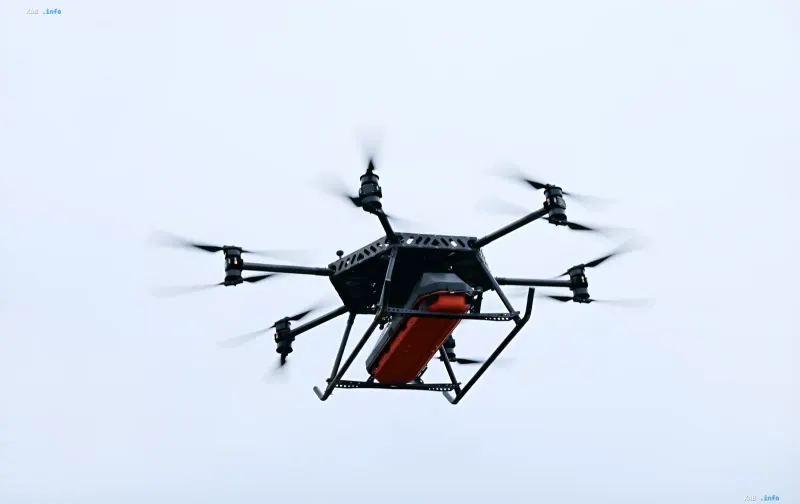
The Ukrainian military has conducted an aerial evacuation of a wounded soldier for the third time using the CASEVAC StarGate unmanned platform, developed by the defense-tech company SkyFall, RBC-Ukraine reported, citing the developer. The operation was carried out by fighters from the 475th Separate Assault Regiment CODE 9.2, who planned and executed the rescue of a soldier from an adjacent unit over several days. This time, the drone retrieved 54-year-old serviceman Andriy, call sign 'Donbas', who had remained on a combat position for nearly two months without the possibility of ground evacuation after stepping on a mine.
Why ground evacuation was impossible
According to SkyFall, the rescued soldier had been at the position since late May 2026. On September 2, while carrying out a combat mission, he triggered a landmine. Difficult terrain, minefields, systematic shelling, and regular attacks by Russian FPV drones made it impossible to extract the wounded man by ground transport. The position from which Andriy was evacuated was located two kilometers from the state border with Russia — in a zone where any movement on the ground posed a critical risk to both the wounded man and the accompanying team.
Operation characteristics and the StarGate platform
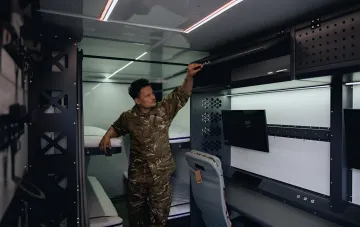
The StarGate unmanned platform traveled more than 15 kilometers one way to retrieve the wounded soldier from the position. After being delivered to a safe zone, Andriy was handed over to a medical facility where he is undergoing treatment. According to specifications provided by SkyFall, StarGate is capable of carrying up to 150 kilograms of payload and reaching speeds of up to 105 km/h. The evacuation module is built on certified medical stretcher standards, allowing the wounded person to be secured in accordance with medical transportation requirements.
Technological equipment: AI, navigation, and communication redundancy
The platform is equipped with artificial intelligence systems, navigation, and communication redundancy. According to the developer's statements, this allows the drone to continue its mission even under conditions of GPS signal suppression or partial loss of the communication channel with the operator. For SkyFall, this is a key requirement set by the military when forming the technical specifications: in an active combat zone and electronic warfare environment, standard navigation systems may be unavailable, and the platform must maintain decision-making autonomy.
Third evacuation in a week and a half: scale of application grows
The operation involving Andriy became the third successful aerial evacuation using StarGate. In total, within a week and a half, the drone has helped save three severely wounded servicemen. SkyFall, together with the CODE 9.2 unit, continues to refine the technology and is working on its broader application within the army structure. The company announced plans to facilitate the platform's introduction in other units to provide a way to rescue the wounded in situations where ground evacuation is objectively impossible. StarGate is being developed upon the direct request of the military as a specialized aerial battlefield evacuation platform (CASEVAC).
Context: From first evacuation to serial application
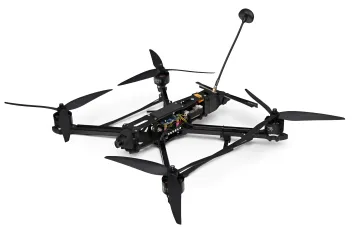
Earlier, XAB.info reported on two previous complex evacuations using StarGate, carried out five kilometers from the Russian border. At that time, SkyFall presented the platform as the first of its kind aerial CASEVAC system created for the conditions of the Ukrainian front. Simultaneously, the developer demonstrates the versatility of its solutions: in particular, the 'Vampire' drone from SkyFall was used to deliver food to civilians in temporarily occupied Oleshky. Thus, the company is forming a lineup of unmanned platforms covering both combat and humanitarian tasks.