Ukrainian forces have carried out their sixth successful aerial evacuation of a severely wounded soldier using the specialized StarGate drone. Published footage, cited by RBC-Ukraine with reference to accounts from operation participants, shows a Ukrainian soldier very carefully, meter by meter, pulling his wounded comrade toward the evacuation craft to deliver him by air to a stable medical facility. The operation has become further proof that unmanned evacuation systems are becoming a critical component of tactical medicine on the front line.
Who was evacuated and how
The evacuated soldier is Serhiy, a member of the 475th Separate Assault Regiment with the call sign CODE 9.2. He sustained severe leg and arm injuries as a result of a strike from an enemy FPV drone. After sustaining these injuries, he was completely immobilized and unable to move on his own. The rescue operation was carried out by members of the same 475th Assault Regiment. Following the aerial evacuation, Serhiy was delivered to a medical facility where he is currently undergoing treatment.
Why the ground route was closed
The key reason for using aerial evacuation was the impossibility of transporting the wounded soldier via ground transport. According to the military, several factors combined in the area where the soldier was located: complex terrain, the presence of minefields, active shelling, and systematic attacks by Russian troops. Under such conditions, any attempt at ground evacuation would have turned into a deadly operation for the support team. The StarGate drone allowed this risk factor to be completely eliminated by air-lifting the wounded man out of the impact zone.
Technical characteristics of the StarGate
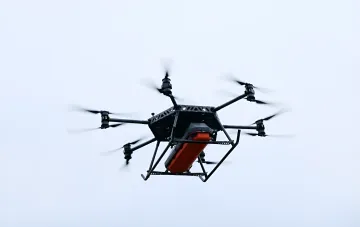
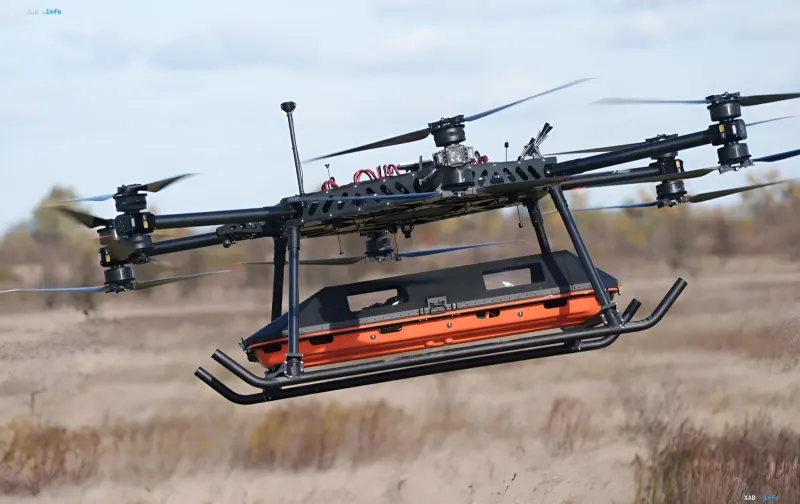
The StarGate drone was developed by the Ukrainian defense company SkyFall specifically for evacuating wounded personnel from positions unreachable by ground transport. The aircraft is capable of carrying a payload of up to 150 kilograms and reaching speeds of up to 105 kilometers per hour. The evacuation module containing the wounded person is based on certified medical stretchers, ensuring necessary fixation and protection during flight. Key technological features include onboard AI systems, navigation, and redundant communication, which allow the drone to continue its flight even in conditions of GPS jamming and loss of radio contact with the operator.
The sixth case and growing practice
The current operation marks the sixth documented evacuation of a wounded soldier using the StarGate. There were previous reports of the drone being used to rescue military personnel at distances of over 15 kilometers in high-risk zones, as well as two complex evacuations conducted five kilometers from the border with the Russian Federation. The growing statistics of successful operations indicate that the StarGate is moving from an experimental solution to a standard tactical evacuation tool, without which, on the modern battlefield, the loss of a soldier due to the inability to provide timely medical aid would be an unacceptable risk.
Significance for tactical medicine
The systematic use of the StarGate is changing the paradigm of casualty evacuation on the front line. Previously, a soldier who sustained severe wounds in conditions excluding ground access faced either long wait times under fire or forced evacuation via roundabout routes that multiplied the time until medical care could be received; now, an aerial route reduces this interval to a minimum. For SkyFall and the Ukrainian military, this is confirmation that investment in specialized unmanned platforms delivers measurable results in the form of saved lives.