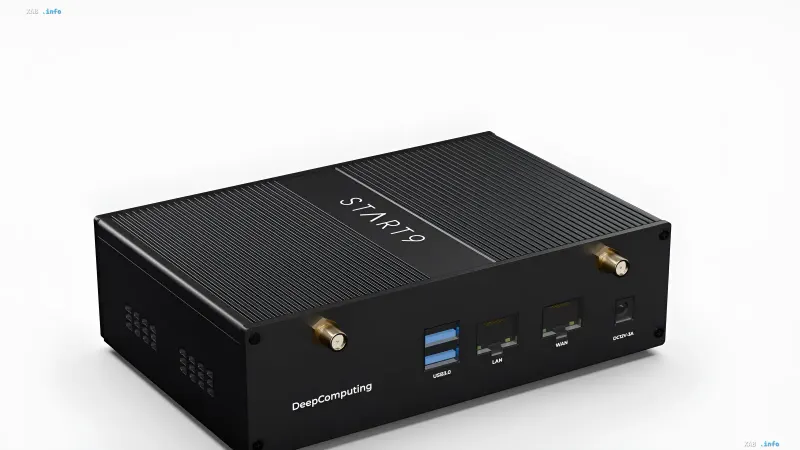
Start9, known for developing open-source hardware and software, has officially introduced its first router built on the RISC-V processor architecture. Created in partnership with DeepComputing, the device is designed to be an affordable tool for enthusiasts and professionals who value hardware and software transparency. The device casing features the logos of both partners — START9 and DeepComputing — emphasizing the collaborative nature of the project.
Open Architecture and OpenWrt-Based Firmware
At the core of the router is the K1 chip, implementing the RISC-V instruction set, while the operating system is the StartWRT distribution built on OpenWrt. This combination means the user gains access to open firmware with the ability to configure it independently, install additional packages, and audit the code. For an audience accustomed to proprietary solutions, this is a fundamental shift: the router ceases to be a "black box" and turns into a tool that can be managed at the system settings level.
Hardware Components and Interfaces
The router is equipped with 4GB of LPDDR4 RAM and 16GB of internal eMMC storage. Wireless connectivity is provided by a built-in AX3000 miniPCIe network card, complying with the modern Wi-Fi 6/6E standard. Externally, there is a microSD card slot, a USB-C power port with 36W PD support, two USB-A ports running at 5 Gbps, and two gigabit RJ-45 ports (LAN and WAN). The rear panel also features two connectors for external antennas, typical for devices with an expandable wireless subsystem.
Price and Package Contents
The device is priced at 300 dollars. The router comes bundled with a 4-port TP-Link switch, effectively expanding the number of network ports without requiring a separate purchase. For the open-source hardware segment, this bundle makes the product much more practical for home and small office use.
Why RISC-V: Industrial Context
The choice of RISC-V is no coincidence: the architecture is fully open and managed by the non-profit organization RISC-V International, which includes over 1,000 members across 50 countries, making it a geopolitically neutral alternative to closed x86 and ARM architectures. At the government level, RISC-V development is actively supported in China, and major manufacturers are already bringing the architecture to commercial products — for instance, Samsung uses RISC-V in its BM9K1 SSD controllers, and Western Digital uses SweRV cores in its drives. The Start9 router continues this trend, bringing open architecture into the consumer networking hardware segment.
Thus, the Start9/DeepComputing release is not just a new router, but a demonstration of the maturity of the RISC-V ecosystem: from microcontrollers and SSD controllers to full-featured networking devices with open firmware. At a price of 300 dollars and with the included TP-Link switch, the device looks like a competitive offering for those who value openness and control.