The Ukrainian business community and representatives of the mining industry are actively discussing the initiative to introduce export duties on raw materials. The Golovinsky Trading House, which specializes in the extraction of construction and decorative stone, has officially supported the introduction of state duties on the export of unprocessed products. According to company director Oleksandr Semak, speaking at the United by Mining industry conference, this measure will not stop supplies abroad, but will allow a fairer valuation of domestic natural resources on the global market.
Raw Material Base Potential and Pricing
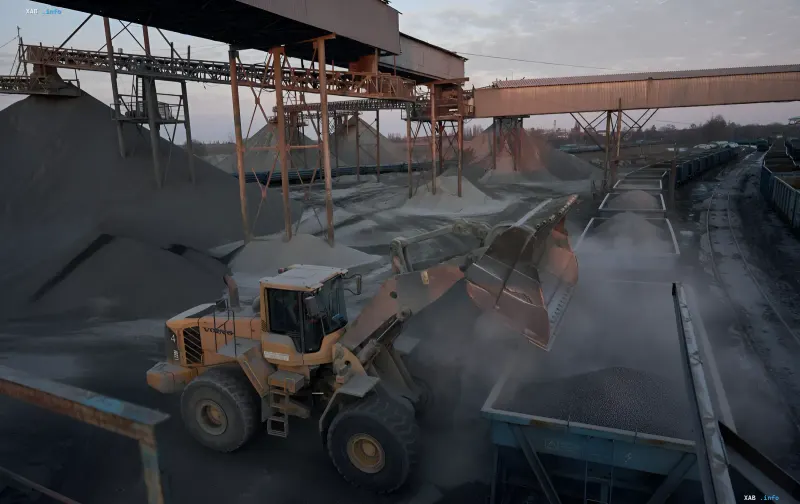
Ukraine has colossal reserves of construction and decorative stone, the main deposits of which are traditionally concentrated in the Zhytomyr region. However, the export structure has long remained disadvantageous for the state: raw materials were sold at minimal prices. The management of Golovinsky TH emphasizes that Ukrainian stone is in no way inferior in potential to premium global analogues and should cost comparably to well-known Italian marble rather than being sold for next to nothing.
Issues of Domestic Processing
The development of deep stone processing inside the country runs into a number of serious infrastructural and organizational barriers. Building a modern stone-processing plant requires solving complex tasks, including connecting to power grids, allocating land for production waste, and attracting qualified personnel. Ksenia Oryshchak, Executive Director of the National Association of the Extractive Industry, previously noted a paradoxical situation: unique Ukrainian labradorite is exported abroad, in particular to China, for subsequent processing there.
Legislative Initiatives and Budget Impact
The issue of export regulation has already moved into the practical plane of lawmaking. Recall that in June of this year, the Ukrainian parliament adopted in the first reading a bill providing for the introduction of a duty on the export of construction and decorative stone in the amount of 0.3 euros per kilogram for a period of 10 years. Daniil Hetmantsev, Chairman of the Parliamentary Committee on Finance, Tax and Customs Policy, estimated the potential fiscal effect of this initiative at over 460 million hryvnias annually.