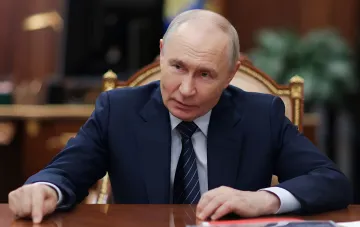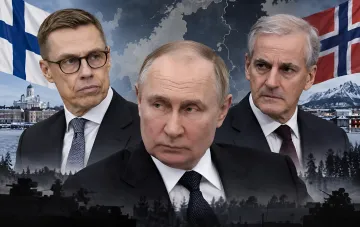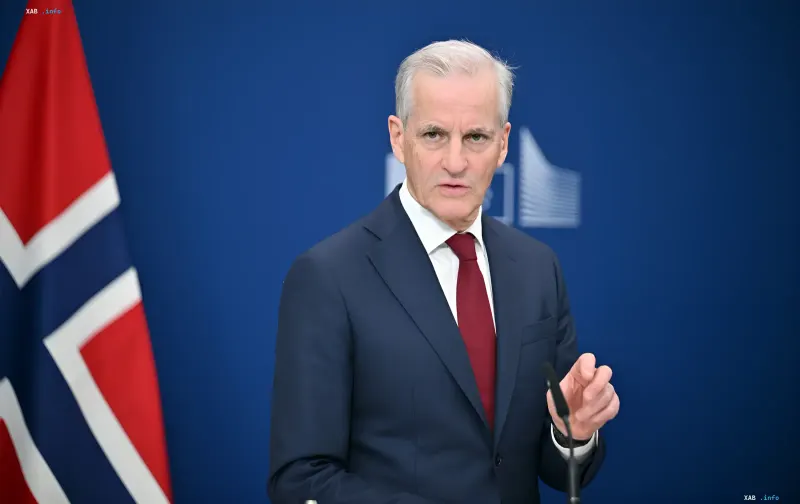
On October 28, Norwegian Prime Minister Jonas Gahr Støre once again publicly defended his telephone conversation with Russian President Vladimir Putin, which took place the previous day, October 27, alongside Finnish President Alexander Stubb. According to Norwegian and international observers, such direct contact with the Kremlin leader goes beyond the practice of Western European leaders, who in recent years have generally avoided direct negotiations with Putin, sparking criticism from several NATO allies. In response, Støre delivered a detailed explanation on Wednesday of the call's purpose and listed concrete steps that, in his view, could bring an end to the war closer.
«Focused on the Future»
Addressing critics, the Norwegian Prime Minister emphasized that together with Stubb, he focused on a practical question—what needs to be done to prevent the conflict from dragging on indefinitely and causing further casualties. «Stubb and I focused on the future—on what must happen so that this war does not continue endlessly for months, so people do not die, and so finding a solution does not become even more difficult,» Støre stated. At the same time, he explicitly acknowledged that he does not expect Putin's position to change after a single conversation, but considers it important for the Russian leader to hear the position of European countries, not just the US: «I do not think Putin will change his mind, but he hears our position very clearly. I am concerned that some of these messages do not reach him when Americans talk to him.»
Concrete Steps Toward De-escalation
Among the possible measures capable of reducing tension and the intensity of combat operations, Støre named halting attacks on energy infrastructure in both Russia and Ukraine, ceasing strikes on ships exporting Ukrainian grain, and prisoner-of-war exchanges. These proposals were voiced ahead of expected talks between Ukrainian and Russian officials in Abu Dhabi in November, giving the call the character of a preparatory diplomatic step.
The Territorial Issue and the «Red Line»
Answering questions about the fate of Ukrainian territories in the context of a potential settlement, the Prime Minister noted that Russia currently controls about 20% of Ukraine's territory. He outlined Kyiv's principled position: Ukraine will not sign an agreement legally recognizing the loss of its lands. At the same time, Støre suggests that the current frontline could be viewed as a starting point for negotiations, even without formal recognition of the occupied territories: «Ukraine will never sign an agreement recognizing that it has lost territories, but whether it can perceive the current frontline as a reality and as a starting point is another question.»
Security Guarantees as a Key Issue
Separately, the Norwegian Prime Minister named security guarantees for Ukraine following a peace agreement as the main condition for lasting peace, noting that the future of the settlement will largely depend on their scope and nature: «And the main question is what security guarantees can be provided to Ukraine after a peace agreement is concluded? Putin acknowledges that this is the main question.» According to reports, following the phone call with Stubb and Støre, Ukrainian President Volodymyr Zelenskyy stated that the European leaders conveyed to Putin the necessity of real steps for de-escalation.