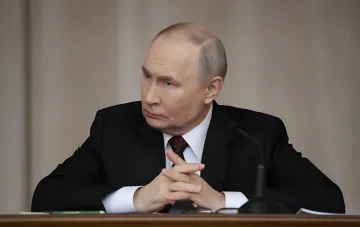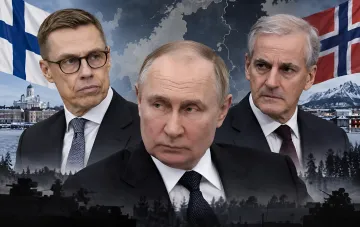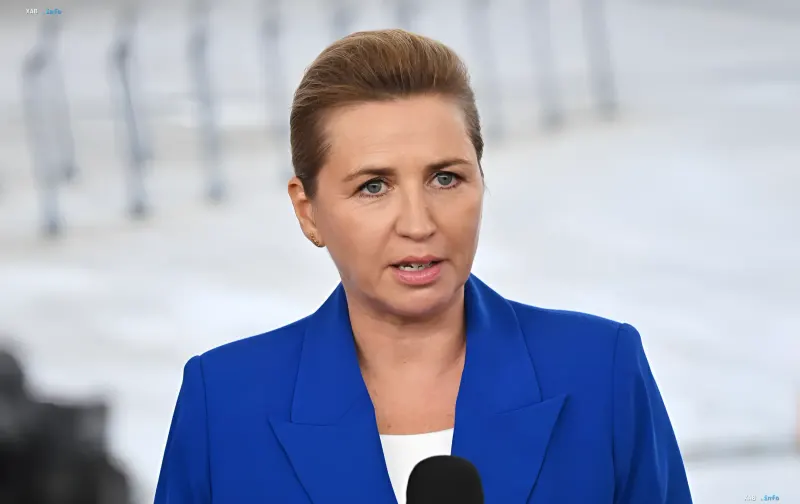
The telephone conversation between Finnish President Alexander Stubb and Norwegian Prime Minister Jonas Gahr Støre with Vladimir Putin, which took place on October 27, 2026, has sparked a public dispute among European leaders. Danish Prime Minister Mette Frederiksen was the first to express a sharp reaction, stating that she sees 'no signs that Russia is striving for peace with Europe' and emphasizing that the initiative from Helsinki and Oslo was not coordinated with other European partners. The Danish prime minister's statement came against the backdrop of her visit to Finland, where foreign ministers of the Nordic countries are meeting on October 27–28.
'Europe Must Maintain Unity'
In a comment to Danish media, cited by The Guardian and the public broadcaster DR, Frederiksen described her stance on the negotiations as 'very skeptical.' According to her, Russia continues its hybrid war daily and commits 'brutal and aggressive attacks' in Ukraine, which, in the Danish prime minister's view, precludes the prerequisites for a peaceful dialogue. 'I believe we need to maintain European unity rather than acting alone,' she stated, effectively accusing Helsinki and Oslo of unilateral actions.
The Position of Oslo and Helsinki
Norwegian Prime Minister Jonas Gahr Støre, in turn, reported that the conversation with Putin took place in the morning and lasted about 90 minutes. He emphasized that allied countries and partners were notified of the call in advance, and the purpose of the contact was to convey Ukraine's position regarding upcoming peace talks planned in Abu Dhabi. Støre called for de-escalation of the conflict and noted that his approach coincides with Stubb's position and the so-called 'Coalition of the Willing.' Earlier, Stubb clarified that the leaders of Finland and Norway called Putin on behalf of their own countries, not the entire European Union. Following the conversation with the Russian leader, the European politicians contacted Volodymyr Zelenskyy and informed him of the results.
Context: Preparation for Talks in Abu Dhabi
According to the Norwegian prime minister's assessment, Moscow is thoroughly preparing for the upcoming trilateral talks in Abu Dhabi. Thus, the telephone contact on October 27 became part of broader diplomatic activity aimed at preparing a potential peace track. However, as Copenhagen's reaction shows, divergence remains within Europe regarding whether it is permissible to conduct such contacts without a unified coordinated mandate, and it is precisely this issue that has now been brought to the public level.