
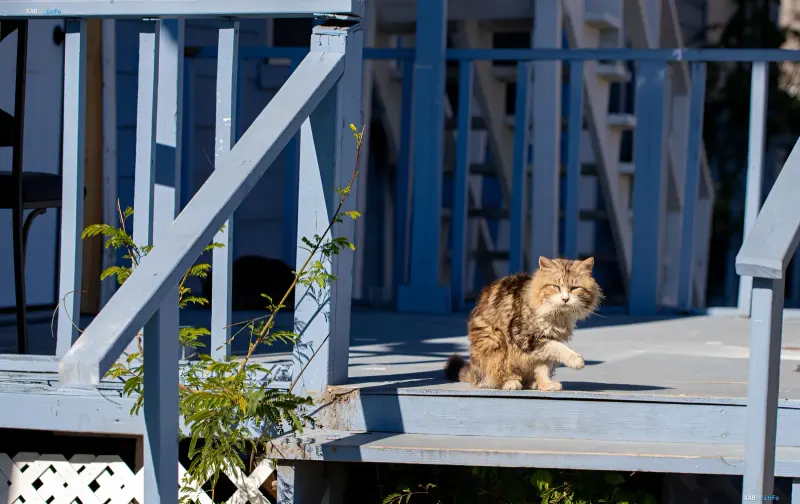
A stray cat suddenly appearing near your home can cause genuine surprise, especially if the animal shows no hurry to leave and behaves as if it has lived there for a long time. In folk traditions, cats were attributed with a special sensitivity to the energy of a place, so their appearance at the threshold was often perceived as a sign of impending changes. The entertainment project Styler (RBC-Ukraine) in a recent publication analyzes what exactly the visit of an unfamiliar cat portends and why our ancestors treated such "guests" with special attention.
The threshold as a boundary between worlds
In folk beliefs, the threshold of a house was considered not just an architectural element, but a kind of boundary between the inner world of the dwelling and the outer space. This is why an animal sitting for a long time at the entrance could be perceived as a harbinger of news or unexpected guests. If the cat behaves calmly, does not run away, and allows itself to be petted, this was traditionally considered a good omen: pleasant changes, a significant meeting, or long-awaited news could lie ahead.
Cat behavior and its interpretation
The situation is even more interesting when a stray cat not only runs into the yard but returns again and again. According to folk beliefs, such behavior meant that the animal had "chosen" a specific house. It was considered a particularly favorable omen if the cat asked to come inside on its own. There was a persistent belief: if an animal came on its own and stayed, it should not be driven away — such a guest supposedly brings peace, protection, and good changes for the residents. The unexpected presence of a cat inside the house was perceived as an even stronger symbol, portending changes in the owners' lives.
Color and regional differences
In folk beliefs, even the color of the animal could be significant. A white cat was associated with peace, good news, and positive changes. A calico cat was traditionally considered a particularly lucky messenger of fortune. As for black cats, there were completely opposite views in different cultures: in some places, their appearance near the house was interpreted as a harbinger of trouble, while in other traditions, conversely, it was considered a good omen. There is also a less well-known omen: if a stray or unfamiliar cat suddenly attaches itself to a lonely person, this could be interpreted as a sign of a future acquaintance or the appearance of a new important connection.
Contradictory data
It is important to note that in different regions and sources, the meaning of the omen differs significantly. On the one hand, Styler (RBC-Ukraine) and a number of other publications emphasize that there is no universal "correct" interpretation: in some places, a stray cat was perceived as a sign of luck, while in others, simply as an animal that felt a safe place and came to warm up. On the other hand, the publication pravda.ru offers a much more alarming interpretation, claiming that a stray cat comes to a house only when the dwelling "needs an urgent amulet," linking the visit with potential danger. The publication glavred.info, in turn, offers a mixed scenario — from money and success to possible danger. Thus, there is no single folkloric canon on this issue, and the reader should take into account the regional and cultural specifics of each interpretation.
Earthly explanation
Despite the rich mythology, there is a quite prosaic explanation for the appearance of a stray cat near a house: cats often choose places for themselves where it is warm, calm, and where they can be fed. Therefore, if an unfamiliar animal lingers at your threshold, it is not necessary to look for a mystical meaning in this — perhaps it simply found a place where it feels good. Folk omens remain an interesting element of cultural heritage, but decisions should be made based on them with a healthy dose of skepticism.