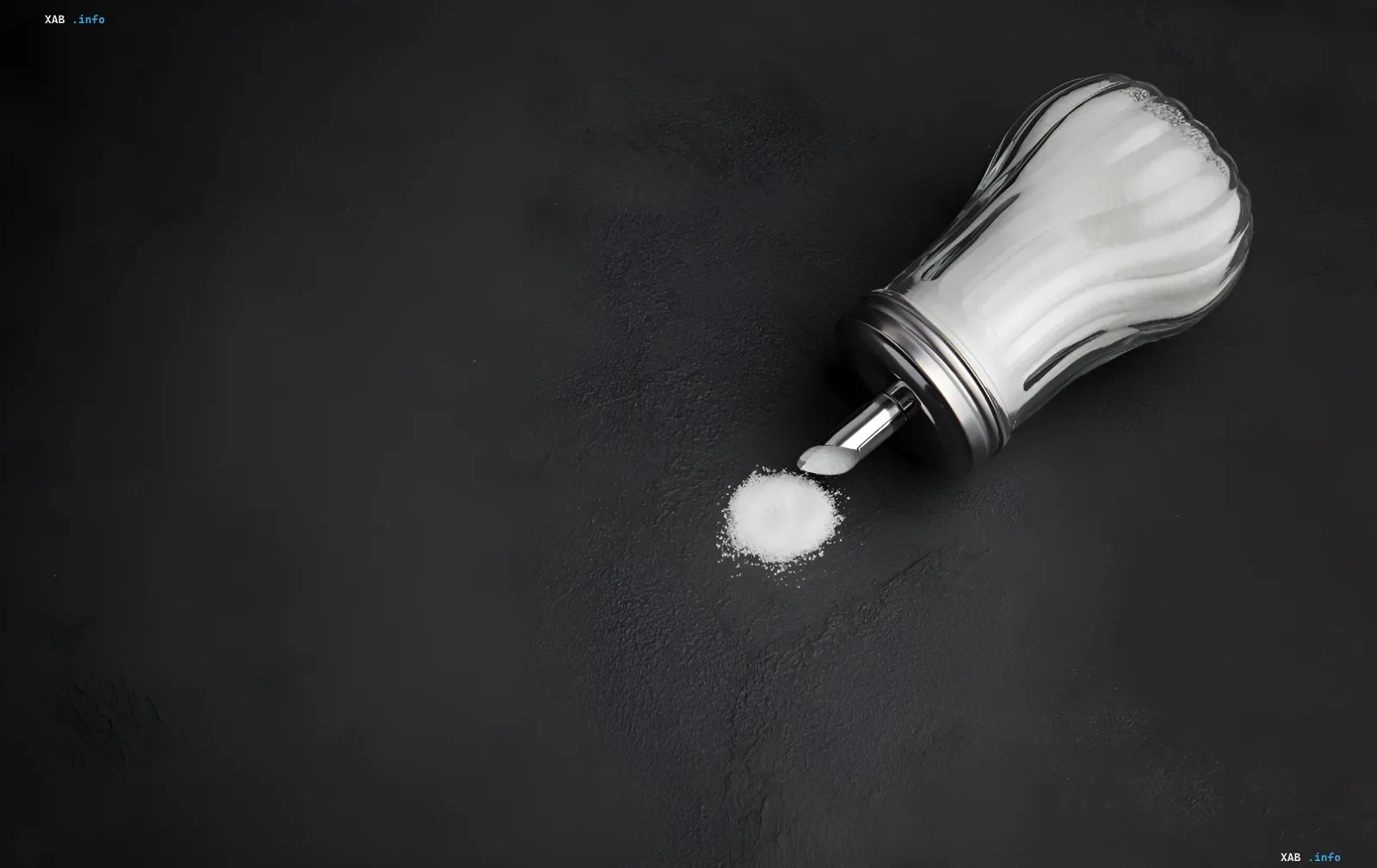
Did salt accidentally spill onto the table during dinner or in the kitchen while you were cooking lunch? Before you involuntarily start to feel nervous and hurriedly sweep the crystals into the trash, it is worth recalling one of the most enduring folk superstitions that has taken root in the everyday life of the Russian-speaking world over the course of centuries. According to the belief, you must draw a small cross with your finger over the spilled salt — and it is precisely this gesture, in the view of our ancestors, that can "cancel out" the ill omen of what happened. The XAB.info editorial team has looked into where this tradition came from, what symbolism it carries, and why salt once commanded far more careful attention than it does today.
Salt as a symbol: why spilling it was considered a bad sign
In folk beliefs, salt occupied a special, almost sacred place. It was used not only in cooking but also in various rituals — from christenings to wedding ceremonies — so this product was treated with deep respect. Spilling salt, especially during a feast, was considered a harbinger of a quarrel, a conflict, or other trouble in the family. The more public and solemn the moment, the more seriously the "sign" was taken: salt spilled on a festive table could, by belief, turn into a serious rift between the guests or the hosts. It was precisely this symbolic weight that turned an everyday slip into a reason for a ritual act.
A cross over the salt: a protective gesture with a canceling meaning
That is why, over time, a method emerged in folk practice that was meant to symbolically "cancel out" the negative meaning of the superstition. If salt spilled, a small cross was drawn over it with a finger. According to folk beliefs, this gesture was supposed to help ward off a possible quarrel or other misfortune. In this context, the cross was perceived above all as a protective symbol, and the gesture itself — as a kind of crossing-out of the bad omen, a "closing" of the ill sign that had not yet come to pass. It is important to stress: this is a symbolic, ritual act, not some magical mechanism capable of influencing real events.
Alternative ways of "neutralizing" the superstition
A cross over the salt is far from the only option offered by folk tradition. Spilled salt could be carefully gathered into the palm and carried out of the house, symbolically "taking away" the misfortune associated with it. Another common method was to smile three times after the salt fell onto the table or the floor. All these actions shared one goal: not to give the bad omen any power, not to "spiral" into negativity, and to show that the person is not afraid of what happened. In this sense, the superstition and its "neutralization" worked as a single ritual complex: first the "disrupted order" was acknowledged, and then it was restored.
The practical roots of the superstition: salt as a scarce resource
To understand why salt in particular became the object of such enduring prejudices, it is enough to look into the economy of the past. In earlier centuries, salt was a far more valuable and scarce product than it is today. It was not easy to extract from salt lakes or seas, to transport, or to buy. Spilling salt meant literally losing part of the family's stores, and in conditions where salt was kept in reserve and rationed over months, such a "loss" could be significant. That is why an entire layer of prejudices and taboos gradually formed around salt, and the custom of drawing a cross over spilled salt became one of the ways people tried to "neutralize" an unwelcome sign and psychologically cope with the feeling of a lost value.
Contradictory evidence
Although most sources agree that spilled salt is interpreted as a bad omen, in regional and historical tradition salt simultaneously figures as a protective means. Thus, in Soviet everyday life, according to a number of ethnographic reviews, salt was sprinkled under the bed or in the corners of a room to ward off evil spirits — that is, the very same salt whose spilling was considered a misfortune served as a talisman in another context. This duality is not a direct contradiction: it reflects the ambiguity of a symbol that in some rituals carries a negative charge (loss, disruption of order) and in others a positive one (protection, purification). Nevertheless, for a reader accustomed to the straightforward reading "you spilled it — trouble," such a spread of practices may look like an inconsistency, and the XAB.info editorial team considers it important to note this.
Of course, there is no scientific evidence that a cross drawn over salt can actually influence future events. Today this tradition is above all an interesting folk practice, reminding us of how important a place salt once occupied in the everyday life, economy, and symbolic system of our ancestors. And if salt does spill, you can simply gather it up calmly and attribute no mystical meaning to what happened — which, in essence, is the most modern way to "neutralize" the superstition.