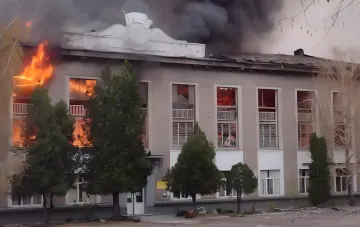
On the night of November 8, 2026, a Russian unmanned aerial vehicle struck a critical infrastructure facility in the Kharkiv region. According to Zlatopil Mayor Mykola Baksheev, as a result of the Geran-4 (or Shahed) drone impact, about 250,000 subscribers in the Kharkiv region were cut off from electricity, and other critical facilities were also damaged. Energy workers have begun repairing the damage, though exact timelines for restoring power supply were not reported at the time of publication.
Nature of the Attack and Drone Type
Zlatopil Mayor Mykola Baksheev, making an official statement, indicated that an enemy Geran-4 (or Shahed) drone struck the critical infrastructure facility. These unmanned aerial vehicles, manufactured in Iran and supplied to Russia, are the primary tool for nighttime strikes against Ukraine's energy infrastructure. The attack was carried out at night, which is characteristic of the deployment tactics for this class of UAVs, allowing them to minimize the effectiveness of air defense systems and complicate target localization.
Scale of the Power Outage
According to Baksheev, the strike left about 250,000 subscribers in the Kharkiv region without electricity. In addition to residential buildings, other critical facilities were left without power, posing a direct threat to the operation of medical institutions, water supply systems, and communications in the affected areas. The exact list of damaged facilities and settlements in the outage zone was not disclosed at the time of publication.
Repair Works and Power Restoration Timelines
Emergency power crews began eliminating the consequences of the strike immediately after the damage was discovered. As Baksheev noted, the exact time for restoring power supply was not known at the time of his statement. Typically, restoration after such strikes takes from several hours to a day depending on the nature of equipment damage and the volume of necessary repair work. Priority is given to supplying electricity to life-support facilities—hospitals, boiler houses, and pumping stations.
Broader Context: Systematic Attacks on the Energy System
The strike on the Kharkiv region was part of Russia's ongoing campaign to destroy Ukraine's energy infrastructure. As RBC-Ukraine recalls, simultaneously with the attack on the Kharkiv region, over 600,000 consumers in five districts of the Dnipropetrovsk region were also left without electricity due to strikes on the power system. Hospitals and critical infrastructure facilities in these districts have been switched to generator power. The combined scale of outages on the night of November 8, 2026, thus affects at least 850,000 subscribers across two regions simultaneously.
Impact on Public Life Support
Massive power outages during the autumn-winter period create additional strains on the healthcare system and municipal services. Switching hospitals to generator power is standard procedure, but with prolonged outages, the risk of overloading backup systems increases. Local authorities recommend that residents stock up on chargers, light sources, and, where possible, portable heaters until power supply is fully restored.