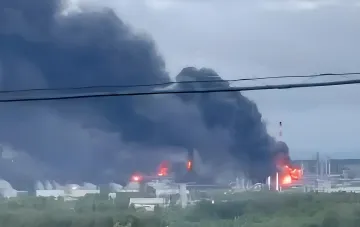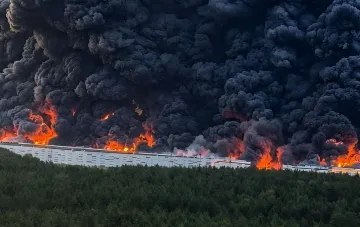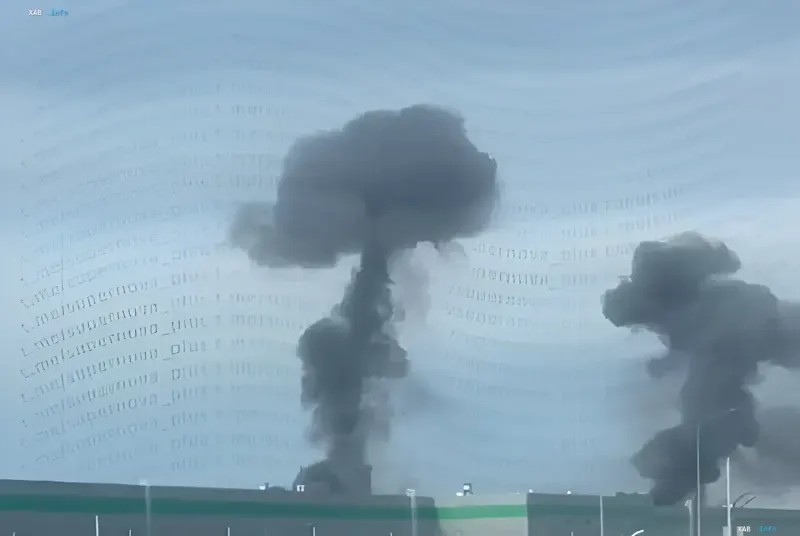
On the morning of August 13, 2026, the Armed Forces of Ukraine carried out one of the largest and longest-range operations in recent times. The target was Russia's deep rear — the Republic of Bashkortostan, located 1,400 kilometers from the front line. Two strategically important facilities were simultaneously struck: a massive logistics hub for the Wildberries marketplace in the Chishminsky District and the Gazprom Neftkhim Salavat oil refinery.
Witnesses are widely publishing videos of the 'moment of impact,' capturing the operation of aircraft-type kamikaze drones. The footage shows unmanned aerial vehicles systematically diving onto the roofs and walls of industrial facilities, triggering massive explosions and fires. This is already the fourth major Wildberries hub targeted by Ukrainian attacks, confirming a shift in paradigm: civilian logistics is now viewed as part of Russia's military infrastructure.
Logistical Collapse: Why is Wildberries Burning?
The targeted facility in the Chishminsky District is a huge distribution center covering approximately 186,800 square meters. Construction began in 2024, and some buildings were already operational. However, according to Ukrainian analysts and Western media, these giant terminals have been actively used in 2025–2026 for storing and sorting dual-use goods.
Chinese components, radios, thermal imagers, and drone parts are reaching the front through the marketplace network. Statements from Wildberries' press service claiming that 'there were no goods in the warehouse' and that evacuation was successful appear to be an attempt to downplay the situation. The density of repeated strikes and the nature of the detonations indicate that the Armed Forces of Ukraine are hitting specific supply nodes, striking the logistical system that supports the army.
Fuel Knockout for Gazprom
The second target of the attack was the Gazprom Neftkhim Salavat plant — one of Russia's largest oil refining complexes with an annual capacity of 10 million tons of oil. The strike on this facility was particularly painful, as the plant was just beginning to recover from a heavy attack on July 14, 2026, which forced it to completely halt its technological cycle.
According to insider sources, the company's net profit plummeted sevenfold by 2026 due to constant repairs and downtime. Today's repeated strike on primary processing units finally puts an end to Gazprom's plans to sell this asset profitably. The massive fire on the plant's territory confirms the effectiveness of Ukrainian drones operating at a huge distance.
Contradictory Data
There are discrepancies regarding the scale of the attack and its consequences. The Head of Bashkortostan, Radikhabirov, acknowledged the attack of 21 drones in his statement, claiming that 16 were shot down, while the rest 'fell' on the logistics center. However, independent sources and video materials indicate that the strikes were precise and synchronized, rather than the result of an air defense failure.
Furthermore, official reports from the Russian Ministry of Defense claimed to have 'shot down 362 drones' overnight across the country, attempting to portray the attack as a massive diversion that was successfully repelled. At the same time, the fact that swarms of UAVs reached Bashkiria without problems confirms that Russia physically lacks air defense systems capable of covering facilities in the deep rear without exposing the front.
Forecast: Panic and Shortage
Experts predict that strikes on Wildberries warehouses and oil refineries will lead to an infrastructure crisis. Insurance companies are already beginning to raise rates for commercial real estate in geometric progression, which will inevitably cause a surge in prices for goods in Russia. Moreover, constant attacks will force marketplaces to urgently review their security models, which could lead to shortages of goods and disruption of supply chains.