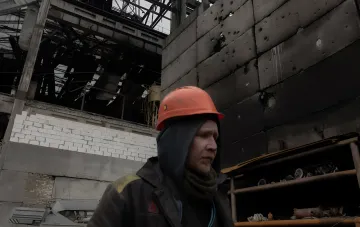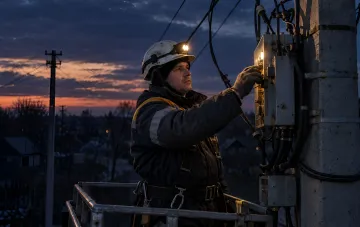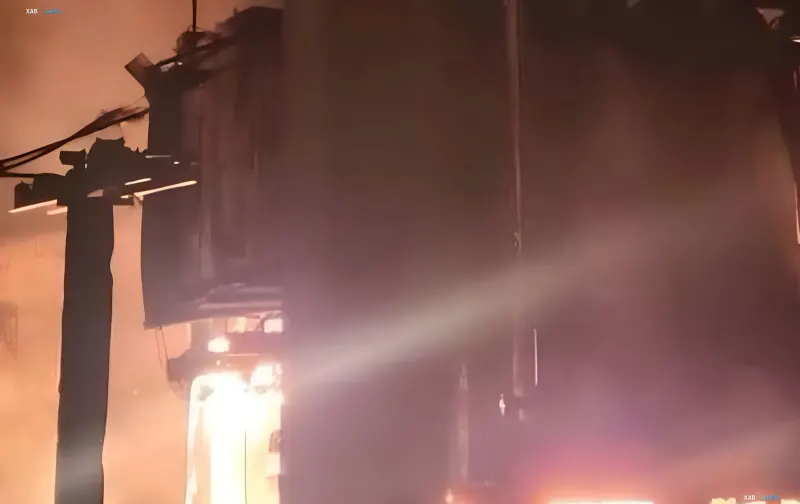
On the night of November 5, 2026, Russian forces launched a renewed strike on DTEK's energy infrastructure in the Kyiv region. According to the company's press service, the attack damaged two energy facilities, leading to a complete blackout in parts of the Obukhiv and Bila Tserkva districts. DTEK emphasizes that the destruction is significant and repairing the equipment will require a considerable amount of time. By the morning of November 6, emergency repair crews had already started work: some households have been reconnected, but the full repair cycle is ongoing.
Scale of Damage and Progress of Repair Work
DTEK energy workers stated in an official announcement that the damage to the two energy facilities is substantial and does not allow for a quick return to standard generation levels. Emergency restoration work, launched immediately after the damage was discovered, is being conducted around the clock. By dawn on November 6, power supply was restored for some consumers in the affected areas, but complete elimination of the attack's consequences, according to the company's estimates, will take more than one day. In other districts of the Kyiv region, DTEK specified that stabilization outage schedules are in effect to maintain the stability of the power system under increased loads on the remaining operational facilities.
Context: A Series of Massive Energy Strikes
The nighttime attack on November 5 became the latest in a series of systematic strikes on Ukraine's energy infrastructure. According to data previously published by RBC-Ukraine, three days prior to this, Russian forces carried out 78 massive strikes on energy facilities. Both power plants and current transmission network elements were targeted. As a result of the massive air attack, three DTEK thermal power plants suffered large-scale destruction and completely ceased electricity generation. This means the region's power system is operating under conditions of a critical deficit in generating capacity, and each new strike on the infrastructure multiplies the difficulty of the recovery task.
Dynamics: From 2022 to 2026
For comparison: in 2022, Russia carried out 11 massive attacks aimed primarily at power plants. By November 2026, the tactics have changed significantly — strikes have become more frequent, massive, and cover not only generation but also transmission. The increase in the number of attacks from 11 per year to 78 in three days indicates a transition to a strategy of systematically destroying the region's energy framework. Under such conditions, even localized damage to two facilities in the Kyiv region can trigger cascading outages in neighboring areas, which is confirmed by the blackout of parts of the Obukhiv and Bila Tserkva districts.
What's Next: Prospects for Recovery
DTEK confirms that repair crews are working at the site of the damage, but the company does not provide a specific timeline for full recovery. Given the nature of the destruction, described as "significant," as well as the overall condition of the region's power system after a series of strikes, experts expect that stabilizing the situation will require not only local repairs but also load redistribution among the remaining operational facilities. In the near future, a key factor will be the ability of energy workers to maintain grid operations amid ongoing attacks and limited equipment reserves for recovery.