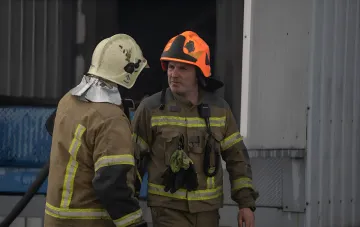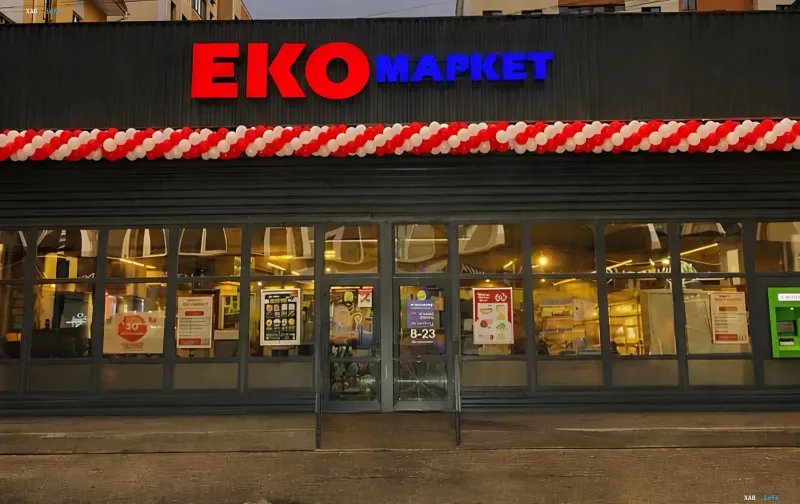
Russian military forces carried out a strike on one of the logistics infrastructure facilities of the “ECO Market” retail chain. This was reported on September 21, 2026, by RBC-Ukraine, citing the company's official Instagram page. According to the retailer, no one was injured as a result of the incident: all personnel are safe, and employees are alive and unharmed. The company expressed its gratitude to partners, rescuers, and the military for their prompt assistance in dealing with the aftermath of the attack.
Emergency Mode and Maintaining Supply
Despite the damage to the warehouse facility, “ECO Market” stores continue to operate and serve customers in normal mode. The company's team has switched to emergency working mode to ensure stable product supply and keep the necessary goods on store shelves. The statement emphasizes that supply chains are already being restored, and operational processes are being adapted to the new conditions. This approach is characteristic of Ukrainian retailers, who, under conditions of systematic attacks on civilian infrastructure, demonstrate a high speed of recovery.
Systematic Strikes on Logistics and the Food Sector
The incident involving “ECO Market” is not isolated. Throughout the conflict, Russian forces have systematically struck Ukraine's civilian and logistics infrastructure, deliberately damaging warehouse complexes, distribution centers, and transport hubs. The food sector, on which the supply of millions of citizens depends, is under constant pressure. Nevertheless, Ukrainian retailers, including “ECO Market,” are demonstrating resilience: they quickly reconfigure supply chains, deploy reserve capacities, and continue to supply the population with essential first-necessity products.
State Support for Business in Wartime
Against the backdrop of repeated attacks on enterprise infrastructure, Ukraine's Economy Ministry is developing a new model for compensating businesses' wartime losses. As part of the initiative, a special fund worth 3–4 billion dollars is planned to be created, which will cover the initial losses of enterprises incurred as a result of attacks. In addition, the Cabinet of Ministers recently classified Kyiv and the Kyiv region as high-risk territories. This decision will allow enterprises in the capital region to use the state property insurance program against military threats, which will significantly reduce the financial burden on businesses when recovering from incidents.
Contradictory Data
The provided sources differ in their description of the extent of damage to the facility. The company's basic statement and the RBC-Ukraine publication use the phrasing “one of the network's facilities was damaged,” indicating partial damage. At the same time, Focus.ua characterizes the incident in its headline and text as “VARUS and ECO-market warehouses burned down near Kyiv,” implying more extensive destruction, up to the complete destruction of structures. The original text also does not specify the exact geography of the strike, whereas Focus.ua indicates a location “near Kyiv.” The difference in terminology may be due to the fact that some sources record the immediate state of the facility at the moment of the attack, while others record the final result after the fire was extinguished and the damage was assessed. Exact data on the scale of the destruction and the cost of restoration work were not disclosed at the time of publication.