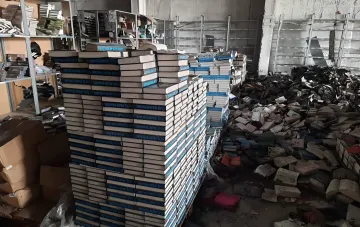
On the morning of October 27, 2026, on the Day of Ukrainian Writing and Language, the warehouse of the 'Family Leisure Club' (KSD) publishing house in Kyiv was shelled by Russian forces. The publishing house announced this on its official Facebook account, and the information was reported by RBC-Ukraine. KSD's statement confirmed that 'the enemy hit our warehouse' and added that the attack on the district where the facility is located continued into the daytime hours. Thus, the strike occurred on the very day the publishing house planned to congratulate readers on their professional holiday and present announcements for November new releases.
Consequences for Ukraine's Book Market
The publishing house explicitly stated that the consequences of the attack will inevitably affect the schedule of new book releases. The release scheduled for November 5 is now under threat. As of the time of publication, KSD was assessing the extent of the damage and determining which specific titles and in what quantities were affected. For Ukraine's book market, where the publishing house holds a prominent position in the family and entertaining literature segment, the disruption or delay of the November release means not only financial losses but also a breach of expectations for readers and partners—bookstores, libraries, and online platforms.
A Series of Strikes on Book Warehouses: Knygolav and A-ba-ba-ha-la-ma-ha
The attack on the KSD warehouse is not the first such incident targeting Ukraine's publishing infrastructure. As RBC-Ukraine recalls, on October 7, a new warehouse of the 'Knygolav' publishing house was hit as a result of a nighttime missile attack on Kyiv. According to the publication, tens of thousands of books were destroyed by the shelling. Even earlier, on the night of August 28, Russian forces struck a warehouse containing books by the 'A-ba-ba-ha-la-ma-ha' publishing house, destroying many books and the building itself. Three incidents in less than two months form a consistent pattern of systematic impact on the logistical and production facilities of the book industry.
Book Warehouses as a Target: Context and Significance
Choosing book warehouses as targets has several dimensions. On the one hand, this is a direct blow to the material assets of publishing houses—finished products that cannot be quickly restored and that, unlike raw materials, represent a final product tied to specific print runs and deadlines. On the other hand, attacks on objects related to the cultural and educational sphere are aimed at undermining daily life and the information space. Under conditions where publishing houses have already adapted to working amid war by sorting warehouses and rebuilding logistics, repeated strikes on new facilities complicate recovery and force the industry to operate under constant risk. The KSD publishing house, like its industry peers, has not yet released exact figures for destroyed or damaged copies, limiting itself to stating the fact of the hit and indicating its impact on the November schedule.
Reaction and Next Steps
At the time of material preparation, the 'Family Leisure Club' publishing house was still assessing the situation. In its public statement, the company did not specify the exact losses in copies or whether the November 5 release would be postponed entirely or partially. Readers and partners of the publishing house, who were expecting announcements that should have appeared on the Day of Ukrainian Writing and Language, received news of the warehouse damage instead. For the industry, this is another argument that book logistics under combat conditions require a revision of the model for storing and distributing print runs, although specific decisions on rebuilding KSD's infrastructure have not yet been made public.