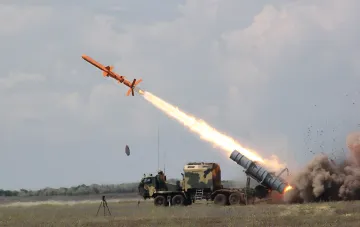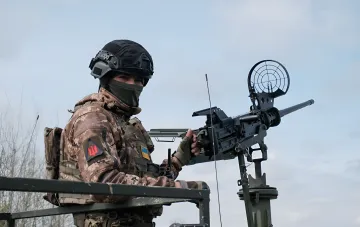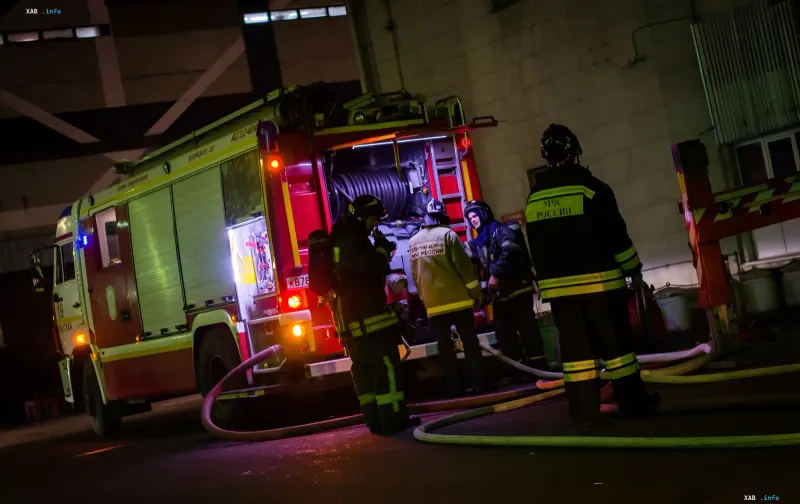
On the night of November 9, 2026, the Defense Forces of Ukraine carried out a strike on a defense industry enterprise near St. Petersburg. According to a statement by the General Staff of the Armed Forces of Ukraine, provided to RBC-Ukraine, the target of the attack was the Morozov Plant JSC, a key production link in the chain supplying the Russian army with ballistic weapons. According to the Ukrainian command, three production workshops of the enterprise were damaged as a result of the strike. The extent of the damage, as specified in the report, was still being assessed at the time of publication.
What the Morozov Plant produces
The enterprise, located near St. Petersburg and part of the Rostec state corporation, specializes in the development and production of explosives and solid rocket fuel. Specifically, the plant creates solid fuel for the engines of the Topol-M intercontinental ballistic missile complex. Furthermore, it is where the solid-fuel charges for 9Kh820 engines, used in the 9M723 ballistic missiles of the Iskander-M operational-tactical missile system, are manufactured and supplied. Thus, the plant's output is a direct component of the missiles used for strikes against Ukrainian residential areas.
Strike tactics: breaking the production chain
The General Staff of the Armed Forces of Ukraine emphasized that such an attack is aimed at complicating the Russian military's ability to produce new missiles for Iskander systems, thereby breaking the ballistic weapon production chain at the initial stage — directly in the production workshops. Following the logic of the Ukrainian command, every precision strike on infrastructure linked to ballistic development reduces the pace of replenishment of enemy missile arsenals and limits its capacity to conduct massive missile attacks.
Broader context of night operations
The strike on the plant near St. Petersburg was part of a wider series of operations carried out by the Defense Forces over the past day. As the General Staff noted, over the last 24 hours, Ukrainian forces struck four drone control centers of the Russian occupying forces. Earlier, on the night of November 7, strikes were carried out on military objects in the Bryansk region, which, according to the Armed Forces of Ukraine, included two Iskander launchers and a Pantsir-S1 air defense system. The totality of these operations points to a systematic approach to attacking infrastructure related to the enemy's missile and anti-aircraft weaponry.
Legal justification and strategic framework
Commenting on the nature of the ongoing operations, the General Staff of the Armed Forces of Ukraine stated that Ukraine is acting strictly within the scope of the right to self-defense enshrined in Article 51 of the UN Charter. According to the Ukrainian command's phrasing, the systematic undermining of Russia's military-economic potential aims to force the enemy to stop its armed aggression. Thus, strikes on defense enterprises, including those producing rocket fuel and explosives, are part of a broader strategy to weaken the enemy's war machine at the level of its industrial base.