August 14, 2026. During the night of August 14 and in the early hours of that day, the Defense Forces of Ukraine launched a powerful strike on one of the strategic objects of the Russian economy in the Baltic region — the port of Ust-Luga. According to reports in the Telegram channel «Fire Point», damage and a fire were recorded in the port area as a result of the attack. This event marked the culmination of a series of massive strikes on the Moscow and Leningrad regions, which began as early as the night of August 14.
Scale of the Attack and Consequences
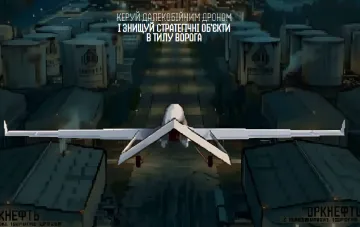
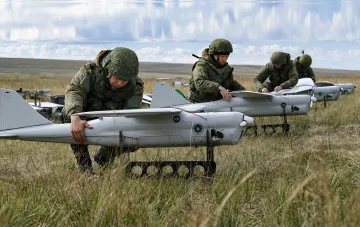
The port of Ust-Luga, located in the Leningrad region, is one of the largest oil terminals in Russia on the Baltic Sea. Significant volumes of hydrocarbon exports pass through it, making it a critically important object for the Russian economy. The attack that occurred in the morning of August 14 led to a fire in the port area. According to preliminary data, the strike was carried out using unmanned aerial vehicles (UAVs), which massively attacked not only the port but also other objects in the region.
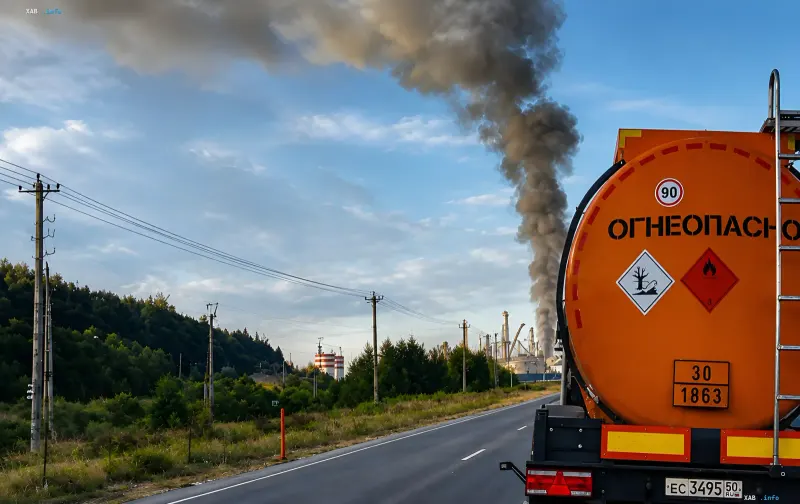
The Governor of the Leningrad region reported dozens of shot-down drones over the region, indicating the significant scale of the operation. A flare-up accompanied by thick smoke, visible from a great distance, was recorded in the port area for the first time. Details regarding the scale of the consequences are being clarified, but it is already possible to speak of serious damage to the port's infrastructure.
Strategic Significance of Ust-Luga
The port of Ust-Luga plays a key role in the export of Russian oil to Western markets. Millions of tons of hydrocarbons pass through it annually, making it one of the main nodes of the logistics chain. An attack on this object not only causes direct damage to infrastructure but also creates serious problems for logistics and exports. In the event of a prolonged shutdown of the port, this could lead to significant economic losses for Russia.
Furthermore, the strike on Ust-Luga demonstrates the ability of the Defense Forces of Ukraine to deliver pinpoint strikes on strategically important objects deep within the enemy's territory. This calls into question the security of other port and industrial facilities in Russia, especially those near the borders with Ukraine.
Contradictory Data
While Ukrainian sources report significant damage and a fire in the port of Ust-Luga, Russian authorities have not yet confirmed the scale of the consequences. The authorities of the Leningrad region refuted information about an oil spill in the bay after the attacks, however, this does not rule out the possibility of local fires and infrastructure damage. Differences in the versions of the parties may be related to a desire to minimize public resonance or a lack of complete information at the time of publication.
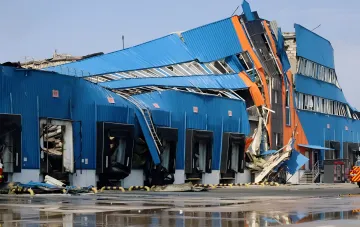
It is also worth noting that on the same day, news emerged of a strike on a Wildberries train in the Tver region, 150 kilometers from Moscow. Debris from a drone damaged the wall of a building, leading to temporary smoke. This event highlights the wide range of targets that can be attacked during such operations.
Reaction and Prospects
The attack on the port of Ust-Luga caused a wide resonance both in Russia and on the international arena. Experts note that such strikes could become part of a broader strategy to destabilize Russia's economic infrastructure. At the same time, Russian authorities will likely strengthen security measures around key objects, which could lead to further militarization of border regions.
In the coming days, the situation around the port of Ust-Luga is expected to develop dynamically. There may be attempts to restore the terminal's operations, as well as new attacks by the Defense Forces of Ukraine. In any case, this event will become an important marker in the context of the ongoing conflict and its impact on the Russian economy.