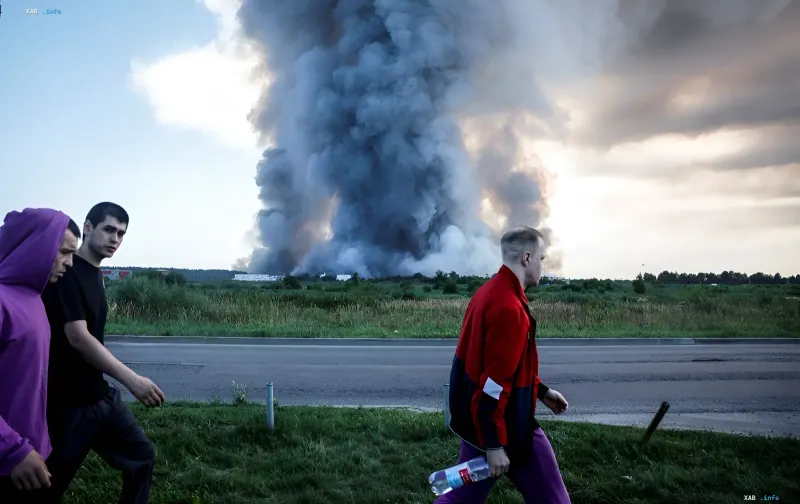
The logistics network of one of Russia's largest marketplaces, Wildberries, has faced an unprecedented challenge. As a result of a series of attacks on the company's infrastructure, facilities with a total area of over 550,000 square meters were damaged. This accounts for about 10% of the retailer's total capacity, dealing a colossal blow to its operational activities.
Scale of Losses and Recovery Costs
According to estimates by the publication "Kommersant," the cost of the damaged real estate is approximately 60 billion rubles (about $762 million USD). However, this figure reflects only the cost of buildings and infrastructure. Fully restoring a single large complex of 100,000 square meters is a task requiring not only time but also huge capital investments.
Experts note that partial restoration of such an object will take from 6 to 8 months and require investments of tens of millions of dollars. Alexander Bondarenko, founder of GreenInvest and CEO of the Investment Programs Bureau, clarifies: full restoration of the complex will cost more than $70 million, not counting the cost of goods destroyed inside.
If these data are extrapolated to the total area of the affected facilities, the full resumption of operations for 550,000 square meters of warehouse space could take about three years. Actual timelines will depend on the scale of destruction of each specific facility, the possibility of parallel work, and the current security situation.
Expansion into Kazakhstan as a Survival Strategy
Understanding that recovery within Russia will take years, the Wildberries management group RWB has begun actively seeking backup capacity outside the country. The main direction for expansion has become Kazakhstan. The company is already looking for additional warehouses and is ready to lease almost all available logistics space in the country.
RWB's interest is focused on facilities with a total area of about 100,000 square meters. In particular, the group is already building a warehouse complex of over 100,000 sq. m in Almaty. Another large-scale facility of 160,000 sq. m is being built in Astana, with its opening planned for next year.
Economic Consequences and Market Lessons
Moving logistics abroad carries its own risks. As "Kommersant" notes, rental rates in Kazakhstan have already almost equaled those in Moscow. Moreover, storing goods for Russian buyers outside the country significantly increases transportation costs and extends delivery times.
The commercial real estate market has already observed similar scenarios. Natalia Sokirko, Director of the Warehouse Real Estate Department at Expandia, recalls the situation in Ukraine: after the destruction of West Logistic Park in the Kyiv region in 2022, the market immediately felt an acute shortage of modern warehouse space. Partial compensation for losses does not mean a quick recovery of logistics.
In response to the threat of a complete halt in operations, businesses are forced to change their model. Companies are moving from a strategy of one large centralized hub to creating several regional hubs. Decentralization of logistics is becoming the only way to reduce risks and ensure continuity of operations in conditions of instability.