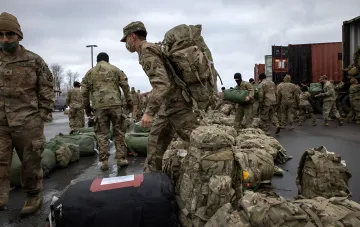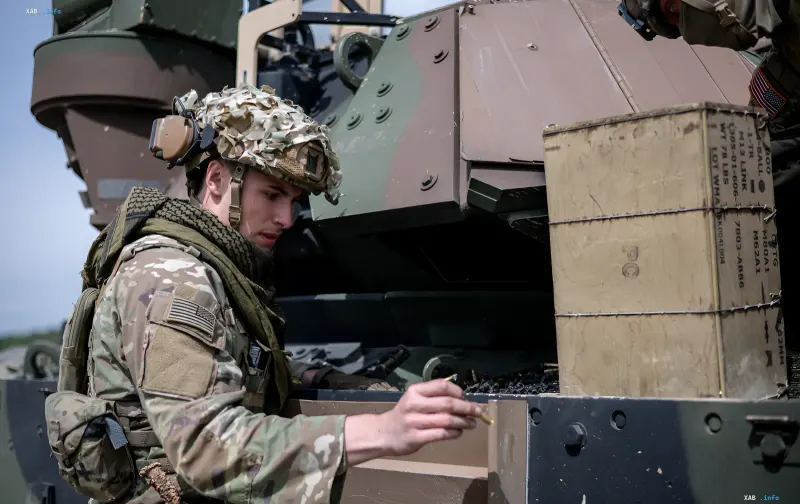
The situation in the Persian Gulf has escalated sharply after the US Central Command (CENTCOM) conducted a large-scale military operation against Iran. On the night of July 14, American forces not only launched a series of strikes on military facilities but also reinstated a naval blockade of Iranian ports.
Massive Attack on Military Facilities
According to official data, the new wave of strikes concluded at 22:00 Kyiv time. The operation lasted seven hours and was carried out by US fighter jets, unmanned aerial vehicles, and Navy ships. During the attack, dozens of targets located near the strategically important Strait of Hormuz and coastal areas of Iran were hit.
The list of targeted facilities included:
- launchers for ballistic missiles and drones;
- naval assets;
- coastal defense systems.
Resumption of Naval Blockade
Parallel to the air and sea strikes, the US imposed strict restrictions on shipping. At 23:00 Kyiv time, the naval blockade was reinstated. Now, vessels heading to Iranian ports, coastal areas, or departing from them are being blocked by American forces. This decision effectively isolates the Iranian economy from maritime trade routes.
Command Position and Political Context
In a statement, CENTCOM emphasized that American forces remain "vigilant, combat-ready, and prepared" to execute any operations ordered by the Commander-in-Chief. Amidst the escalation of tensions, Donald Trump announced the abandonment of the idea to charge a 20% fee for vessel passage through the Strait of Hormuz. Instead, the US focused on concluding new beneficial agreements with Persian Gulf countries.
Previously, Iran had already demonstrated a readiness for aggressive actions in the region by attacking two UAE tankers in the Strait of Hormuz. As a result of that attack, one crew member was killed, and two Ukrainian citizens were among the injured. Experts note that besides the Strait of Hormuz, Iran theoretically has the capability to block the Bab el-Mandeb Strait, which could lead to a global shipping crisis.