Discussions in Washington have intensified regarding a radical expansion of military operations against Iran. The administration of President Donald Trump is discussing scenarios that could fundamentally alter the balance of power in the Persian Gulf. According to sources in the White House, the agenda includes the question of potentially deploying a US military contingent to strategic islands controlling the Strait of Hormuz.
The escalation of military rhetoric is taking place against the backdrop of a complete deadlock in diplomatic negotiations. Attempts to reach a comprehensive agreement on Iran's nuclear program and shipping security have failed. Disagreements between the parties regarding the terms of control over this key waterway have brought military scenarios back to the forefront.
Strategic Choice: Key Strike Targets
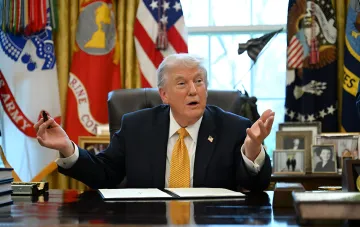
During consultations in the White House Situation Room, attended by Vice President JD Vance, Defense Secretary Pete Hegseth, and Secretary of State Marco Rubio, action plans regarding specific coastal and mainland territories were worked out in detail. Analyzing the geopolitical map of the region, three key directions can be identified on which the US leadership is focusing.
The first, and perhaps most sensitive, target is Kharg Island. This is Iran's largest oil terminal, through which about 90% of the country's crude oil and petroleum product exports pass. Control over Kharg is viewed by Washington as a tool for maximum economic pressure, capable of paralyzing Tehran's financial system.
The second vector is directed at Abu Musa, Greater and Lesser Tunb islands. These territories are of critical importance for shipping security, as it is here that the defensive and radar systems of the Islamic Revolutionary Guard Corps (IRGC) are deployed. It is from these positions that Iranian military forces control the passage of civilian and military vessels through the Strait of Hormuz.
The third scenario concerns objects on the mainland, specifically the "Koh-e Kalang" (Pikaks Mountain) complex in the Natanz area. Western intelligence services claim that this underground tunnel facility is used for the accelerated assembly of centrifuges and uranium enrichment. Intensifying air strikes on such objects is part of the strategy to contain the nuclear program.
Risks and Current Situation
Despite active discussions, a final decision on the deployment of ground forces has not yet been made. US military leadership emphasizes the significant risks for amphibious groups. Iranian coastal missile complexes located on the mainland pose a serious threat to any attempts to land troops on coastal territories.
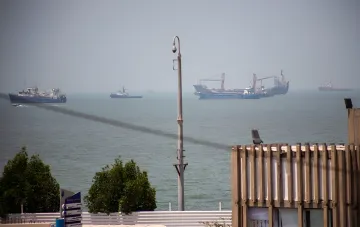
Nevertheless, the US Central Command (CENTCOM) continues to increase the intensity of air operations. Recently, strikes on military infrastructure objects in Bandar Abbas have been recorded. There are also reports of the interception of the commercial tanker M/T Belma, sailing under the flag of Curaçao, which ignored the demands of the naval blockade.
Tehran's Position and International Law
Iran is reacting resolutely to the threats. Representatives of the country's Ministry of Defense characterized Washington's maneuvers and statements as a gross violation of international law. Tehran has declared its readiness to give a symmetrical military response in the event of a violation of state borders or strikes on critical infrastructure objects.
The legal aspect of the situation is also causing sharp discussions. According to the 1982 UN Convention on the Law of the Sea, the Strait of Hormuz is classified as a strait used for international navigation, where all ships enjoy the right of transit passage. Any unilateral restrictions on shipping or port blockades may be construed as casus belli — a legal pretext for the start of full-scale military action.