Attacks on border infrastructure have already become a persistent factor affecting the operations of international carriers: the temporary shutdown of individual crossing points redistributes the load to neighboring checkpoints, lengthens queues, and forces logistics companies either to wait for processing to resume or to choose alternative routes. On which directions are currently the most problematic and how this is reflected in international freight transport, Vice President of the Association of International Road Carriers of Ukraine (AsMAP), Vladimir Balin, told RBC-Ukraine in a blitz interview. According to him, the industry is recording an increase in waiting times and temporary movement restrictions on certain directions, while carriers' response remains situational and tied to specific incidents.
Moldovan and Romanian Directions: Where Strikes Hit Most Often
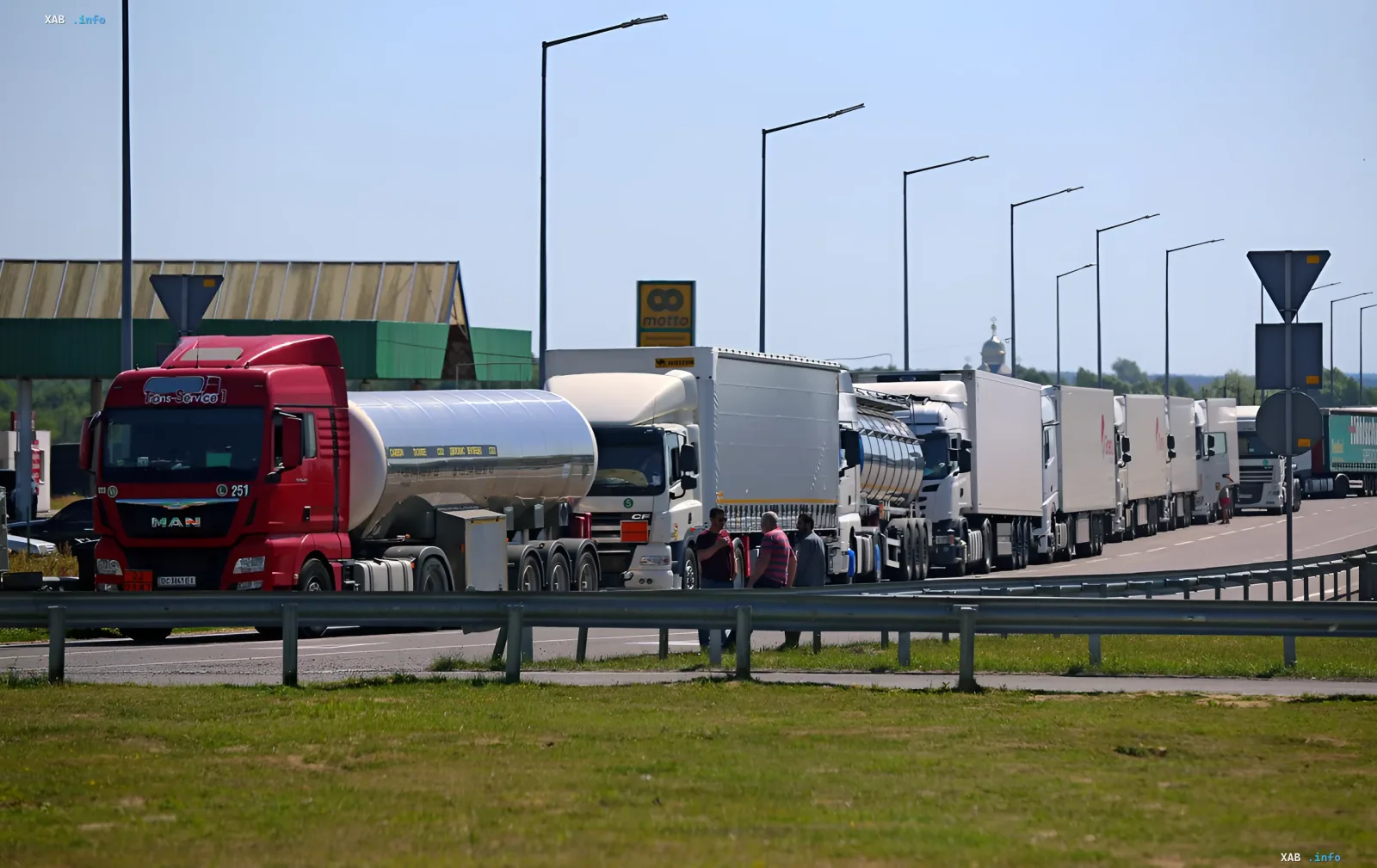
The main current problem, according to AsMAP's assessment, is the Moldovan border: strikes have been recorded there several times, and two crossing points were shut down for a day. Balin separately named the Orlovka crossing on the Romanian border, where, according to him, strikes had hit five times and which had been out of operation for almost two days recently. The Orlovka story, he said, has been repeating from time to time over several years. As a result, vehicles either sit idle in queues or are redirected to other crossings, creating tension and increasing queues on adjacent directions.
The Polish Border: The Main Hub and Its Vulnerability
The most strained direction for the industry remains the Polish one, since its throughput capacity accounts for about 50% of all international road crossing points in Ukraine — up to 2,000 freight vehicles per day in one direction. The largest crossing here is Yagodin, which, under the memorandum, can handle 600–680 vehicles per day in one direction, and slightly more under normal conditions. Recently, a strike was recorded near Yagodin, which caused the crossing to be out of operation and its work to be suspended for some time. Thus, even a single incident at this hub can significantly affect the entire network of international freight transport.
Moving Procedures Across the Border: Protecting People and Cargo
A separate trend noted by AsMAP is the relocation of some crossing points and associated procedures to the territory of Poland or Moldova. According to Balin, border guards and customs officers are working to move part of the processing to the other side of the border in order to protect carriers, passengers, and cargo from risks. He confirmed that several crossing points are already de facto operating on Polish or Moldovan territory, citing the Ustilug–Zosin crossing, which is de facto located on the Polish side. The association supports this position of the authorities and considers the relocation of procedures a logical step given the ongoing threats.
Routes and Costs: How Carriers Respond to Closures
Balin answered cautiously on the question of systematic route changes due to attack risks: AsMAP has no statistics showing that a carrier regularly and in advance departs via a different crossing. According to him, the decision is made situationally — drivers join the queues, see the congestion, and choose a direction; if a crossing point is closed, the carrier monitors how long it will remain closed and only then may detour. Objectively, passing through a different crossing point increases the carrier's costs, but whether the customer compensates for these expenses depends on the agreements between the parties, and there is no single answer to this question in the industry yet.
Drivers' Readiness: Refusal to Enter Combat Zones
A separate topic of the interview was drivers' readiness to carry out international trips. Carriers complain that many drivers refuse to travel to zones where active hostilities are taking place — referring to Zaporizhzhia, Kharkiv, and Kherson regions, and some refuse to travel even to Kyiv. At the same time, according to Balin, AsMAP has received no specific complaints about individual crossing points that drivers "will not go to," and no appeals on this matter have been recorded. Thus, the safety factor affects the geography of trips as a whole, but is not tied to specific border crossings.
Coordination with Authorities and Reserve Scenarios
AsMAP accepts the position of the State Customs Service and border guards that, where possible, procedures should be moved to the Polish or Moldovan side, and confirms that the situation with Moldova is already "moving" in this direction. Relocating some crossing points to the territory of neighboring countries is considered a key reserve scenario that allows maintaining the stable operation of crossings in case of their temporary disablement. For carriers, the most relevant remains the combination of two measures: prompt information about closures and the systematic relocation of vulnerable procedures across the border, which should reduce both risks to people and logistics costs.