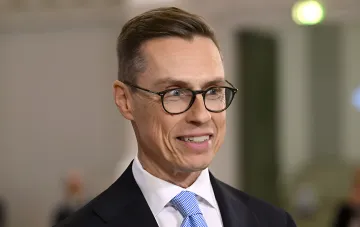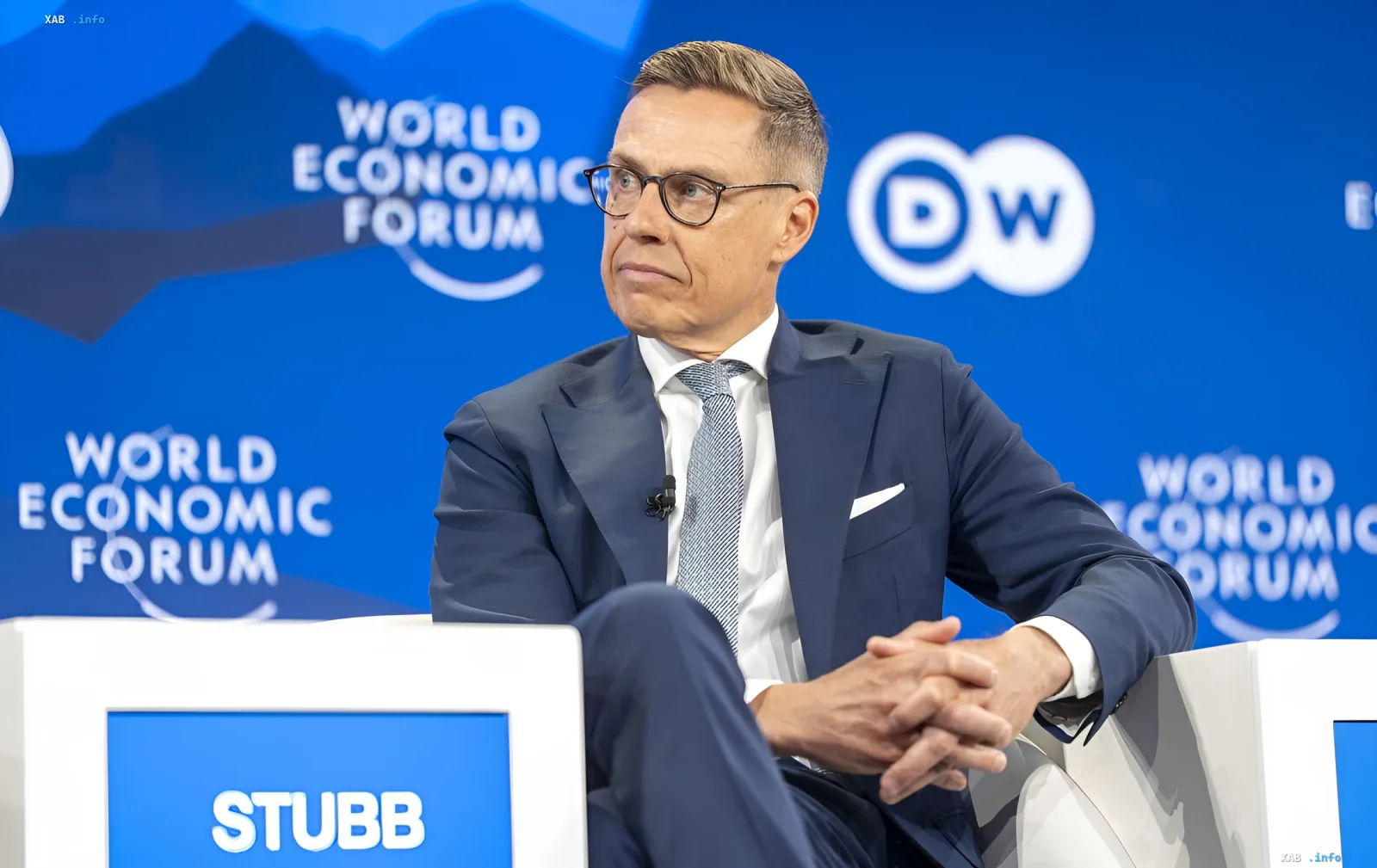
Finnish President Alexander Stubb, speaking at the World Economic Forum, stated that an economic downturn will not be the reason Russia stops fighting. In his words, neither inflation, nor a banking crisis, nor the level of interest rates will force Moscow to end the war, which, as he emphasized, the aggressor has been waging against Ukraine since 2014. "I don't think Russia will end this war because of an economic downturn," Bild quotes the politician, as cited by RBC-Ukraine. Stubb added that one should never underestimate how much economic hardship the Russian people are capable of enduring.
Economic Pressure as an Ineffective Tool
The Finnish leader stated outright that traditional levers of economic pressure — from inflation to banking crises and high interest rates — will not work against the Russian regime. Similarly, in his assessment, significant losses of the Russian armed forces will not become a reason to stop the war. Stubb thereby outlined a fundamental position: economic sanctions and their consequences, however severe their impact on citizens, are not a sufficient stimulus for Moscow to change its foreign policy course. This assessment comes against the backdrop of data from Ukrainian and Western sources indicating that the Russian economy is, in effect, operating for the military-industrial complex, while sanctions and Ukrainian drone strikes on oil refining capacity have substantially undermined budget revenues.
When the Regime Feels Threatened
The only scenario in which, in Stubb's view, Russia might end the war, he described as a situation in which "something threatens the current regime." "However, the last straw may be a situation in which they feel that something threatens the current regime," the Finnish president noted. In his words, Moscow needs to draw the conclusion that there is no longer any benefit for its regime in continuing this war. Thus, Stubb shifts the focus from external economic pressure to the internal political resilience of the regime as the key factor in a possible change of course.
The Real Picture of the Russian Economy
The context of Stubb's statement is shaped by data on the state of the Russian economy. As Ukrainian media note, the long-term war launched by Moscow in 2014 has led to the entire country's economy working for the military-industrial complex. Sanctions and, importantly, Ukrainian drone attacks have cut off the main source of budget revenue — oil export income — and forced Russia to buy oil products abroad. As an example, it is noted that Belarus is now selling gasoline to Russia. Moreover, according to data published recently, Russia has cut civilian spending by a third due to a shortage of funds for the war, and the aggressor's budget deficit has already exceeded the forecast for the entire year.
Contradictory Data
In the statements of the parties and in the factual context, a certain inconsistency is traceable in assessing the effectiveness of economic pressure. On the one hand, Stubb categorically asserts that an economic downturn will not force Russia to end the war, and that the Russian people are capable of enduring significant hardships. On the other hand, factual data on the state of the Russian budget — the deficit exceeding the forecast, a one-third cut in civilian spending, dependence on imported oil products — indicate that economic pressure is nonetheless having a noticeable impact on the state's capabilities. The difference in versions comes down to interpretation: for one observer, economic losses are already critical, for another — they do not touch the core of the regime and its will to continue the war. Both viewpoints coexist in the public discourse without final resolution.