Modern fashion continues to move away from rigid stereotypes that limit women with curvy forms in their clothing choices. Well-known stylist Olena Shevchenko demonstrated through her own example that leggings are not a taboo for plus-size sizes, but a versatile base that requires competent styling. Contrary to the common belief that tight clothing highlights "flaws," the expert proves: it is not what you wear, but how you combine it with other wardrobe elements that matters.
The Art of Creating a Silhouette
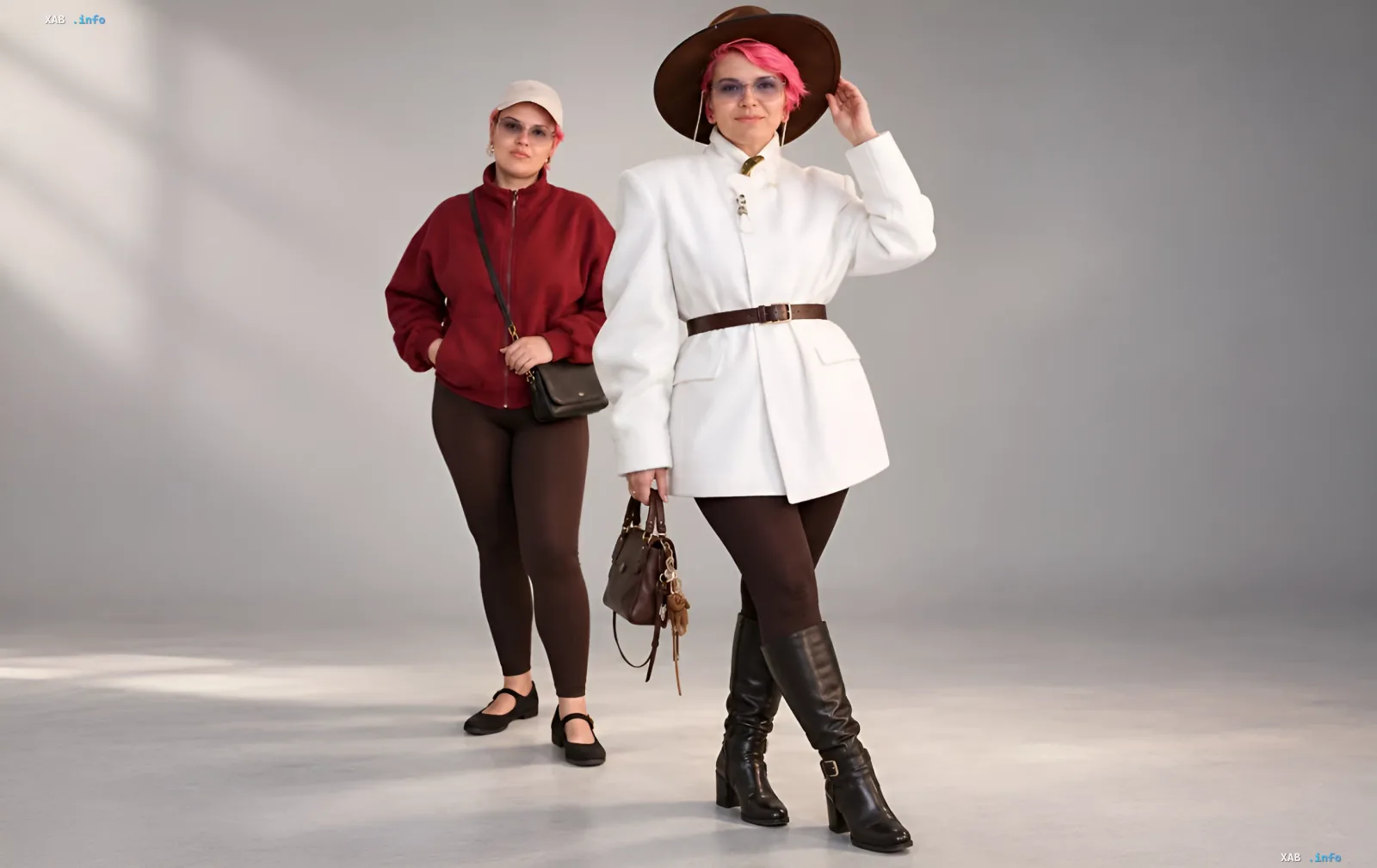
In a recent review of her wardrobe, Shevchenko compared two completely different approaches to styling black leggings. In the first case, an outfit with a short sweatshirt and ballet flats looked visually flat due to the lack of contrast. In the second variant, the stylist added a voluminous jacket with defined shoulders, cinched the waist with a belt, and finished the look with high boots. It was the play with proportions, clean lines, and fabric structure that transformed the casual look into a stylish outfit that visually corrects body proportions.Key Styling Techniques
To make leggings look organic, Olena Shevchenko recommends following a few balance rules. First, using dense materials for the top layer (jackets, shirts) helps to hide the transition of the hip line and create a finished, "put-together" look. Second, do not neglect accessories: headwear, glasses, and statement bags shift the focus to details, creating a holistic character for the look. High footwear or models with a chunky sole in this context act not just as a functional part of the wardrobe, but as a powerful tool for silhouette correction.
Contradictory Data
There is a social prejudice that tight clothing is strictly contraindicated for women with hip measurements of 125 cm or more. Critics of this approach argue that leggings inevitably draw attention to body relief, which may be inappropriate in a formal or office environment. On the other hand, body-positive advocates and modern stylists, such as Olena Shevchenko, insist that the aesthetics of an outfit are determined not by the centimeters around the hips, but by the skill of selecting tops, shoes, and accessories. The main conflict of opinion lies in the question of appropriateness: is it a matter of personal comfort or generally accepted norms of style?
Conclusion: Experiments Are More Important Than Restrictions
The stylist's experience shows that you often don't need to get rid of your favorite things, but simply reconsider their surrounding items. The key advice lies in finding a contrast between the tight bottom and a looser, structural top. It is important to remember that any fashion advice is only a recommendation, not a dogma. Comfort and self-confidence remain the main markers of a successful outfit, allowing every woman to experiment without restricting herself with artificial standard frames.