
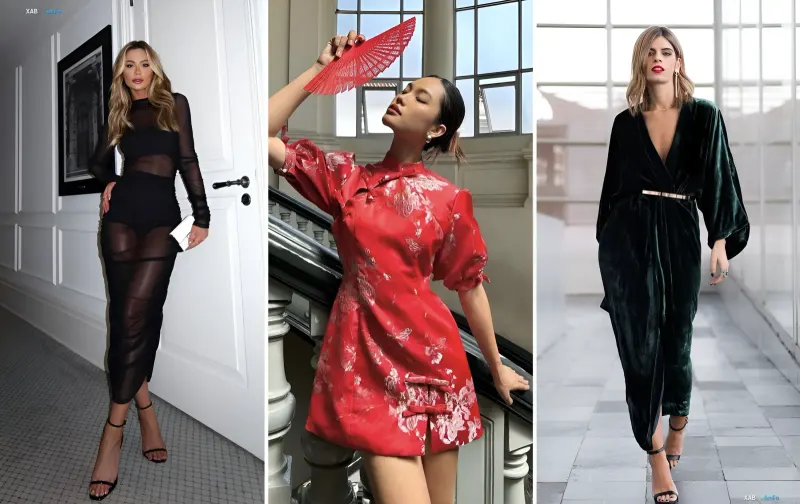
In a video for her Instagram channel, stylist Yana Markovskaya broke down a number of popular dress models and explained why some of them shouldn't be bought solely because they're trending. Her list included both retro models and modern hits from the runway and social media. The expert's main message is that a striking look in a photo doesn't always translate into comfort in everyday life or long-term wearability in your wardrobe.
Sheer Dresses: Effect vs. Comfort
Sheer dresses regularly appear on runways, red carpets, and in social media, but according to Markovskaya, such a model may require careful selection of underwear, a slip, or other additional layers. Instead of a light, relaxed look, the wearer constantly worries about how sheer the fabric is and whether it draws unwanted attention. That's why, before buying, the stylist advises evaluating not only how the dress looks in a photo but also how often you'll actually be able to wear it.
Asian Style and Baby Doll: Pieces for Just a Few Occasions
The next trend that may prove too specific for an everyday wardrobe is dresses in the Asian style with mandarin collars and characteristic loop-and-knot fastenings. Such details immediately set a particular style for the outfit, making it harder to pair with other pieces, and the look easily becomes a "piece for just a few occasions" that you quickly grow tired of. A similar problem exists with baby doll dresses featuring infantile details — large collars, bows, full silhouettes, and an emphasis on a "doll-like" look. In real life, they often need contrasting details to balance out an overly romantic or childish character, otherwise the outfit looks too babyish and the dress loses its versatility.
Velvet and Large Floral Prints: The Risk of Overloading
The stylist calls velvet a particularly tricky fabric: it's already striking on its own, so additional decoration, pleated cuts, or too many accents can easily overload the look and turn a modern outfit into something overly theatrical or old-fashioned. If you're choosing a velvet dress, it's best to let the fabric remain the main accent. Large flowers covering the entire surface of a dress deserve separate attention: a large-scale print immediately draws the eye and becomes the dominant detail, causing shoes, accessories, and even the wearer's appearance to fade into the background. The stylist advises thinking in advance about whether such a piece will fit easily into your wardrobe.
Extremely Short Dresses: A Trend on the Decline
Markovskaya separately drew attention to extremely short dresses, associated with 2000s aesthetics and recently making an active comeback in fashion. According to the stylist, their popularity is now gradually waning, so buying a very short dress just for the trend may turn out to be a poor investment in your wardrobe. The expert emphasizes that you shouldn't chase every viral trend but first evaluate how well a piece matches your personal style and whether it will remain relevant after the season ends.
Contradictory Data
It's worth noting a discrepancy in how trend dynamics are assessed. On the one hand, a number of fashion reviews from summer 2026 describe the return of 90s and 2000s pieces to peak popularity, including short silhouettes. On the other hand, Markovskaya herself claims that the trend for extremely short dresses is currently on the decline. Thus, the question of whether a given trend is "on the rise" or "on the decline" remains debatable and depends on which market segment and geographic context a particular source takes into account.
The Main Advice: Versatility Matters More Than Virality
The stylist's final recommendation is not to buy a piece just because it's currently appearing everywhere on social media. A bright trend may catch your eye, but that doesn't mean it will be a good investment in your wardrobe. Before buying, ask yourself what you can wear the dress with, how many times you'll actually put it on, and whether it fits your usual style. It's precisely versatility and the ability to create different looks that help avoid pieces that start gathering dust in the closet after just a few wears. This material was prepared based on a publication by the RBC-Ukraine entertainment project Styler.




