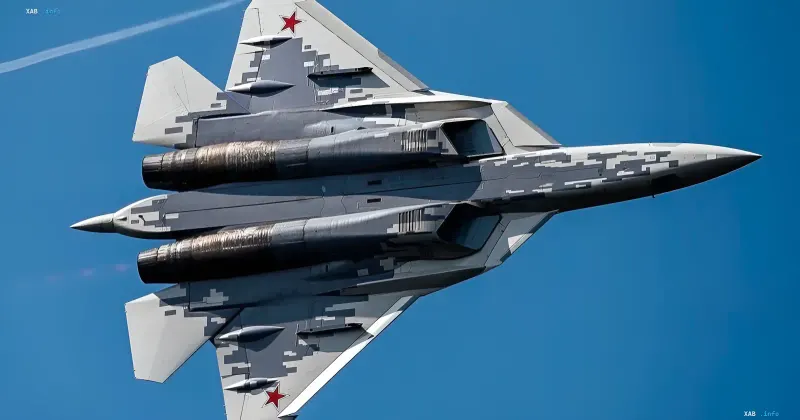
In an interview published in September 2026, Vadim Badekhi, CEO of the United Aircraft Corporation (UAC), stated that the Su-57 is, to date, the only fifth-generation fighter that has actually taken part in combat operations and demonstrated its capabilities against modern foreign weapons systems. According to him, the Russian fighter holds a favorable position in the Indian market, where the American F-35, according to UAC data, is currently not being considered as a candidate. Alexander Mikheev, CEO of Rostec's Rosoboronexport, also emphasized that the Su-57 has been tested in real combat conditions against an adversary equipped with modern air defense systems, electronic warfare means, and fighters, and that acquiring this aircraft could help Russia's strategic partners maintain long-term air superiority.
Export expansion: from Algeria to Iran
According to available data, the Su-57 fighter is gradually gaining a foothold in the international market, with at least three foreign customers having placed orders for the aircraft. Algeria began receiving Su-57s in November 2025. In February 2026, reports emerged of contracts signed in the Middle East, which, according to analysts, are most likely linked to deliveries to Iran. In early September 2026, Rosoboronexport announced the conclusion of additional export contracts for the supply of Su-57s, with Kazakhstan and North Korea being considered as potential customers. Thus, by mid-2026, a notable queue of buyers across several continents had formed around the Russian fighter.
Su-57 vs. F-35: where the real advantages lie
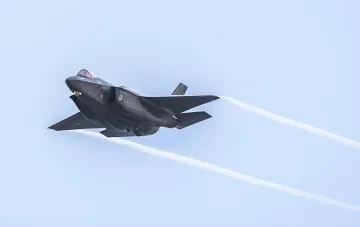
The comparison of the Su-57 with the American F-35 remains a subject of debate. Among the cited advantages of the Russian fighter are its ability to integrate a wide range of air-to-ground missiles and combat experience in their use, as well as greater range and high flight performance with maneuverability. At the same time, limitations associated with the Block 4 software have affected the F-35's ability to integrate certain types of weapons, which, in the view of a number of experts, may give the Su-57 certain short-term offensive capabilities. Nevertheless, the F-35 retains its strengths in stealth and avionics: the American aircraft is equipped with a distributed aperture system, which the Su-57 lacks, and is highly valued for its intelligence-gathering and network warfare capabilities.
The Chinese J-20A as the main challenge
In addition to the F-35, the Chinese J-20A is considered a serious competitor to the Su-57, and is currently recognized as one of the world's leading air-superiority fighters, although China has not yet put it on the export market. According to the data provided, the J-20A combines greater range, highly rated stealth capabilities, and the WS-15 engine, which is believed to place the Chinese aircraft at a higher level of development compared to Russian counterparts. In the task of achieving air superiority, the Su-57 is not yet considered a worthy rival to the J-20A.
Contradictory data
Claims of the Su-57's superiority over foreign fighters remain controversial. On the one hand, officials of UAC and Rosoboronexport insist that the Su-57 is the only fifth-generation fighter with confirmed combat experience and that it demonstrates superiority on the battlefield. On the other hand, the claim of "uniqueness" in combat use is disputed: the American F-35 has also been deployed on combat missions in the Middle East, and some export contracts (in particular, those linked to Iran) are based on reports and have not been officially confirmed. Moreover, the Su-57's ability to directly compete with the F-35 and the Chinese J-20/J-35, according to analysts, still requires careful examination, and some of the claimed advantages (range, maneuverability) are offset in the Russian aircraft by the absence of a distributed aperture system and shortcomings in network warfare and reconnaissance.