An investigation by the Financial Times, based on a leak of internal Russian correspondence, business trip records, and an analysis of military patents, has revealed the existence of a long-running secret program under the code designation C430L, under which Moscow is assisting Tehran in developing supersonic sea-based cruise missiles. According to the publication, the project, launched in 2023, has drawn some of Russia's most experienced missile specialists and represents one of the most significant known transfers of strategic military technology from Russia to Iran. The program's main goal is to help Iranian engineers master the ramjet (a ram-air jet engine), which allows a cruise missile to fly at several times the speed of sound; combined with low-altitude flight, this sharply reduces the time available for detection and interception by modern air and missile defense systems.
Architecture of the Secret Program and Its Organizers
Coordination of the C430L project was carried out by the state arms exporter Rosoboronexport together with NPO Mashinostroyeniya — a company that the United States placed on its sanctions list as early as 2014, designating it as the leading Russian missile enterprise responsible for sea- and land-based cruise missiles as well as work on Russia's strategic nuclear forces. According to leaked travel documents, Russian arms export officials and a number of leading NPO Mashinostroyeniya engineers visited Iran on multiple occasions even before the official signing of a contract with the Iranian Ministry of Defense in November 2023. This indicates that the actual work on technology transfer began well before the formalization of the relationship in a contract.
Key Figures and the Technical Core of the Project
Among the identified participants of the program, the FT names Alexander Dergachev, then deputy head of NPO Mashinostroyeniya and chief designer of sea-based missile systems, as well as Alexander Chebakov — head of the design department for air-breathing powerplants, who visited Tehran three times in 2023. According to Russian patents, Chebakov is the specialist on supersonic ramjets for cruise missiles. By 2025, NPO Mashinostroyeniya had received an extensive body of Iranian technical materials on the ramjet: Russian engineers analyzed data from one of Iran's flight tests and sent Tehran a detailed list of questions concerning the fuel system, combustion stability, and the design of the engine's intake and nozzle. In April 2025, Rosoboronexport proposed sending a delegation of around two dozen Russian specialists to Iran to conduct technical consultations under C430L.
Timeline: From First Contacts to 2026
The investigation documents the continuity of the program throughout the entire period, including the time of the American-Israeli war against Iran. According to the correspondence, C430L was active in 2026 as well: Moscow was preparing technical reports for Tehran, and the parties were discussing the next stage of cooperation. A letter from Rosoboronexport dated June 2026 confirms that, at the time the FT piece was being prepared, the parties were still finalizing the details of a new stage, although the start of its implementation remains unconfirmed. Iran, according to the FT, has already built and flight-tested a ramjet, however no evidence has been presented to date of the deployment of a finished supersonic missile created with Russian assistance.
Strategic Context and Mutual Military Assistance
The C430L program fits within a broader course of strategic military rapprochement between Moscow and Tehran. Previously, Iran supplied Russia with "Shahed" strike drones and helped establish their production directly on Russian territory. Ukrainian and Western officials have also accused Russia of providing Iran with battlefield assistance during its conflict with the United States and Israel — including the transfer of satellite imagery, drone support, and the supply of weapons components. In July 2026, Reuters reported on possible Russian involvement in Iranian strikes on CIA facilities in the Persian Gulf, where experts were looking for a "Russian fingerprint" in the attacks. Against this backdrop, the United States struck a bridge linking Iran with Russia and China, marking yet another episode of escalation.
Contradictory Data
The available sources contain a number of inconsistencies and areas of uncertainty. First, the FT emphasizes that there is as yet no evidence of the actual deployment of a supersonic missile with Russian assistance: Iran has tested the engine, but the transition from prototype to serial weapon has not been confirmed. Second, although the program formally began in 2023, travel data show that working contacts between the two countries' specialists preceded the signing of the contract in November 2023, blurring the clear chronological boundary of the project's "start." Third, the Rosoboronexport letter dated June 2026 records only the finalization of details for the next stage, but does not confirm its actual start — thus, the status of the program at the current moment (September 2026) remains in a transitional phase. Finally, the Kremlin, Rosoboronexport, and NPO Mashinostroyeniya did not respond to the FT's requests, which rules out verification by Russian officials.
Moscow's Reaction and Geopolitical Consequences
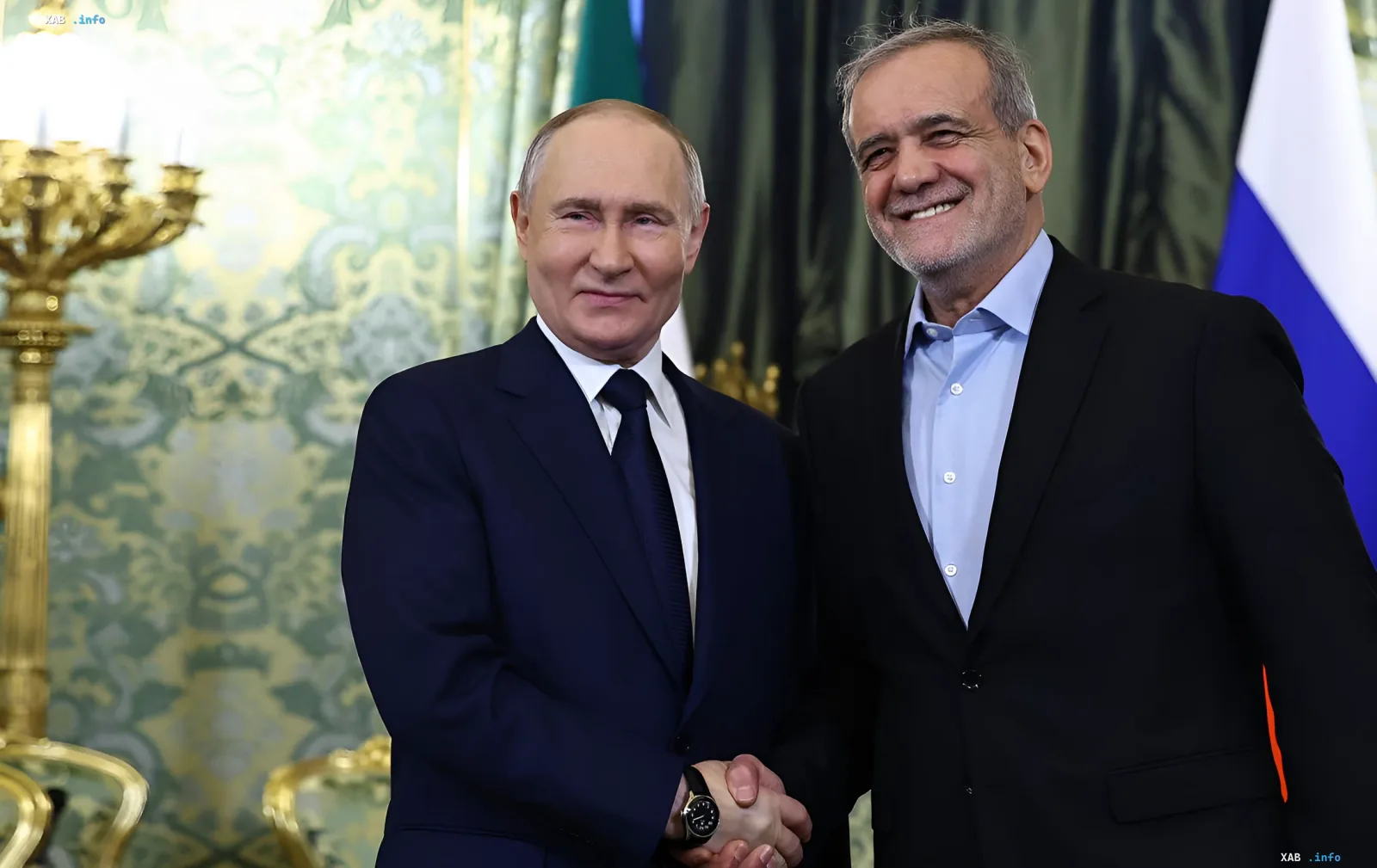
Speaking against the backdrop of the ongoing conflict, Russian President Vladimir Putin told his Iranian counterpart Masoud Pezeshkian that Moscow "is trying to provide the necessary assistance during this difficult period," "supplying the needed goods," without specifying details. This public statement indirectly confirms the fact of ongoing interaction but does not disclose the technical parameters of the C430L program. For the regional security of the Persian Gulf, the emergence of operational supersonic sea-based cruise missiles in Iran's arsenal would constitute a qualitatively new challenge for American carrier strike groups and allied forces using modern land- and sea-based defense systems. The deployment of such a weapon, capable of penetrating multi-layered air defense, would radically alter the balance of power in the Middle East.