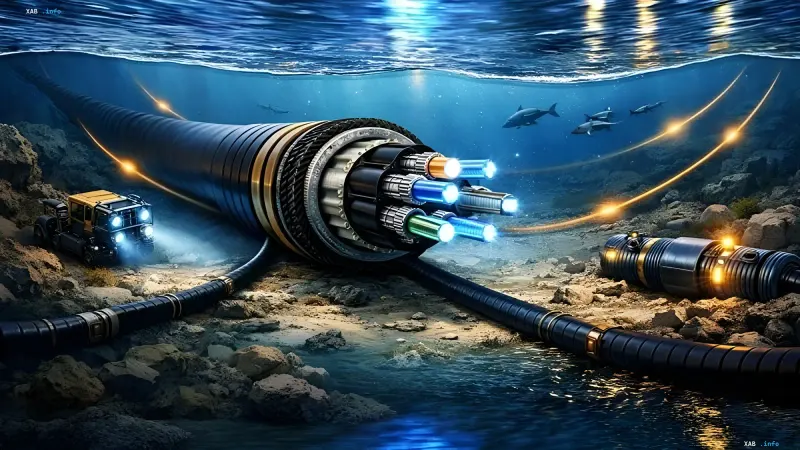
On August 15, 2026, the world continues to live in a reality shaped by the events of February 2024, when a digital infrastructure catastrophe occurred in the Red Sea. The simultaneous damage to four critical submarine fiber-optic cables — AAE-1, Seacom, EIG, and TGN — sent shockwaves through the global economy. According to data compiled by ICTVietnam based on telecommunications industry reports, internet access was disrupted for over 100 million people in West and North Africa within a short period. Approximately 70% of data traffic between Europe and Asia was affected, significantly exceeding initial expert estimates. This incident became a turning point, exposing a harsh reality: the "data flows" transmitted daily over the internet — from messages and videos to artificial intelligence (AI) models — depend on thin threads laid deep beneath the ocean.
Geopolitics on the Ocean Floor: From Anchors to Sabotage
Preliminary data suggests that the cause of the massive outage was the retrieval of anchors from a ship previously sunk by Houthi forces. However, the group denies directly damaging the cables, creating room for geopolitical speculation. This incident was not an isolated case. According to a 2025 report by the German Heinrich Böll Foundation, approximately 150-200 incidents involving submarine cables are recorded globally each year. While most are caused by natural factors or accidents, a growing number of incidents are leading governments to suspect deliberate sabotage. Submarine cables have ceased to be merely data transmission infrastructure and have become a strategically vital asset in the digital economy.
The Digital Artery: 99% of Traffic and AI Vulnerability
According to data from the research firm TeleGeography, by 2025 there were approximately 597 active or under-construction submarine fiber-optic cables worldwide, compared to 559 the previous year. The total length of these cables reached nearly 1.5 million kilometers, connecting continents through thousands of landing points. A report by the American firm Recorded Future indicates that currently, approximately 99% of international data traffic is transmitted via submarine cables. Unlike satellites or telecommunications antennas, cables laid on the seabed are fundamental infrastructure that allows data centers, cloud services, and artificial intelligence models to operate and interact with each other. Without them, these massive data centers would be nothing more than "expensive warehouses," according to the head of Meta's investment division for network infrastructure.
New Rules of the Game: Cables as a Resource of Power
In an analysis of submarine cable infrastructure in the Middle East and Africa, the Center for Strategic and International Studies (CSIS) in the US noted that countries possessing submarine cable landing points have a distinct advantage in developing their domestic digital economies, ranging from IT services to digital startups. Comparing them to historical examples, many researchers argue that modern submarine cables play a similar role to the shipping routes that defined the power of maritime empires in the 19th century: those who could ensure the security of these vital routes gained a commercial and security advantage. The difference is that today these "routes" lie on the ocean floor, making them difficult to monitor and protect along their entire length.
Contradictory Data
There are disagreements surrounding the Red Sea incident regarding the exact assessment of damage and motivation. On one hand, telecommunications operators report a loss of 70% of traffic between Europe and Asia, which is a catastrophic figure. On the other hand, official representatives of the Houthi group deny the intentional nature of the actions, claiming that the cable damage was an accidental consequence of anchor retrieval. Furthermore, there are discrepancies in assessing the long-term consequences: some analysts predict a full transition to Starlink satellite technologies, while infrastructure experts insist that satellites cannot replace the bandwidth of fiber optics required for AI tasks and financial transactions.