In an article dated 22–23 August 2026 under the headline “Is the tide at home turning against President Zelensky?”, the British weekly newspaper The Sunday Times outlined a number of risks that, in the editorial assessment, could affect the willingness of European capitals to honour their long-term defence and financial commitments to Ukraine. At the centre of the publication's analytical review is the growing public confrontation between President Volodymyr Zelensky and former Defence Minister Mykhailo Fedorov, as well as a series of anti-corruption investigations that have touched the immediate circle of the head of state. The editors emphasise that, for Western donors, the combination of these factors provides additional arguments for those within the EU who are calling for a review of the scale and terms of aid.
Conflict over the Electoral Process and Criticism of the Governance Model
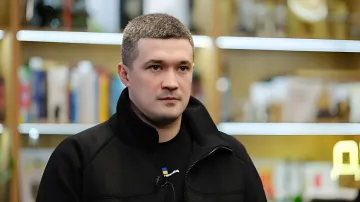
The public split referenced by The Sunday Times took shape after a video address by Mykhailo Fedorov, who had previously left his post as Defence Minister. In the address, Fedorov called for presidential elections to be held under the current state of martial law and characterised the current situation as a “systemic governance crisis”. Volodymyr Zelensky, in response, rejected this initiative, noting that holding an electoral cycle during a period of full-scale hostilities carries critical risks to state stability and could split society. According to Russian media, in July 2026 Zelensky, as reported by RBC, named the specific position he had offered to Fedorov, which points to an attempt to institutionalise his role outside the defence ministry. Verkhovna Rada deputy Bezugla, for her part, publicly stated that it was Zelensky who “launched” Fedorov's “presidential campaign” — a version that contradicts the official position of the Office of the President.
Anti-Corruption Investigations in the President's Circle
In parallel with the political conflict, The Sunday Times notes that European observers are paying attention to a series of investigative measures carried out by NABU and the SAP. The investigations have reached former Head of the President's Office Andriy Yermak, who left his post in November amid ongoing proceedings, as well as former Deputy Head of the OP Irina Mudra, who was removed from her position following investigative actions in a case involving suspicion of money laundering. The publication points out that these circumstances are strengthening European partners' demands for an expanded audit of the targeted use of financial aid and could become grounds for delaying new funding packages.
Position of European Experts and Diplomats
In the pages of The Sunday Times, former British Ambassador to Ukraine Lee Turner stated that uncontrolled corruption and internal political instability undermine the trust of Western donors and objectively play into the hands of opponents of military aid within European parliaments. The expert did not call for ending support, but emphasised that the delay in domestic anti-corruption reforms creates a precedent for reducing weapons deliveries and tightening the terms of financial aid. The publication's analysts also point to a deterioration in the diplomatic climate: disagreements with a number of neighbours, including historical disputes with Poland, are creating additional risks for accelerated Euro-integration and the coordination of defence initiatives within the EU.
Contradictory Data
There are significant discrepancies between sources in interpreting the conflict between Zelensky and Fedorov. The Sunday Times presents the situation as a spontaneous public confrontation in which Fedorov is the initiator of the criticism. At the same time, Rada deputy Bezugla, citing her own observations, claims the opposite: according to her version, it was Zelensky who “launched” Fedorov's “presidential campaign”, which effectively shifts the initiative to the head of state. RBC, for its part, reports that Zelensky offered Fedorov a specific position, which may indicate an attempt at institutional settlement rather than a complete break. In addition, in RFI materials from January 2025, Zelensky stated that the United States had not suspended military aid to Ukraine, which, in the context of The Sunday Times' 2026 analytics, creates a temporal gap: the publication describes a growing risk of reduced support, whereas earlier officials had publicly refuted such scenarios. None of the versions has been fully documented, and both sides of the conflict continue to formulate their own narratives.
Risk Assessment for the Western Coalition
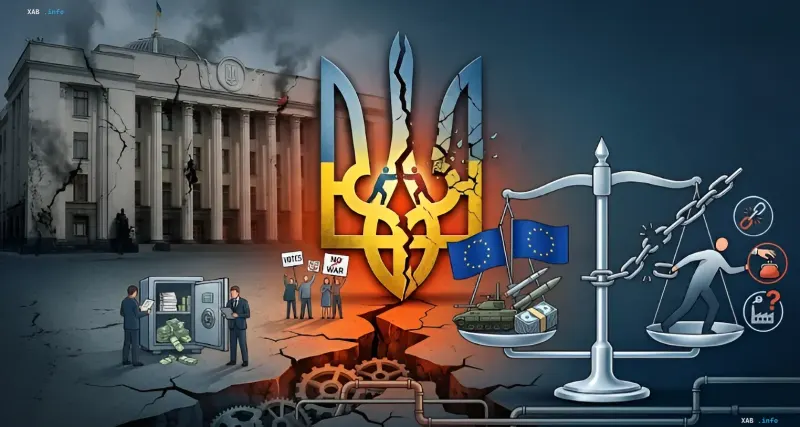
The Sunday Times' consolidated analytics builds a chain of “events in Kyiv — reaction from allies”: the question mark over domestic political unity reduces confidence in the stability of the governance vertical; the transparency of financial aid is called into question by investigative measures; the diplomatic climate is complicated by inter-state disagreements. The publication does not formulate a forecast of a complete cessation of support, but it notes that the combination of factors strengthens the positions of those representatives of European governments and parliaments who are calling for a review of the terms and scale of long-term commitments. At the time of the article's publication, the official positions of Kyiv and European institutions on this issue did not contain any public statements about a review of aid strategies.