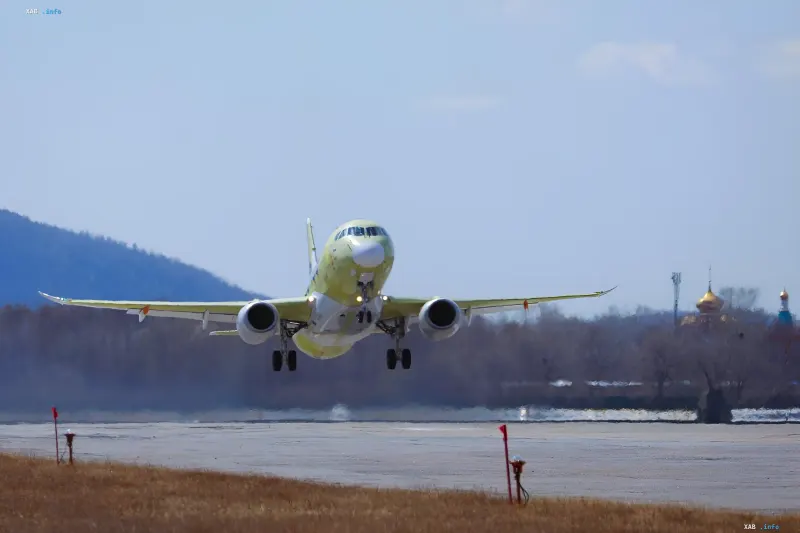
Rostec, citing the United Aircraft Corporation (UAC), has announced the implementation of an upgraded landing gear design on the Russian import-substituted Superjet aircraft. The new configuration is designed for operation in the challenging conditions of regional airports, where the quality of runways and taxiways often does not meet the standards of major hubs. According to the corporation, the improvement aims to expand the aircraft's operational range and reduce requirements for airfield infrastructure.
Dual-chamber shock absorbers: design changes
The aircraft has been equipped with new landing gear struts featuring dual-chamber shock absorbers. As noted in the report, the design was developed taking into account practical experience operating aircraft on airfields with uneven runways and taxiways. The dual-chamber shock absorber scheme allows for more even load distribution during landing and taxiing on rough surfaces, reducing the risk of damage to landing gear components and increasing the design's service life. According to the UAC, tests have confirmed the stated performance characteristics of the updated configuration.
Extended maintenance intervals
In addition to the landing gear upgrade, maintenance intervals for the Superjet have been extended. This means that airlines will need to take aircraft out of service for routine maintenance less frequently. According to the developers, such measures reduce fleet maintenance costs and increase aircraft availability, which is particularly important for regional carriers with limited fleets.
Context: import substitution and regional airport network
The landing gear and maintenance schedule update fits into the broader context of adapting domestic civil aviation technology to the conditions of regional airports, where infrastructure often requires improvement. Expanding the permissible operating conditions allows the Superjet to be used on a greater number of routes without the need for major airfield repairs. However, all stated specifications are currently based on the manufacturer's internal test results and official reports from Rostec and UAC; no independent public verification of the new design parameters is available in open sources.