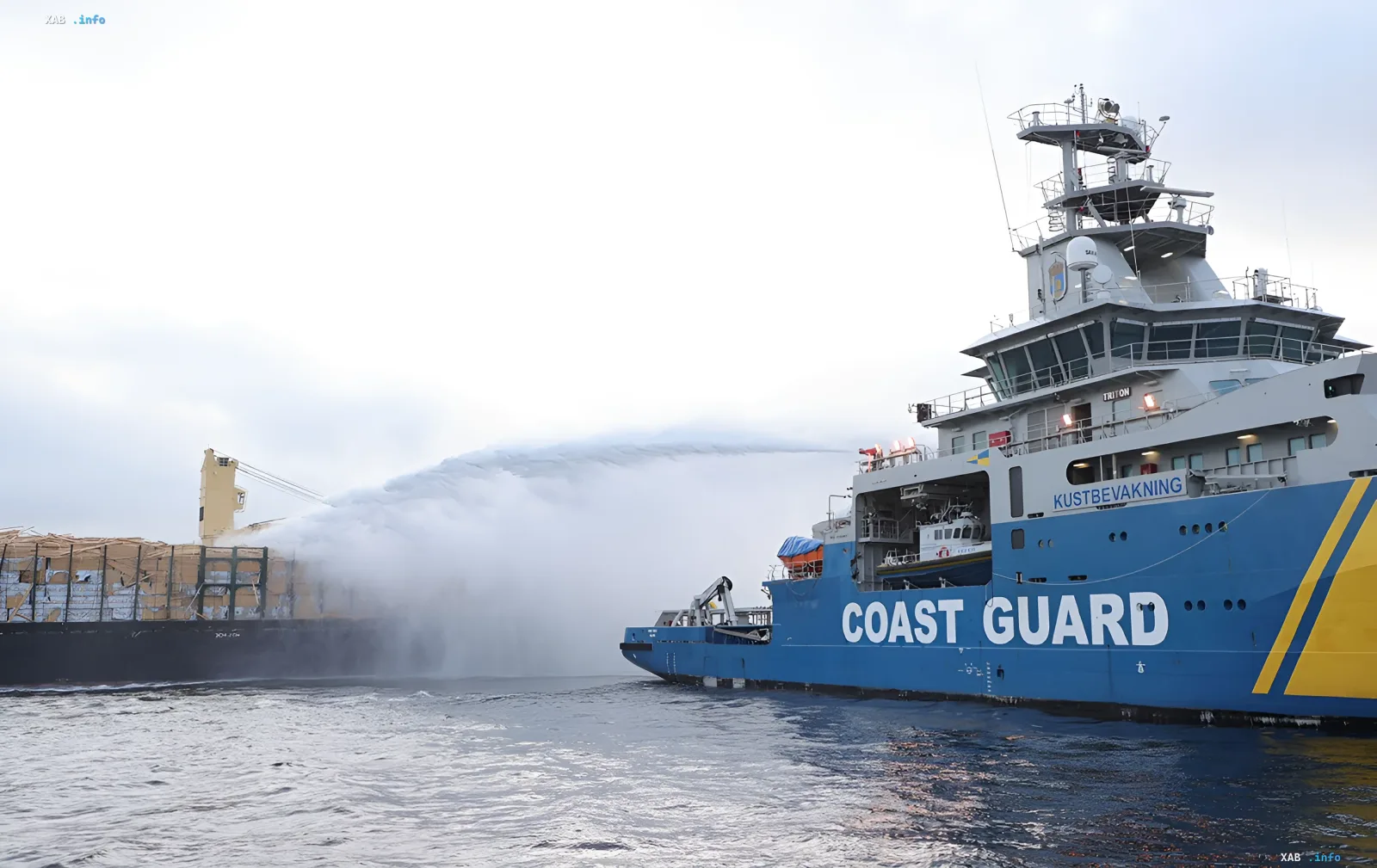
Sweden intends to transfer ten high-speed coast guard boats to Ukraine. This is reported by RBC-Ukraine, citing a statement from the Swedish government. The vessels will be handed over directly to the State Emergency Service of Ukraine (SESU) and, according to the source, will arrive in the same technical condition in which they currently are.
Rescue Operations and Demining
As clarified, the boats will help rescuers carry out operations on the water and will strengthen Ukraine's capabilities in towing, demining, and transportation. "Sweden supports Ukraine on many fronts and is now further strengthening Ukraine's maritime capabilities," stated Swedish Minister for Civil Protection Carl-Oskar Bolin. Thus, the transfer of the vessels expands not only the military but also the civilian and humanitarian component of the aid.
Technical Condition and Terms of Transfer
It is separately emphasized that all ten vessels are being transferred in their current technical condition. This means that the boats will arrive at SESU without any promise of major repair or modernization, and their operational readiness will depend on the Ukrainian side's maintenance capabilities. For the emergency service, however, this is a quick way to replenish the fleet of watercraft needed for operations in the Black Sea waters and on inland waterways.
In the Context of European Aid
Stockholm's decision fits into the general flow of European support for Kyiv. According to Italian media, Italy and France are preparing a new military aid package for Ukraine, which is reportedly to include four state-of-the-art SAMP/T NG batteries, Aster 30 interceptor missiles, and seven long-range radars. In addition, President Volodymyr Zelenskyy previously stated that Ukraine had received additional missiles for Patriot systems, Crotale systems, and AIM missiles.
Frozen Russian Assets
In parallel, Sweden, together with the Netherlands, Spain, and Poland, has called on the European Commission to resume work on transferring frozen Russian assets to Ukraine, proposing the development of mechanisms to bypass the Belgian veto. This step is seen as part of broader financial and logistical support, to which a maritime component in the form of coast guard boats is now being added.