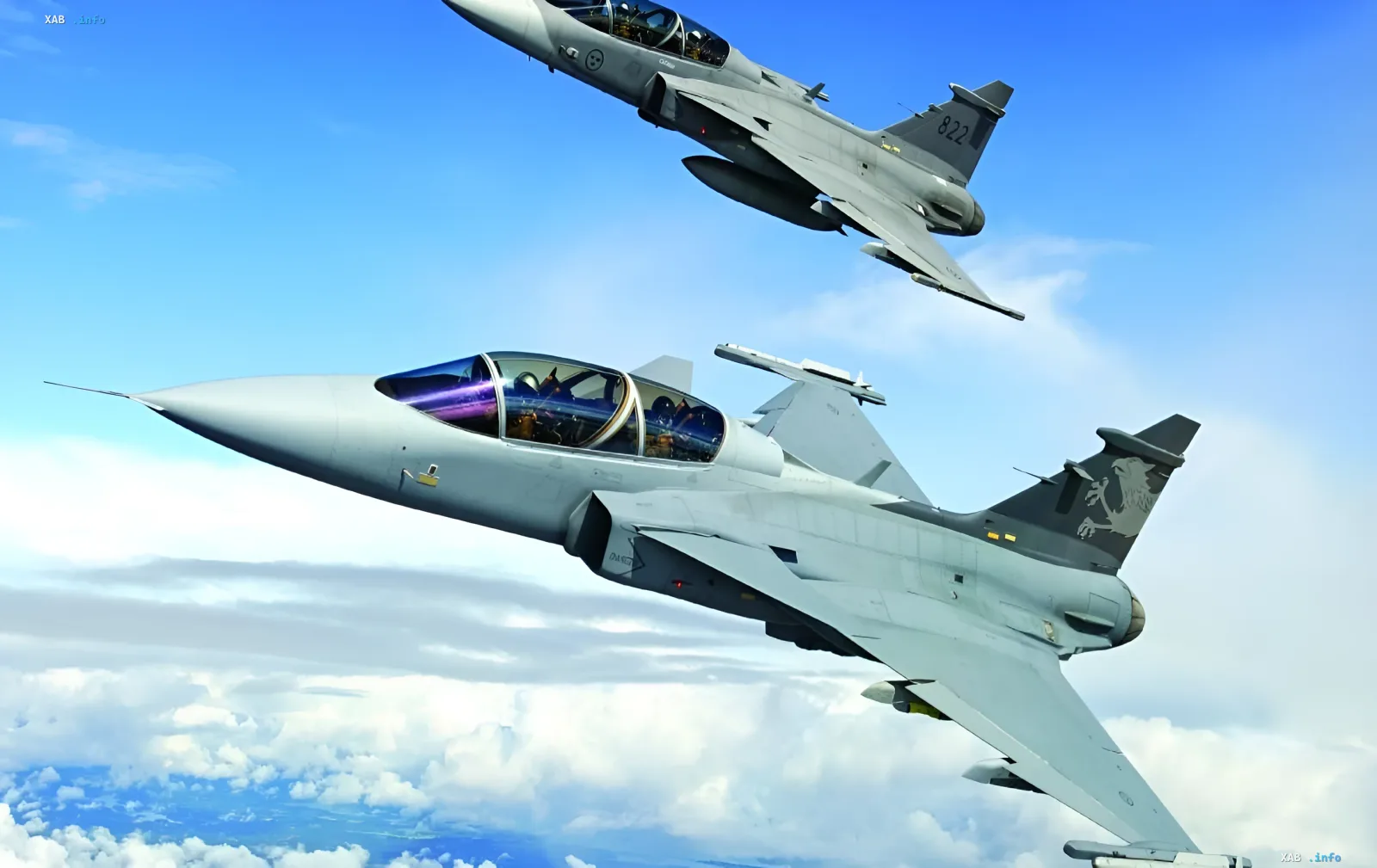
Swedish defense corporation Saab announced the successful completion of the first flight of the two-seat variant of the multirole fighter Gripen F (JAS 39F). The aircraft took off from the company's test airfield in Linköping and spent about 40 minutes in the air. This is reported by RBC-Ukraine, citing Saab's press service. During the test flight, engineers and test pilots checked the functionality of the main onboard systems, as well as a number of basic flight characteristics of the aircraft. In the footage published online, two Gripen-family fighters can be seen flying in formation against a clear sky — the tail of one of them bears the number "822", while the other displays the traditional emblem of the Swedish Air Force in the form of a lion.
What Will Be Tested in the Next Phases of Trials
According to Saab, the first flight was only the initial stage of a lengthy flight-test program. In subsequent phases, specialists will gradually subject the fighter to extreme operating regimes: maximum speed, maximum flight altitude, permissible g-loads, and angles of attack. In parallel, the team will assess the tactical capabilities of the two-seat configuration, as well as the ergonomics and functionality of the rear cockpit, where the second pilot or weapons operator is seated. Only after all planned procedures are completed will the Gripen F be ready for delivery to the Brazilian Air Force — the main foreign customer for this variant.
Technical Evolution: How the Gripen E/F Differs from the C/D
The JAS 39 Gripen E/F family represents a deep modernization of the fourth-generation multirole fighters Gripen C/D, which have been in service with the Swedish Air Force since the 1990s. The E and F variants feature an increased wing area and an elongated fuselage, which allowed additional fuel and avionics to be accommodated. A key upgrade was the installation of a more powerful General Electric F414 turbofan engine, as well as a new active electronically scanned array (AESA) radar, providing simultaneous tracking of multiple targets and improved resistance to interference. These changes significantly extend the fighter's range, reaction speed, and information advantage compared to previous variants.
Swedish-Brazilian Partnership and the Role of the Rear Cockpit
The Gripen E/F fighter was developed within the framework of a strategic partnership between Sweden and Brazil, which provides for extensive technology transfer under Brazil's fighter fleet modernization program. The two-seat F variant was developed with a dual purpose: pilot training and increased efficiency in jointly carrying out combat missions, where the second pilot can manage weapons or coordinate the actions of a group. At the same time, unlike many two-seat trainer-combat variants, the Gripen F retains its full combat capability and all ten weapons hardpoints, making it a full-fledged strike aircraft rather than just a trainer.
Outlook: Controlling Unmanned Fighters
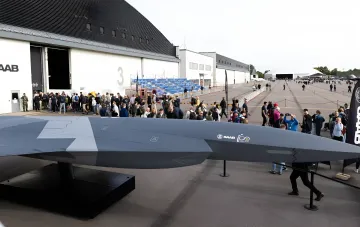
Particular attention should be paid to information about the future capabilities of the Gripen F. As Saab has previously demonstrated, in the future the fighter may acquire the functions of an air group commander controlling unmanned "loyal wingman" fighter drones. The company has already publicly shown a prototype drone-fighter designed for joint operations with a manned Gripen. This paves the way for "one pilot plus several UAVs" tactics, which is gradually becoming the standard for new generations of combat aviation. For Brazil, which is receiving the Gripen F under a long-term contract, such functionality significantly increases the value of the acquired equipment and ensures the fleet's relevance for decades to come.