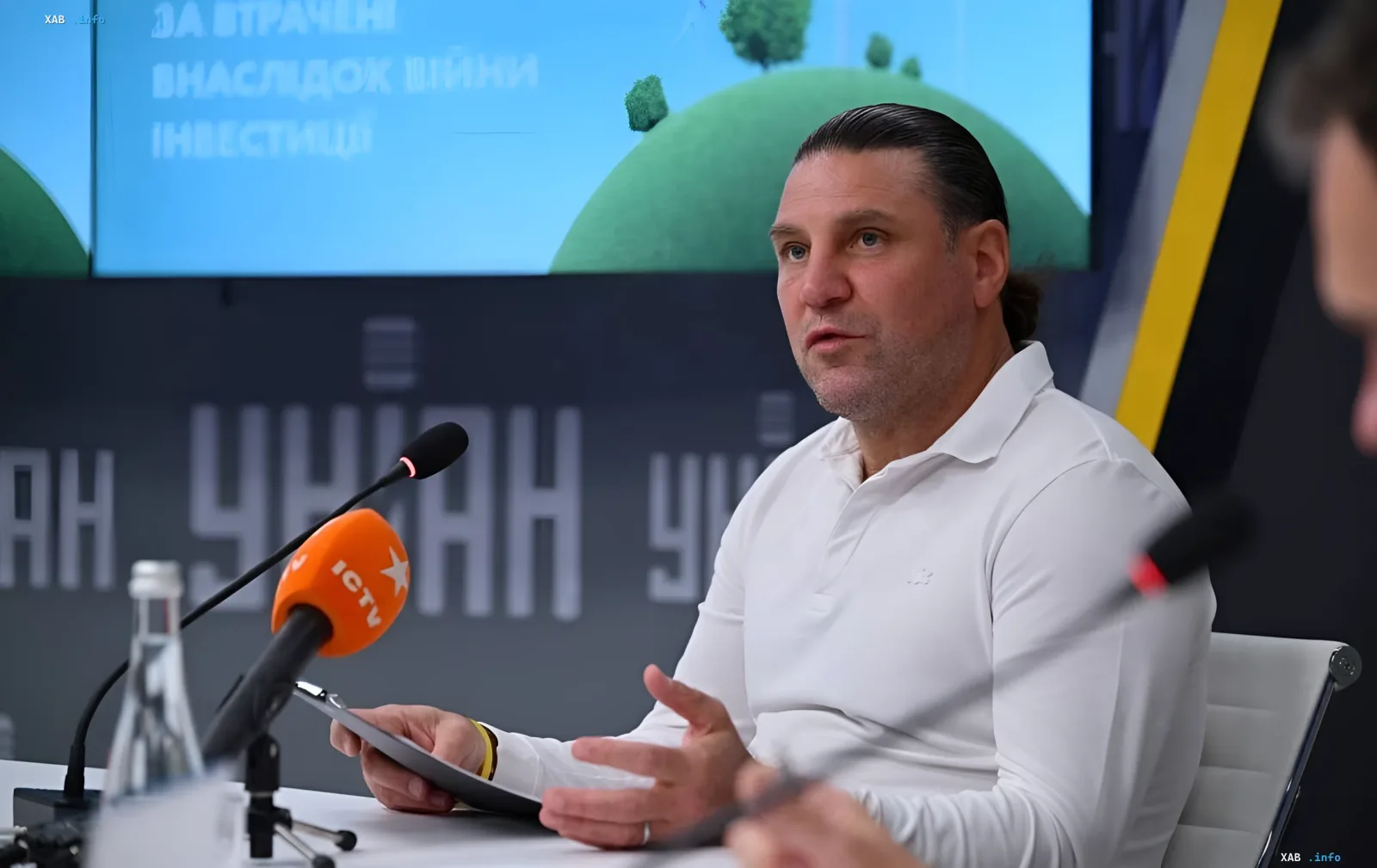
Swedish investor Carl Sturen, who has been operating in Ukraine for 32 years, has officially notified the state of the initiation of an international investment dispute procedure. He announced this at a press conference in Kyiv, stating that he sent Ukraine a "Notice of Investment Dispute" in accordance with the Agreement between the Governments of Ukraine and Sweden on the Promotion and Mutual Protection of Investments, as well as the Energy Charter Treaty. According to him, the actions and inaction of Ukraine, carried out through its judicial system, constitute a denial of justice and a violation of the investment protection provisions provided for in the aforementioned treaties and customary international law.
Background of the Dispute: Loss of Assets and Insurance Denial
After the start of the full-scale invasion and the occupation of the left-bank part of the Kherson region, Sturen's company "Vindkraft" lost access to the wind power plants located there. The assets had been insured against destruction or loss due to war risks with the Austrian insurance company UNIQA. Following the denial of insurance payouts, the company filed two lawsuits in Ukrainian courts, with a total amount exceeding 10 billion UAH. The court of first instance ruled in favor of "Vindkraft," however, after the case was reviewed, the company ultimately lost the dispute in the Supreme Court of Ukraine.
Allegations of Pressure on the Judicial System
Carl Sturen links the change in the course of the court proceedings to the activity of the Austrian embassy — the country of origin of the UNIQA insurance group. According to him, the ambassador sent written appeals to the judges of each court hearing the case, noting that the embassy "is closely monitoring its progress." Representatives of the embassy, according to the investor, also attended the court hearings. In addition, Sturen referred to media reports of a possible personal meeting between the ambassador and the head of the Supreme Court. The investor also expressed concern over media information about possible influence on judges in the interests of UNIQA by former Deputy Head of the Office of the President Iryna Mudra, who is currently under investigation by the NABU.
The Essence of the Claim: The Process, Not the Outcome
Sturen emphasizes that the basis for the investment dispute is not the outcome of the private commercial dispute with UNIQA, but how, in his opinion, the Ukrainian courts handled the case. "I am not saying that Ukraine was obliged to guarantee a favorable outcome in a private commercial dispute. Of course, it was not. However, it was obliged to ensure that its courts acted fairly, consistently and not arbitrarily, respected the procedural rights of the parties and applied the law and its own Supreme Court guidelines in good faith. In our opinion, this did not happen here," stated the Swedish businessman.
Pre-Arbitration Stage and Readiness for Negotiations
The notice of investment dispute is a pre-arbitration stage, at which the investor officially notifies the state of claims regarding a possible violation of international obligations. At this stage, the parties may attempt to settle the dispute through consultations and negotiations. Sturen stated that he offered Ukrainian representatives to begin such consultations and is ready to personally participate in negotiations in Kyiv or via video conference. "The submission of this notice does not mean that a peaceful settlement of the dispute is no longer possible. The purpose of the notice is to provide Ukraine with a clear statement of the nature of the dispute and an opportunity to settle it," he emphasized.
Contradictory Data
It is important to note that Sturen's key claims about pressure on the judicial system — in particular, about the role of the Austrian embassy and the possible influence of Iryna Mudra — are his personal statements made at the press conference. The provided sources contain no independent confirmation of these facts by Ukrainian authorities, the Austrian embassy, or the court. The official position of Ukraine on the received notice, as well as comments from UNIQA and the Austrian embassy, are not provided in the source text. Thus, the investor's version of systematic pressure on judges and the version that the change in the court decision was the result of a normal review of the case within procedural norms remain in the realm of public contradiction, which can only be resolved at the stage of upcoming consultations or within the framework of arbitration proceedings.