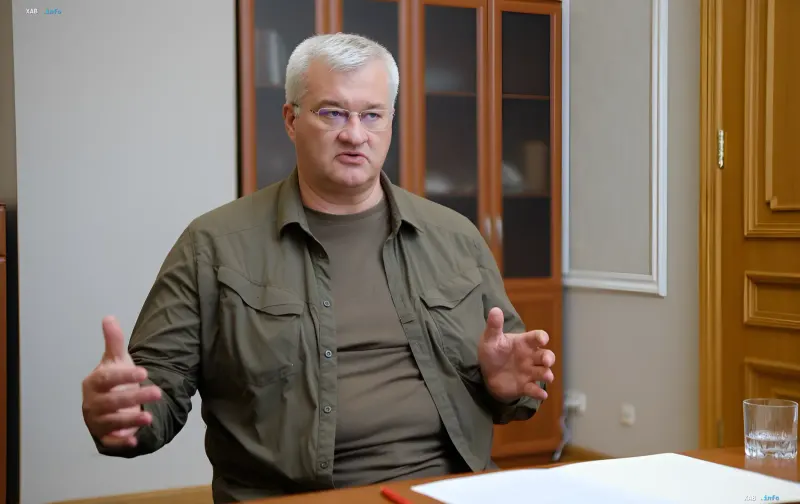
Minister of Foreign Affairs of Ukraine Andrii Sybiha held a large-scale meeting with journalists, outlining key foreign policy and security priorities for the state as of autumn 2026. The main topics included the supply of critical weapons for the upcoming winter period, the development of asymmetric sanctions against Russian oligarchs, and a detailed analysis of existing peace initiatives.
Air Defense Provisions and Critical Missile Needs
One of the central topics of the briefing was the protection of Ukrainian skies from Russian missile and drone strikes. According to estimates by the Ministry of Defense and the General Staff of Ukraine, the minimum requirement of the Defense Forces for interceptors for Patriot systems for the upcoming winter period is at least 300 units. These figures are based on an analysis of the Russian military-industrial complex, which produces between 120 and 140 ballistic and cruise missiles monthly while maintaining significant reserves in warehouses.
In addition, Kyiv is actively working with international partners to supply ammunition of various calibers, including 20mm shells. According to the minister, specific agreements have already been reached with Spain, Belgium, and Poland, with Warsaw already beginning the practical transfer of necessary weapons. The Ukrainian side is also negotiating the purchase of jet interceptor drones from domestic private manufacturers who are ready to scale production if funded on time.
Asymmetric Response in Sanctions Policy
In response to the actions of foreign jurisdictions lifting sanctions on two Russian oligarchs, official Kyiv prepared a tough and mirror response. Andrii Sybiha announced that the President of Ukraine approved an expanded list including more than 20 Russian oligarchs for national and international restrictions.
Simultaneously, Ukrainian diplomacy is working to synchronize sanctions pressure on major businessmen such as Usmanov and Fridman across key Western jurisdictions, including Canada, Great Britain, Japan, and Australia. This approach demonstrates Ukraine's determination not to leave unanswered any attempts to weaken the sanctions regime against the inner circle of the Russian leadership.
International Peace Initiatives and Four Truce Concepts
Commenting on the diplomatic track, the Foreign Minister reported on the existence of four different truce proposals received from international actors. The most comprehensive plan was proposed by India, which expressed readiness to play an active mediation role for the first time. Turkey, Egypt, and the United States also presented their initiatives.
The Ukrainian position is that Kyiv is ready to consider exclusively a comprehensive energy and Black Sea truce, implying a complete halt to strikes on energy infrastructure facilities and seaports only in a single package. Separate proposals from Turkey and Egypt focus primarily on food security and the grain corridor, while the American initiative, discussed at the highest leadership level, concerns the energy track specifically.