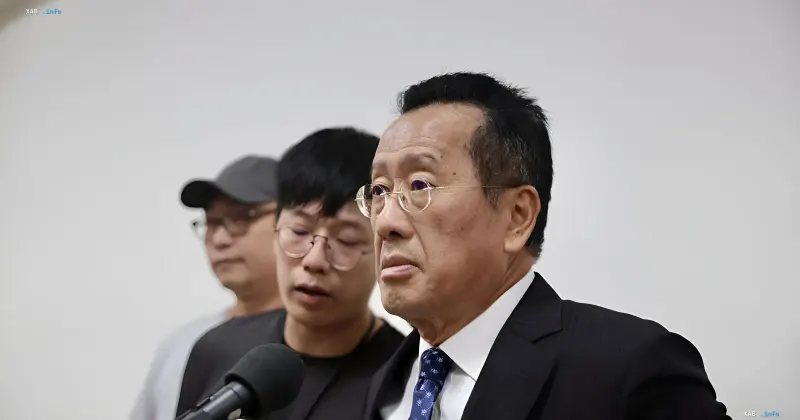
Taiwan's Ministry of Defense has officially confirmed that it has not received any official notifications or instructions regarding changes to ongoing deals and contracts for the supply of American weapons. Defense Minister Wellington Koo emphasized that all existing agreements remain in force despite recent high-level diplomatic contacts between the United States and the People's Republic of China.
Diplomatic Context and Washington-Beijing Contacts
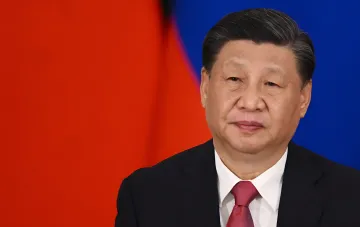
These statements were made against the backdrop of a recent meeting between US President Donald Trump and Chinese President Xi Jinping. According to official information from the Chinese side, during the talks, the Chinese leader expressed hope that Washington would firmly maintain its position against Taiwan's independence. In turn, the US leader stated that his Chinese counterpart clearly understood his position on the Taiwan issue, though specific details and closed aspects of the discussion were not publicly disclosed. Later, US Ambassador to China David Perdue confirmed the unchanged course of Washington, which continues to be based on previous principles of non-interference and the imperativeness of preventing coercive measures.
F-16V Fighter Jet Delivery Status and Compensation Measures
Special attention during the briefing was paid to the implementation of the major 2019 contract for the purchase of 66 Lockheed Martin F-16V multirole fighter jets. Although the implementation of this agreement previously faced delays compared to the original schedule, Taiwan's defense chief reported that deliveries are essentially ready. According to local media, the first two combat aircraft are currently in Hawaii awaiting transit ferry flights. Although a direct mechanism for penalties regarding delivery delays is not outlined in the contract, the Taiwanese side noted a constructive approach and a demonstration of goodwill by the US through the provision of additional compensatory measures.
Contradictory Data
It is worth noting that discussions periodically arise in expert circles and the media regarding the real timelines and volumes of military assistance to Taipei from Washington. Previously, following the US leader's visit to Beijing, the White House temporarily froze a major $14 billion arms package, using it as a strategic leverage tool against the PRC. While officials insist on the stability of all current contracts and the absence of cancellations, analysts continue to point out the vulnerability of defense supply chains in the face of geopolitical tension between the US and China.