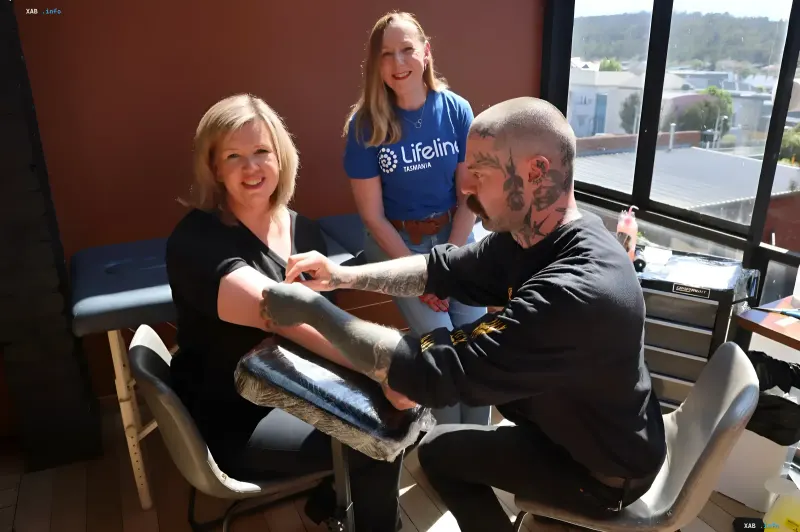
Tasmania has officially lifted the ban on the operation of mobile tattoo vans. State Health Minister Bridget Archer announced the change in sanitary regulations for the tattoo industry in an unusual format: right during a charity tattoo event in North Hobart, where a fresh two-star design was inked onto her arm. The updated Tattoo Guidelines were signed by the Director of Public Health, and publication of the document in the official gazette is scheduled for this week. The decision is the culmination of a months-long campaign by local artists who were previously unable to travel to festivals and private events with mobile equipment.
A Grassroots Initiative: From Petition to Parliament
The impetus for change came from the ground up. Scarr Parlour studio owners Jason Scarr and his wife Casey gathered a petition of around twelve hundred signatures and planned to present it to parliament the following week. The catalyst for their struggle was the Dark Mofo festival, where their van was ultimately not permitted to operate: under the regulations in force at the time, mobile tattooing was effectively prohibited. According to Jason Scarr, the business lost several small bookings as a result. Now, the artist emphasizes that he plans to actively take the van to events, calling weddings the most sought-after request as tattooing is increasingly seen as a personal ritual rather than just decoration.
What the New Rules Say
The key condition for legalization is simple: a mobile premises is acceptable for work if it is registered with the local council and meets the same procedural and environmental standards as a fixed studio. In addition to permitting van operations, the document reviewed references to current codes and standards and added a dedicated block on infection prevention and sanitary control. Minister Archer specifically noted that unsafe or unhygienic practices can have severe consequences, and the regulatory framework is designed to ensure infection control standards are consistently maintained. At the same time, she acknowledged that existing tattoo regulations are "rather outdated" and promised that the government will continue working to update them in the coming months.
Charity Context: Lifeline Tasmania
The announcement coincided with a Sunday flash event operating on a cash-only basis, with all proceeds going to Lifeline Tasmania. Jason Scarr hoped to raise "at least a couple of thousand" dollars. Liz Brown, Chief Executive Officer of the foundation, linked the event to raising awareness about mental health and accessible support during moments when people need it most acutely. A photo from the event shows a foundation employee in a signature blue t-shirt with the Lifeline Tasmania logo observing the artist at work.
A Compromise That Works
For the tattoo community, the decision looks like a logical step towards normalizing street and mobile formats. Mobile vans have long been part of festival and wedding culture: the artist travels to the event rather than the client visiting a studio. Legalizing vans under strict sanitary control is a compromise that protects both client and artist: the industry gains freedom of movement, while the state retains a verification tool. It remains to be seen how the new rules will translate into practice and whether further clarifications will be needed in the coming months.