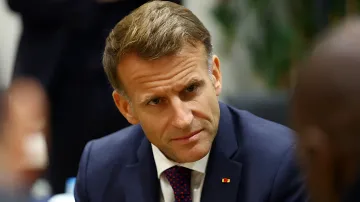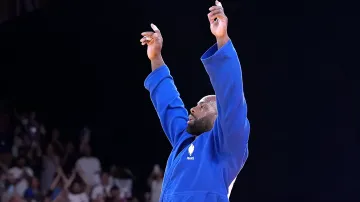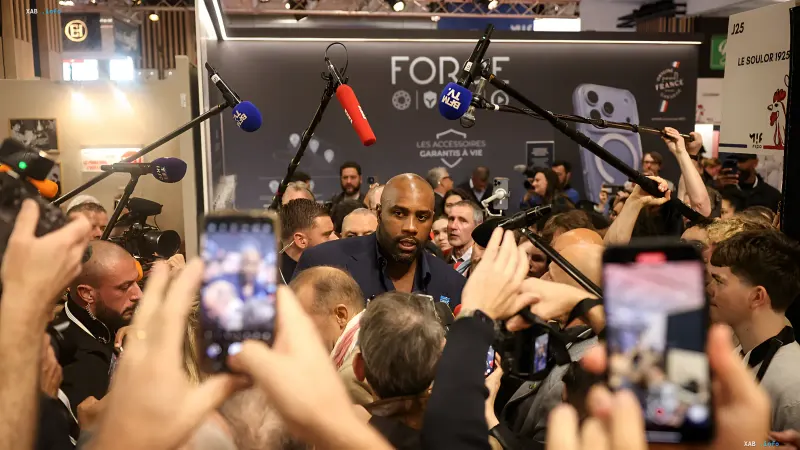
Five-time Olympic judo champion Teddy Riner, who announced on November 9 his intention to run for the French presidency in the 2027 elections, has sharply distanced himself from current head of state Emmanuel Macron. Speaking at the Made in France trade show in Paris, surrounded by dozens of cameras and photographers, the 37-year-old athlete described the president's congratulations following his candidacy announcement as a "poisoned kiss" and stressed: "I am not the president's messenger. I do not belong to any political family. I come with my own ideas, my own ambitions."
Positioning Outside Party Frameworks
Riner, a native of Guadeloupe, has repeatedly echoed the formula "neither right nor left," which he coined when first launching his bid. "I believe that France does not belong to the right or the left. It belongs to a single family, to the people who get up every day, work hard, and need help," he told journalists. This positioning prompted some rivals and commentators to portray him as Macron's unofficial heir, which likely triggered the judoka's harsh reaction. Macron himself, ineligible for a third term, publicly stated that he was "very pleased" with Riner's candidacy and that it "can only benefit the country."
Shadows of the Past: Véran, Braun, and Tax Claims
However, Riner's ties to the Macronist camp do exist and go beyond a single congratulatory message. A key role in his political project is played by business partner Philippe Véran, who joined Macron back in 2016 and later left his camp. "Teddy's program will be very far from Macron's," Véran assured in an interview with the La Provence newspaper. Former Health Minister François Braun, a long-time supporter of the president, has already publicly distanced himself from Riner's campaign. Simultaneously with his political launch, the champion's business troubles have resurfaced: according to L'Équipe, the tax administration is demanding over 244,000 euros from one of his real estate companies, and in early November, the Versailles Administrative Court of Appeal backed the tax authorities in a back-taxes case involving a luxury car rental company. When directly questioned by journalists, an irritated Riner replied that he "has always paid his taxes."
Polls: High Sympathy, but Growing Caution
An Odoxa poll conducted for Winamax and RTL records a drop in Riner's popularity: the figure is 11 points lower than in May 2023, although it remains at a high level—around 78% positive ratings. At the same time, nearly two-thirds of respondents consider him "close to the people," but 61% believe his candidacy has a negative impact on French political life. Another 57% of respondents oppose Riner combining a hypothetical presidential mandate with participation in the 2028 Olympic Games, an intention he has already declared. A separate Ifop poll conducted for RTL shows that around 20% of the French are ready to vote for him.
Race Context: 37 Candidates and the 500-Signature Threshold
Riner's candidacy adds to an already extremely long list of contenders a few months before the first round of the presidential election, scheduled for April 18, 2027. As of November 15, 37 people have declared their participation: four far-left, thirteen from the left camp, three centrists, four right-wing, three far-right, and sixteen categorized as "miscellaneous," including Riner. The National Rally, France Unbowed, the Communist Party, and the Republicans have officially named their candidates. To officially enter the first round, each candidate must collect at least 500 signatures from elected officials; following the opening of the filing period in February, the Constitutional Council must receive them no later than March 18, 2027.