On November 26, 2026, the United States celebrates Thanksgiving Day, one of the country's major family holidays, which this year falls on the fourth Thursday of November. Millions of Americans gather at a common table, give thanks for the events of the passing year, and spend time with loved ones. The holiday is a federal holiday and traditionally ends the autumn season, opening the Christmas shopping period.
When and Where Thanksgiving Is Celebrated
In the USA, Thanksgiving falls on the fourth Thursday of November every year and is among the federal holidays, meaning it is an official day off. In 2026, this date is November 26. In neighboring Canada, the holiday has its own date: it is celebrated on the second Monday of October, which in 2026 is October 12. Similar days of gratitude for harvest and prosperity exist in other countries — for instance, in Liberia, the national holiday is celebrated on the first Thursday of November, and in Grenada, it falls on October 25.
Where the Holiday Came From: The Story of 1621
The most famous story regarding the origin of American Thanksgiving relates to the autumn of 1621. English settlers of the Plymouth Colony, who arrived in the New World in 1620 and survived a harsh winter, held a three-day harvest festival. They were helped to survive by local residents — members of the indigenous Wampanoag people, who shared their knowledge of the terrain and food cultivation methods. According to sources, the Wampanoag leader Ousamequin and about 90 men arrived at the celebration, bringing five deer. According to legend, the colonists prepared wild birds, and the guests brought venison, fish, and vegetables.
This event is often called the first Thanksgiving, although traditions of thanksgiving ceremonies existed among various peoples long before it: in European countries, religious services were held as a sign of gratitude for the harvest, victory, or salvation from disaster. However, historians note that it is not known for certain if it was turkeys in 1621 that have become the main symbol of the holiday today.
From Proclamation to Federal Date
The official history of the holiday in the US begins in 1789, when the first president, George Washington, proclaimed November 26 as a National Day of Thanksgiving, though the holiday did not yet have a unified date for the entire country. Abraham Lincoln took a key step: in 1863, during the Civil War, he declared Thanksgiving a national holiday to be celebrated on the last Thursday of November, with the idea of uniting Americans during a difficult period for the country. The modern date was finally established in 1941: after discussions about moving the holiday, the US Congress set it for the fourth Thursday of November.
Main Traditions: Family Dinner, Parade, and Black Friday
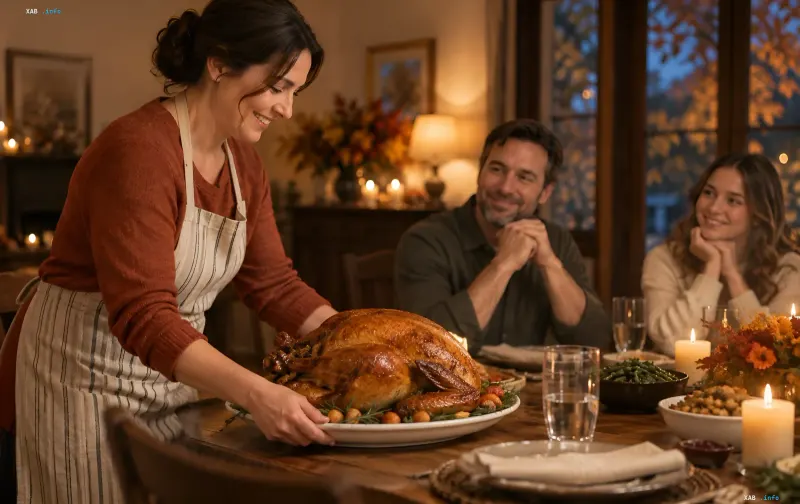
The central tradition of the holiday is the family dinner: relatives and friends travel long distances to gather at the table, and before the meal, they take turns sharing what they are grateful for this year. The turkey has become the main symbol and dish of the feast. In addition to family gatherings, large-scale public events take place in the US — primarily the Macy's Parade in New York, famous for its giant inflatable figures of cartoon and TV show characters. The holiday is also closely linked to commerce: the day after, Black Friday takes place — one of the biggest sale days of the year, opening the Christmas shopping season.
Turkey Pardon in 2026
A separate unusual tradition is the symbolic pardoning of a turkey by the US President, which has been held at the White House since 1947: the chosen bird is spared from becoming part of the festive dinner and spends the rest of its life on a farm. On the eve of Thanksgiving 2026, President Donald Trump announced the official pardoning of two turkeys — Freedom and Feathers. During the ceremony on the White House lawn, he read out the characteristics of the birds, including their weight, size, and wingspan, after which he granted them a "full and comprehensive pardon." Now the turkeys will live on a farm in Texas.
Canadian History of the Holiday
The Canadian tradition of Thanksgiving has its own history. One of the oldest known celebrations on the territory of modern Canada took place in 1578, when an expedition led by English explorer Martin Frobisher held a thanksgiving ceremony after a long voyage. Subsequently, the tradition was influenced by French and other European settlers, and in 1957, the Canadian Parliament officially established the celebration of Thanksgiving on the second Monday of October.