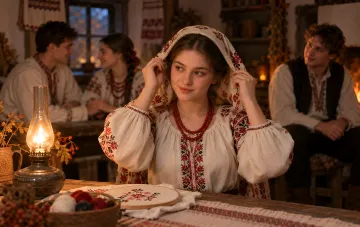
Moving into a new home in traditional Ukrainian culture was not merely a domestic chore, but a complex sacred ritual. From choosing the right day to protecting the home and honoring the memory of ancestors, every step followed age-old customs designed to ensure prosperity and harmony within the family.
Construction Rituals and Preparations
In traditional Ukrainian culture, building a home was accompanied by rituals at every stage. The appearance of a so-called flower on the roof — a green sapling or branch — is often seen today as a sign of construction completion, but historically this custom had a slightly different meaning. As explained by ethnologist, Doctor of Historical Sciences, Professor Roman Siletskiy, after the main structure was built, work could continue for a long time: roofing, oven construction, and carpentry still needed to be finished.
The tradition of placing a green branch on a new building was called "vekha," "voltse," "kosytsia," or "flower." According to the "Encyclopedia of History of Ukraine," it could initially be hung at the very beginning of construction, and later the custom shifted closer to completion. Waiting for everything to be perfect was not always necessary: "vkhodchyny" meant the first entry into the new home, while housewarming was the festive gathering to celebrate the move.
Choosing the Moving Day and First Guests
Choosing the moving day was given special weight, as folk beliefs held that it could influence the family's future. A full moon was considered a favorable time, with the belief that there would be plenty of everything in the house, while fasting periods were avoided for such an important transition. Church holidays like Pokrova, Vvedenie, and autumn memorial days were convenient opportunities for relocation.
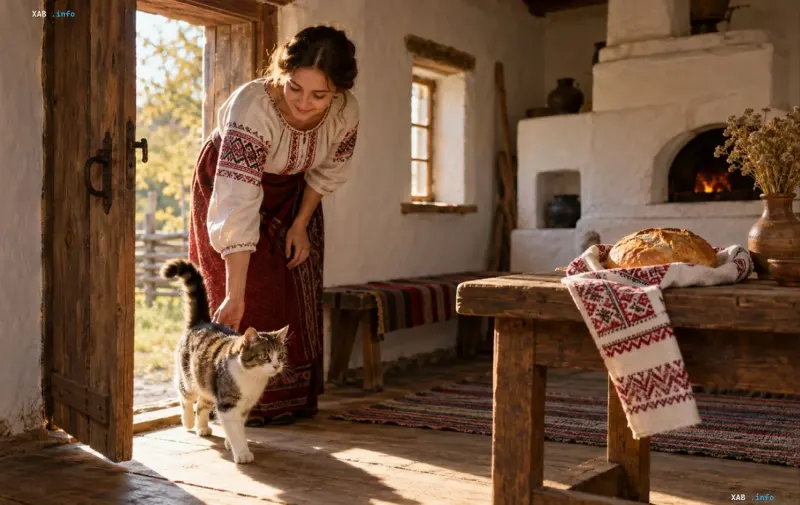
One of the most interesting beliefs concerned the first guest of the new home: in various regions, people believed that the person crossing the threshold first might soon die, so hosts tried to bypass this danger. They would let the eldest family member, a small child, or a domestic animal enter first, which was forbidden to be driven away or slaughtered, as it had already played a special role in the fate of the dwelling.
Symbols of Warmth: Transferring Fire and Items
It was believed that every house had its own guardian spirit — the domovoy — whom people wanted to take with them. The most common transfer method involved the oven: hosts would rake out the embers and take them to the new home, symbolizing the continuation of home warmth and well-being. In some areas, symbolic items such as woven postoly — traditional footwear — were dragged into the new space.
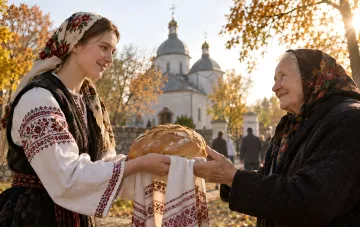
The first items brought into the new home also carried sacred meaning. An icon was carried as a family shrine, bread represented abundance and protection, alongside a towel, salt, grain, and small coins. Relatives, neighbors, and craftsmen who helped build the home were always invited to the festive dinner.
The Significance of Traditions in Modern Context
The customs and omens of Ukrainian housewarming reflect the deep respect of ancestors for housing, the hearth, and generational continuity. Although many today view these rituals as folklore, they retain cultural and historical value. Understanding these traditions helps to better appreciate the roots of national identity and the careful attitude of Ukrainians toward family space.