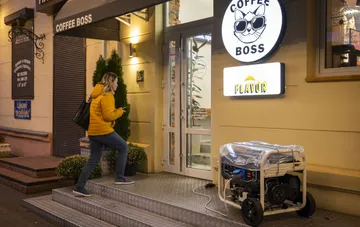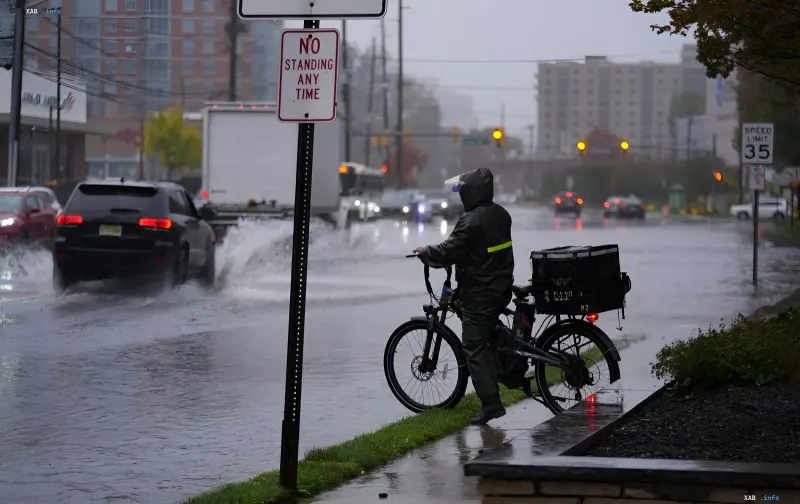
On Thanksgiving Day, November 26, a powerful storm struck the U.S. East Coast, becoming one of the most destructive weather events for the region in recent years. According to PowerOutage.us and The New York Times, nearly a million customers — over 908,000 people — were left without electricity by evening. The highest number of outages was recorded in Pennsylvania, New Jersey, Maryland, and New York. Heavy rain and gusty winds ranging from 50 to 70 mph (approximately 80–112 km/h) caused widespread flooding and major transportation disruptions in major cities. A state of emergency was declared on the evening of November 26 in New York City, Nassau, Suffolk, and Westchester counties, as well as throughout the state of New Jersey.
Record Rainfall and Threats to Water Supply
The heaviest precipitation hit New York, New Jersey, Virginia, Maryland, Delaware, and Pennsylvania. New York City's Central Park recorded a historic high for the date with 1.82 inches of rain, surpassing the twenty-year record from 2006. Utility company WSSC Water urged nearly two million Washington, D.C. suburban residents in Maryland to limit water usage to essential needs only, as power outages disrupted operations at two key water treatment plants.
Casualties, Injuries, and Collapses
According to the New York Post, a 56-year-old man was killed in Brooklyn when a tree fell on him around 3:30 p.m. local time on Euclid Avenue in the East New York neighborhood; the victim was taken to a hospital, where he later died. Arlington Fire & EMS reported that a tree trunk crashed onto a moving vehicle on the George Washington Memorial Parkway — firefighters extricated the driver and transported him to the hospital with non-life-threatening injuries. In Silver Spring, Maryland, a massive tree collapsed onto a residential home on Lombard Road, piercing the roof and damaging a gas line; two elderly residents were evacuated unharmed, after which the building was turned over to building inspectors. Reports of downed trees and power lines poured in from Fairfax, Kensington, Chevy Chase, Gaithersburg, and the District of Columbia.
Transport Collapse and Postponement of Macy’s Parade
The severe weather caused widespread aviation chaos: more than 450 flights were canceled across the U.S., and over 2,400 planes departed with delays. Airports in New York, Baltimore, Washington, and Boston experienced the greatest difficulties. The storm also forced the postponement of the annual Macy’s Thanksgiving Day Parade in New York City for the first time in its 100-year history. The parade will take place on November 28. Along the Mid-Atlantic coast, tidal levels exceeded those of Hurricane Sandy in 2012, leading to the temporary closure of bridges and tunnels in Virginia.
Severe Weather Beyond the Coast
Simultaneously, heavy snowfall battered Missouri and Illinois: snow accumulation in St. Louis exceeded 7 inches, and in the city of Wentzville, the weight of the snow caused part of an ice arena roof to collapse. Local utility Ameren warned that restoring power to some residents would take several days. On the Pacific coast, giant waves flooded homes and destroyed a section of the pier in the California city of Pacifica.
Forecast and Recovery
According to the Associated Press, the storm is expected to intensify in the coming days, threatening dangerous floods, high winds, and transportation disruptions, with tens of millions of people in its path. Sea Bright Mayor Bryan Kelly anticipated wind gusts up to 80 km/h and street water levels rising up to 1.8 meters, comparing the potential flood scale to the aftermath of Hurricane Irene in 2011. New York Governor Kathy Hochul, who declared a state of emergency, warned residents that the worst of the storm is yet to come, with up to 20 centimeters of rain forecasted for the city by Monday.