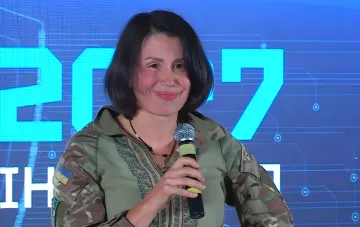
The modern conflict in Ukraine has turned into a high-tech race where the advantage is often determined not so much by the quantity of equipment as by the speed of adaptation. As soon as the Ukrainian Defense Forces find an effective solution to tactical tasks, the enemy demonstrates the ability to quickly adopt these technologies and scale their production. This was stated by Denis Perch, commander of the 107th Territorial Defense Brigade, in an exclusive interview with RBC-Ukraine, emphasizing that the enemy uses its state resources to instantly copy successful tactics.
The enemy's scale effect
According to the commander, the key feature of the enemy's actions lies in the use of its industrial and administrative resources. If Ukrainian developers and military personnel create an effective solution, for example, a new type of guidance or a scheme for using drones, the enemy sees the effect and immediately launches mass production of analogues. "Sooner or later, the Defense Forces face the fact that after the appearance of some kind of guidance, the enemy sees its effect and immediately increases the quantity of its use by several times," noted Denis Perch.
The brigade commander refused to name specific types of means, citing operational necessity, but emphasized that a detailed analysis of specific models is currently meaningless, as the enemy is constantly increasing its capabilities in response to every move by the Ukrainian side.
Tactical adaptation and countermeasures
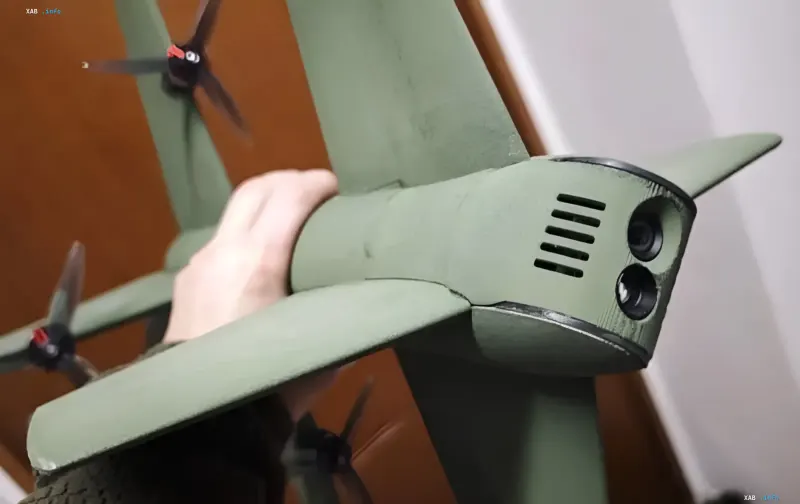
In the initial stages of the use of enemy interceptors, the enemy did achieve a certain success on the battlefield. In particular, this allowed the enemy to push Ukrainian heavy bombers away from the front line, creating a safety zone for its positions. However, according to Perch, the Defense Forces have already found ways to counter this threat.
Details of the new protection methods remain classified, but the brigade commander assured that the solution works: it has become more difficult for the enemy to detect Ukrainian bomber drones, and even in the event of detection, they are not always shot down. This indicates that the Ukrainian side is successfully adapting its tactics to the changed conditions.
Technological evolution: from copters to jet engines
Alongside tactical changes, the equipment itself is evolving. Previously, RBC-Ukraine reported that the Dignitas Foundation, together with the company Aura, is developing electronic warfare means to protect heavy bombers. Despite the high cost of such drones, they are regularly shot down significantly cheaper than FPV drones due to their sluggishness and clumsiness.
In the future, aircraft-type interceptor drones will receive jet engines. This was stated in an interview with RBC-Ukraine by Yartura CEO Oleksandr Bukarenko, explaining the advantages of cruise interceptors over copter analogues. This will increase the speed and maneuverability of interceptors, making them more effective against heavy targets.