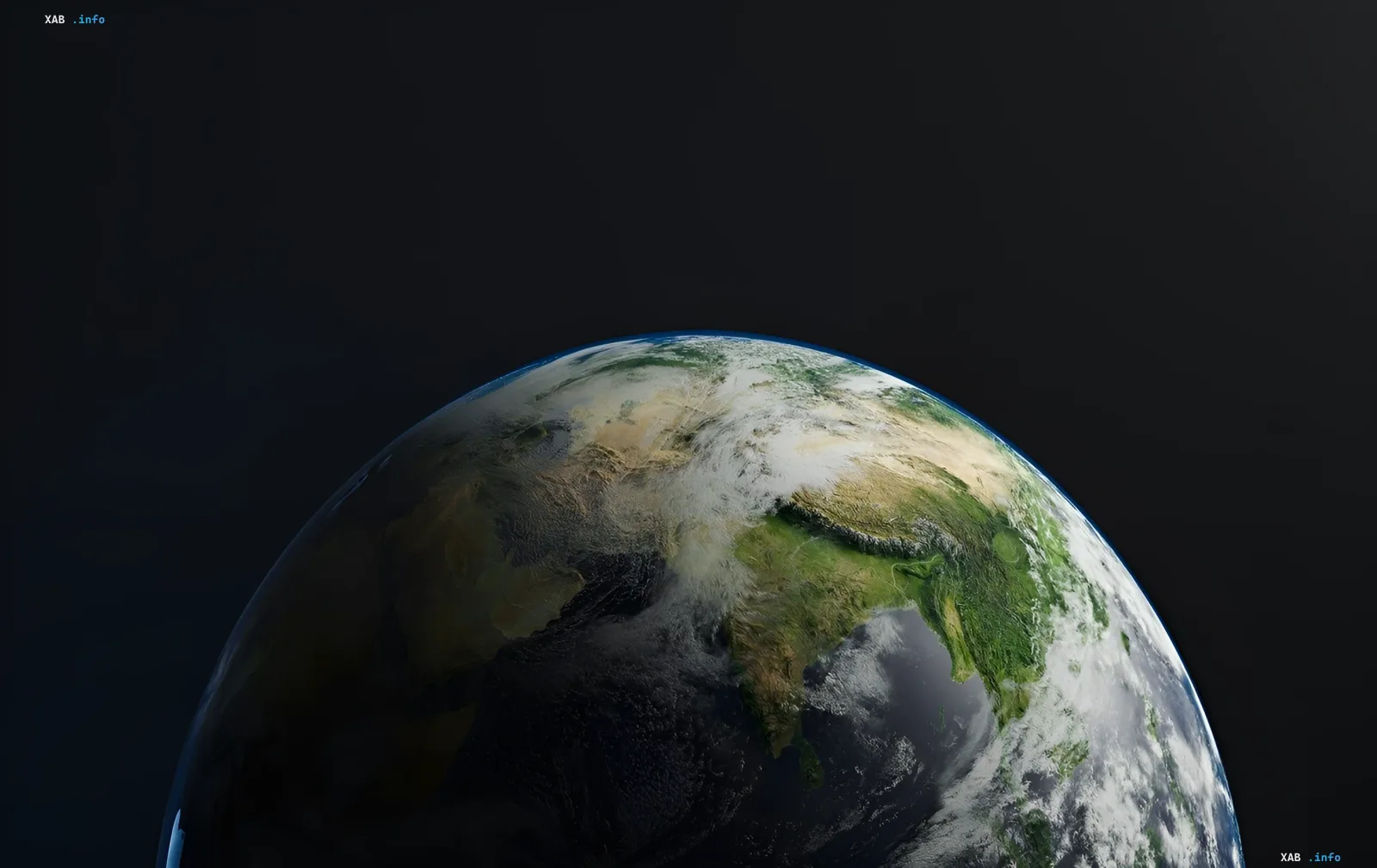
Earth, this fragile blue marble in the depths of space, is accustomed to change. However, new scientific data promises that life in its familiar form to us — vegetation — will persist much longer than we could have imagined. According to a fresh study published in the journal JGR Atmospheres, the flora of our planet is capable of withstanding the test of time for another 1.8 billion years.
The Perpetual Engine and Its Cost
The main factor determining Earth's climatic future is the Sun. Our star is not standing still: it is constantly increasing its brightness. Scientists estimate this growth at approximately 1 percent every 110 million years. To date, the Sun already emits one-third more energy than at the moment of the formation of the Solar System.
This process inevitably leads to the heating of the planet. To compensate for the excess heat, Earth activates a natural thermoregulation mechanism. The rise in surface temperature accelerates the chemical weathering of silicate rocks. As a result of rainfall, carbon dioxide is washed out of the atmosphere and bound within carbonate deposits. The level of greenhouse gases drops, allowing the global overheating to be temporarily contained.
The Survival Paradox: Salvation Becomes a Threat
However, this natural mechanism has a critical downside. The reduction in carbon dioxide concentration, saving the planet from turning into a scorching desert, becomes fatal for most modern plants. About 95 percent of Earth's flora use the C3 type of photosynthesis, which requires the presence of at least 150 parts of carbon dioxide per million in the atmosphere.
Previously, computer models focused exclusively on this threshold gave a pessimistic forecast: the end of plant life would come in just 100 million years. But the new work of scientists has turned these views upside down.
Succulents as Saviors of the Biosphere
The authors of the study created 29 complex three-dimensional climate models to analyze the limits of biosphere survivability in detail. The key difference was the accounting of the diversity of the plant world. It turned out that not all plants are so vulnerable to carbon dioxide deficiency.
Modeling showed that even with intense rock weathering and a rapid drop in carbon dioxide levels, more resilient species — such as cacti and similar succulents — will be able to sustain life on the planet. They are capable of surviving in conditions unsuitable for forests and fields, extending the lifespan of flora to 1.84 billion years.
If the weathering process proceeds more slowly, then the temperature limit at which life becomes impossible will occur in approximately 1.87 billion years. This term practically coincides with the moment when, due to excessive solar activity, Earth will begin to irreversibly lose its oceans, evaporating into open space.
Evolution as the Joker
Despite these grandiose figures, scientists believe that the actual lifespan of plants could be even longer. Future evolutionary processes are unpredictable and may create entirely new, currently unknown forms of ultra-resilient organisms capable of surviving even in conditions that now seem fatal.