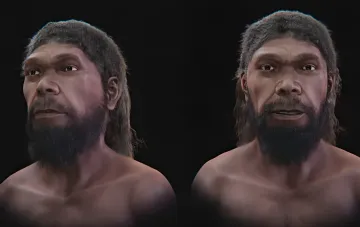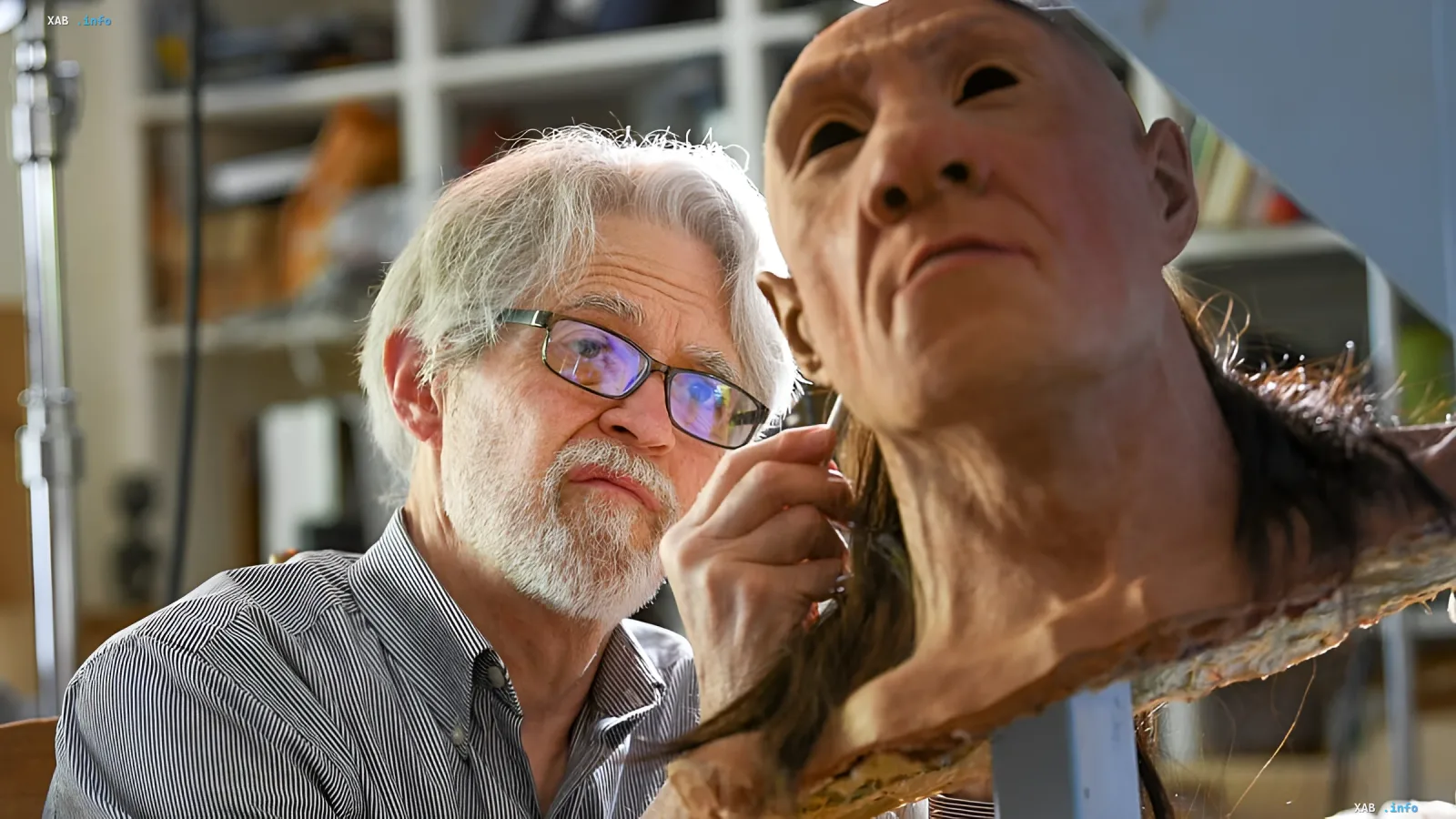
Scientists from the University of California, Berkeley, have made a breakthrough in understanding human evolution. Researchers have identified sections of DNA in the genomes of modern humans that originate from previously unknown extinct groups of hominins. These mysterious ancestors, dubbed "ghosts," have left their genetic mark in each of us, although their physical existence has not yet been confirmed by fossils.
Today, Homo sapiens is the only living human species, but in the past, the Earth was inhabited by many other hominins. Previously, science knew about the interbreeding of our ancestors with Neanderthals and Denisovans. However, a new study suggests that at least two previously unknown groups of people were involved in the formation of the modern genome.
African "Ghost" Line
The first of the discovered groups, which scientists call the "ghost line," interbred with the ancestors of modern humans in Africa more than 50,000 years ago. This event occurred even before Homo sapiens began their last major migration to Europe and Asia.
According to researchers' calculations, this mysterious branch of humanity diverged from the line leading to us approximately 800,000 years ago — roughly the same time that Neanderthals and Denisovans diverged. The genes inherited from this contact today make up about one percent of the genome of all humans, which is comparable to the proportion of Neanderthal DNA.
Yulin Zhang, a graduate student at the University of California, Berkeley, and one of the authors of the study, noted the importance of the discovery: "It was previously assumed that genetic traces of unknown lines existed, but it was unclear whether this line was found only in Africans. We were able to show that this ghost line is present in all living humans".
Super-Archaic Ancestor
An even more surprising discovery was the so-called "super-archaic ancestor." The line of these people diverged from other hominins approximately 1.8 million years ago. According to data, more than 200,000 years ago, they interbred with Denisovans in Eurasia. It was through this "detour" that fragments of ancient DNA entered the genome of modern humans.
"Proof of the existence of this super-archaic ancestor is particularly interesting because it reveals the genetic contribution of a line of people who lived more than a million years ago, although not a single DNA molecule from this population has been sequenced yet," explains Arjun Biddanda, a postdoctoral fellow at Johns Hopkins University.
Evolution as a Network, Not a Tree
The discovery changes the perception of how the Homo sapiens species evolved. Professor of Molecular and Cellular Biology Priya Murjani emphasizes that human evolution resembles not so much a branching family tree as a complex network. Different populations were connected by repeated migrations and mixing.
Traces of these ancient contacts continue to influence us today. Inherited sections of DNA may be associated with immune defense, skin and hair characteristics, adaptation to the environment, as well as the risk of certain diseases. Thus, living within each of us are not only Neanderthal ancestors, but also the shadows of completely unknown species with which we intertwined thousands of years ago.