The history of science knows many examples where the pursuit of new knowledge required colossal investments. Some experiments cost more than the space programs of entire states, and their implementation cost tens of thousands of human lives. The RBC-Ukraine editorial board, citing the publication BGR, has compiled a rating of the most expensive scientific projects in history, the cost of which is counted in billions of dollars.
Giant Eyes into the Universe: The Very Large Array
One of the largest astronomical instruments — the Very Large Array (VLA) — is a complex of 28 radio antennas located in the state of New Mexico. Working as a single giant telescope, it allows for the acquisition of high-resolution images of black holes and neutron stars.
In 1972, the creation of this complex cost $78.5 million, which translates to about $627 million in 2026 terms. Currently, preparations are underway for a major upgrade of the system to the Next Generation Very Large Array version, the cost of which is estimated at approximately $2 billion.
Underwater Observatory on the Floor of the Pacific Ocean
The Canadian initiative Ocean Networks Canada implemented the project of the world's largest underwater observatory. The infrastructure includes more than 800 km of high-speed optical cable laid on the floor of the Pacific Ocean.
The project launch required investments of $111 million Canadian dollars (about $79 million USD). Annual maintenance of the system costs an additional $17 million Canadian dollars. A special pride of the project are the deep-sea remote rovers Wally and Wally 2.
The Manhattan Project: The Price of the Atomic Age
The secret program of the USA and its allies to create the world's first atomic weapon became one of the most expensive and significant projects in history. Thousands of scientists from the USA, UK, Germany, and Canada worked on it. Robert Oppenheimer served as the scientific director, and General Leslie Groves as the military director.
The project budget at the time was $2.2 billion, which, taking inflation into account, is equivalent to more than $40 billion in 2026 prices. Under the program, three atomic bombs were created: Trinity for the first nuclear test, Little Boy, dropped on Hiroshima, and Fat Man, used against Nagasaki.
Skylab: The First American Space Station
The Skylab space station was intended for studying long-term human stay in weightlessness and investigating solar radiation. Thanks to the station's equipment, astrophysicist Riccardo Giacconi made discoveries that later earned him the Nobel Prize in Physics.
Curiosity Rover: A Laboratory on the Red Planet
The NASA mission, launched in 2011, concluded with a landing on Mars in 2012. The solar-powered Curiosity laboratory has been studying the planet's surface for more than 14 years, collecting critically important data for future human landing.
The Human Genome Project
The international scientific project led by the US National Institutes of Health allowed for the decoding and mapping of more than 90 percent of the human genome. The remaining 10 percent was completed by 2022. Separate funding was received by the ELSI program, which studies the ethical and legal consequences of using genetic data.
The Large Hadron Collider
The world's largest particle accelerator is located in a 27-kilometer tunnel under the border of Switzerland and France. In 2012, with its help, the Higgs boson was discovered, which received the unofficial name "God particle".
Currently, an upgrade of the collider to the High-Luminosity version is being prepared. By 2038, the construction of a new accelerator costing $23 billion is planned.
The "Apollo" Program: The Path to the Moon
The American lunar program, announced by President John Kennedy in 1961, concluded with the historic landing of Neil Armstrong and Buzz Aldrin on the Moon on July 20, 1969, during the "Apollo-11" mission.
The total budget of the program was $25.4 billion, which, taking inflation into account, corresponds to $203 billion as of 2026.
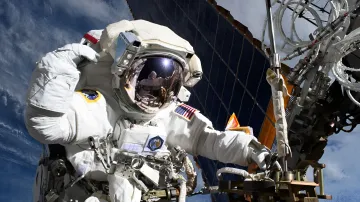
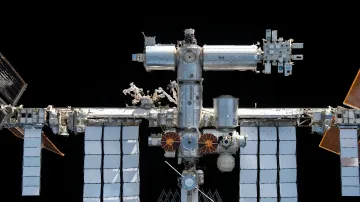
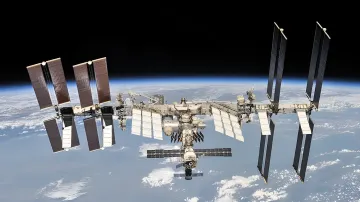
International Space Station
The launch of the first ISS module took place in 1998, and the completion of the mission is scheduled for 2030. The total budget of the project is estimated at about $150 billion, including $3 billion for annual maintenance and an additional $1 billion for the station's deorbiting.
This project became the most expensive and large-scale international scientific enterprise in history, created by the efforts of the USA, Japan, Canada, European countries, and other partners. The station serves as both an orbital laboratory and a global diplomatic tool.